
Acquisition of financial assets and external financing in Germany in the first quarter of 2026 Results of the financial accounts by sector
- Valuation losses cause decline in financial assets
- Real return declines and remains positive only for the wealthiest tenth of households.
- Non-financial corporations’ external financing increased, but still shows no discernible upward trend in annual terms
Decrease in households’ financial assets
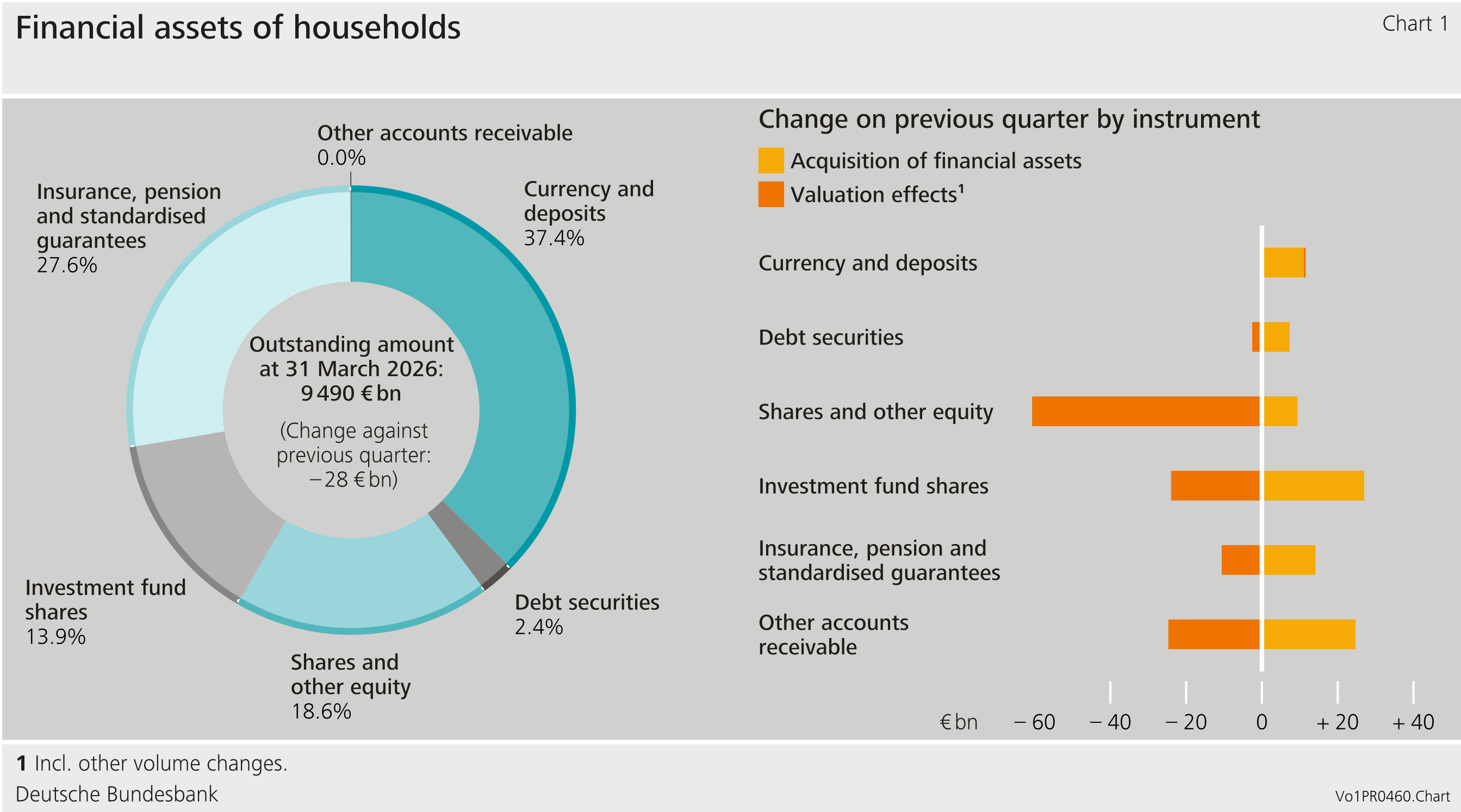
German households’ financial assets decreased in the first quarter of 2026. At the end of the quarter, they amounted to €9,490 billion and were thus €28 billion lower than at the end of 2025. This was attributable mainly to negative valuation effects. Households’ financial assets grew by €94 billion in net terms. However, this was insufficient to offset valuation losses totalling €122 billion. These losses were related to a gloomier financial market environment in the first quarter. The war in the Middle East increased uncertainty in the financial markets, caused energy prices and short-term inflation expectations to rise, and led to higher interest rate expectations. Ultimately, these developments had a particularly negative impact on investments linked to capital markets.
Households increased their holdings of cash and sight deposits by €6 billion in the first quarter, after having already expanded them sharply in the previous quarter. Time deposits were also built up by €6 billion. These renewed inflows are also likely to have taken place against the backdrop of economic uncertainty, which, taken in isolation, is likely to have strengthened households’ preference for liquid and safe forms of investment. By contrast, savings deposits and savings bonds were reduced by €1 billion on balance; this reduction continued the trend that has been ongoing since the second quarter of 2024.
At the same time, households’ capital market orientation remained unchanged overall. Debt securities were purchased to the amount of €7 billion in net terms and thus to a somewhat greater degree than in the previous quarter. A similarly high level of purchases was last observed two years ago. Shares and other equity were also purchased in the amount of €9 billion in net terms. Investment fund shares were likewise purchased to a greater degree again; the build-up of claims amounted to €27 billion and thus remained at an elevated level even by longer-term standards. At the same time, the repercussions of the war in Iran left a significant mark on the financial markets: there were valuation losses of €3 billion for debt securities, €61 billion for shares and other equity, and €24 billion for investment fund shares.
Insurance and pension claims were acquired on much the same scale as in the previous period (€14 billion, compared with €19 billion in the fourth quarter). These instruments also saw €11 billion in valuation losses.[1]
Declining real return on financial assets
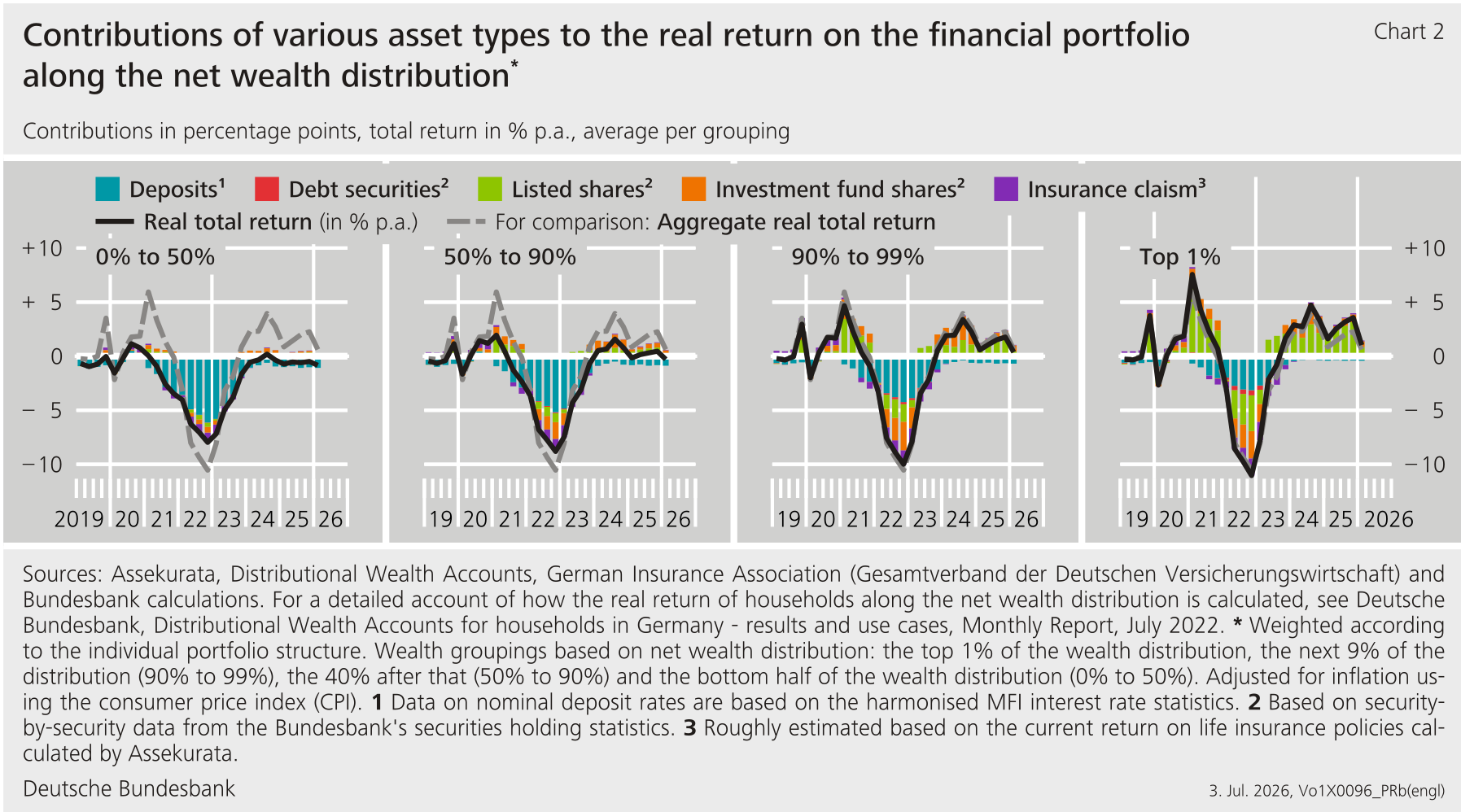
The real total return, i.e. the return adjusted for inflation, on financial assets represents the actual return on financial assets for households. Considering the individual structures of financial assets from the Distributional Wealth Accounts (DWA), Chart 2 shows the real total return on financial assets along the net wealth distribution.[2]
An analysis of wealth groups shows that, in the first quarter, the average real return remained positive overall only for the wealthiest 10 % of households. Nevertheless, this has also fallen significantly as a result of marked price declines in the capital markets.[3] By contrast, the remaining households achieved negative returns: mainly the less wealthy half of households hold their financial assets almost exclusively in low-risk deposits and insurance claims. As the return on these two asset types remained weak, the total return was correspondingly low and negative. Looking at all households together, the aggregate real total return on the year decreased to around 0.6 % in the first quarter of 2026. This decline is attributable mainly to shares and investment fund shares. The real return on deposits remained negative and thus dampened the real total return once again.
Households’ external financing down
Households’ liabilities moved largely sideways in the first quarter of 2026, rising slightly to a total of €2,180 billion. This small rise was mainly due to low and again declining borrowing amounting to €5 billion. Owing to the increase in nominal gross domestic product, the debt ratio thus fell to 48.4 % at last count.[4]
Overall, these developments led to a decline in net financial assets of €32 billion to €7,310 billion.
External financing of non-financial corporations up on the quarter, longer-term dynamics subdued
External financing of non-financial corporations in Germany increased in the first quarter of 2026 compared with the previous quarter. It grew by €20 billion to €56 billion. This was mainly due to increased borrowing, which totalled €32 billion. There was a rise in both borrowing from domestic banks and financing via foreign lenders. However, the recovery over the weak previous quarter should not be interpreted as a fundamental reversal of the trend: in annual terms, external financing, as measured by four-quarter moving sums, remained lacking in momentum. The sideways movement that has been observed for some quarters now thus largely continued. In this context, the weak development is mainly due to the persistently difficult economic situation combined with high uncertainty in economic policy.
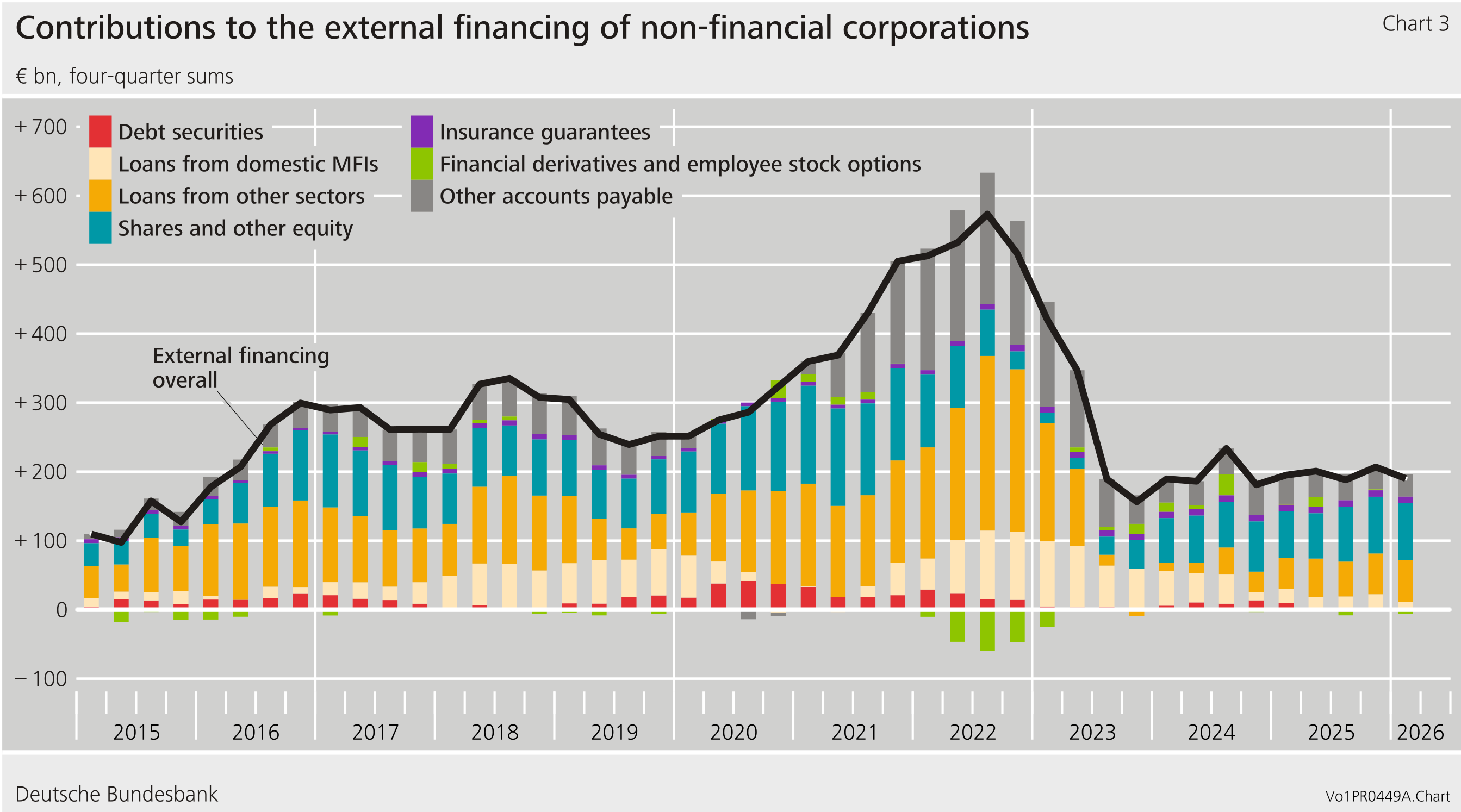
In addition to loans, enterprises also made use of the capital market: debt securities totalling €5 billion in net terms were issued in the first quarter, compared with €2 billion in the previous quarter. Issuance of shares and other equity moved largely sideways and stood at €17 billion, which was slightly below the level from the previous quarter.
At the end of the first quarter of 2026, non-financial corporations’ liabilities fell by €121 billion to €12,033 billion. This was mainly due to negative valuation effects amounting to €177 billion, which were almost entirely attributable to shares and other equity issued by non-financial corporations. While liabilities declined overall, debt instruments increased. As a result, the debt ratio rose slightly to 67.4 %.
Overall, the financial assets of non-financial corporations rose by €31 billion to €9,069 billion. Due to the decline in liabilities, net financial assets improved by €152 billion on the quarter to
− €2,964 billion.
Owing to interim data revisions of the financial accounts and national accounts, the figures contained in this press release are not directly comparable with those shown in earlier press releases.
Footnotes:
- The method for calculating households’ technical provisions is based on the Solvency II reporting regime, under which the discounted cash flow method is used to calculate/value these provisions: https://eur-lex.europa.eu/legal-content/EN/TXT/PDF/?uri=CELEX:02009L0138‑20190113. The relevant interest rate term structure for discounting technical provisions in Solvency II is determined by EIOPA on a monthly basis. At each valuation date, the provisions for all existing contracts must be valued at applicable interest rates. This form of marking to market means that, under Solvency II, technical provisions are significantly influenced by the current interest rate environment. This means that valuation effects may be stronger in certain quarters.
- The Bundesbank uses the DWA to provide additional data on the distribution of household wealth. The DWA financial portfolio comprises the following asset types: deposits, debt securities, listed shares, investment fund shares and insurance claims (life insurance and private pensions). For more information on the DWA, see also https://www.bundesbank.de/en/statistics/macroeconomic-accounting-systems/balance-sheets/balance-sheets-792952#tar-2.
- Specifically, the net wealth distribution is divided into four wealth groupings: the top 1 % of the distribution, the next 9 % of the distribution (90 % to 99 %), the following 40 % of the distribution (50 % to 90 %), and the less wealthy half of the distribution (0 % to 50 %). Net wealth is calculated as the difference between total assets (financial portfolio plus real estate and business assets) and liabilities (loans for house purchase and other debt).
- The debt ratio represents debt as a percentage of nominal gross domestic product (four-quarter moving sum).