
Bundesbank President Nagel at the House of the Euro in Brussels CIC-Newsletter – May 2026
Bundesbank President Joachim Nagel visited the House of the Euro in Brussels on 22 April 2026. Attention centred on dialogue with the central bank representatives located there, as well as on an evening event discussing the digital euro and Europe’s strategic autonomy.
Mr Nagel already met central bank representatives in the House of the Euro in the afternoon. Following introductory remarks by the Bundesbank President, colleagues from the European Central Bank, as well as the central banks of Ireland, Malta, Slovenia, France and Italy, exchanged views on their work and experiences in Brussels and their joint projects. The House of the Euro allows for close cooperation between the central banks under one roof in Brussels, which has existed in this form for more than two years now. The regular exchange of expertise, the short distances between the representatives and events at the House of the Euro highlight the value for the dialogue between European central banks and institutions in Brussels. The House of the Euro is thus not only a location in close proximity to the EU, but also a forum for continuous exchange on current monetary, financial and European policy.

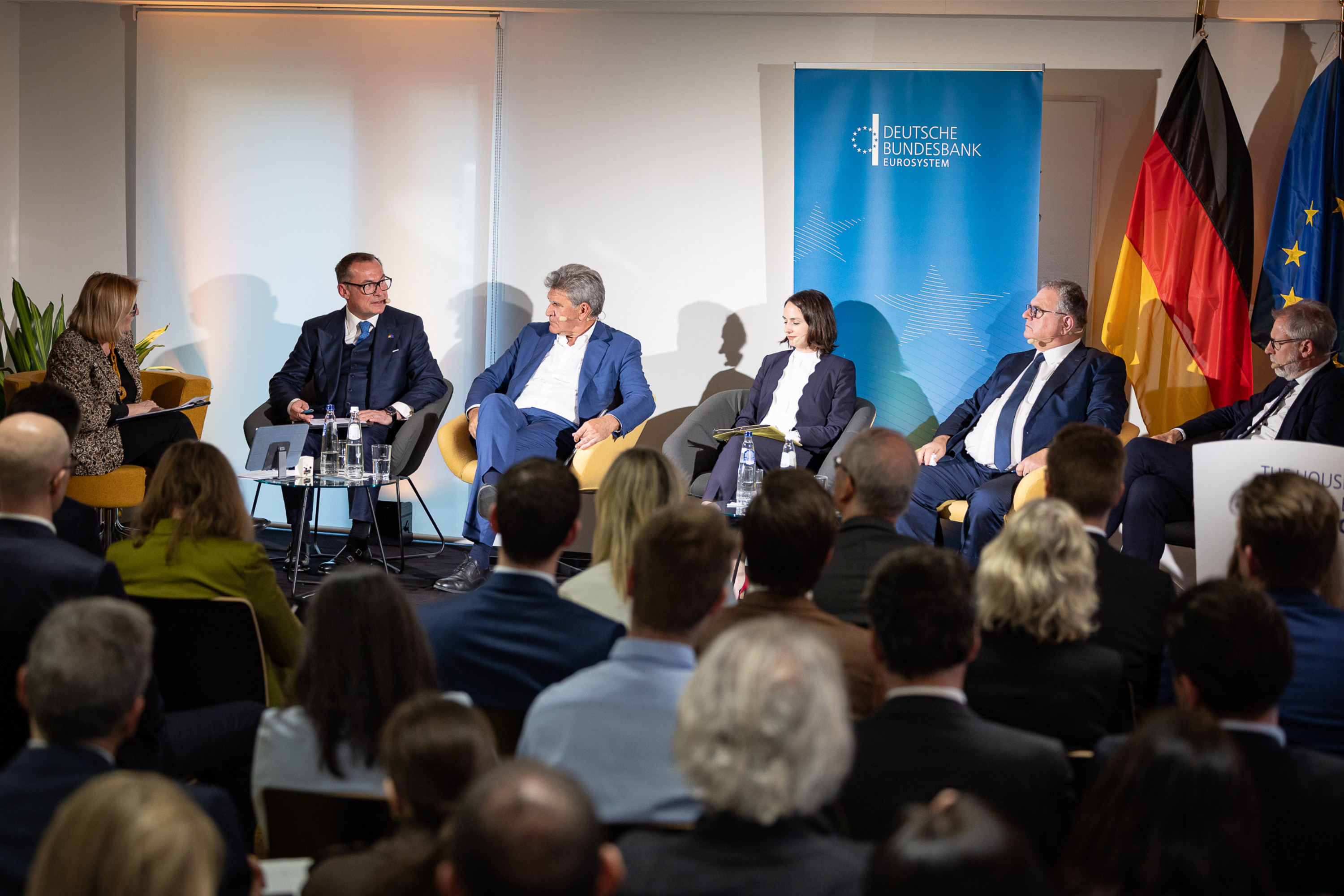
In the evening, President Nagel delivered a keynote speech at the House of the Euro: “The Digital Euro: Anchoring Europe’s Strategic Autonomy in a Digital Future”. Nagel emphasized the need to make Europe’s payment infrastructure more independent and resilient. He emphasized that the digital euro is not intended to replace cash but to complement it. “With this digital complement to cash, we will renew the role of central bank money in an increasingly digital world,” Nagel said. It could help overcome the fragmentation of the European payments market and serve as a foundation for innovation and efficiency. A key aspect of the digital euro is securing European sovereignty in payments. Currently, around two-thirds of card payments in Europe are processed via non-European infrastructures – a significant dependency. The digital euro could reduce these dependencies and strengthen Europe’s ability to act independently. Nagel expressed optimism that the digital euro could be introduced soon. “I strongly believe that the legislative process can be concluded by the end of the year, paving the way for a digital euro that embodies Europe’s vision of sovereignty,” he said. The first issuance of the digital euro would then be possible from 2029 onwards.
Following the speech, Mr Nagel was joined by José Antonio Álvarez (Santander), Isabelle Buscke (Finance Watch), Stelios A. Georgakis (Central Bank of Cyprus) and Michael Hager (European Commission) for a panel discussion on how the digital euro can strengthen Europe´s strategic autonomy in a digitalised future.
The event, which was attended by more than 90 participants, underscored the great interest in the future of European payments. At the same time, the visit highlighted the importance of the House of the Euro as a place of specialist dialogue, institutional interconnectedness and European cooperation between central banks.
The Deutsche Bundesbank’s Representative Office in Brussels has been located in the House of the Euro since October 2023. It is the Bundesbank’s interface with European institutions and other stakeholders. It monitors the European financial and monetary agenda, maintains dialogue with EU institutions, associations and think tanks, and plays a part in introducing the Bundesbank’s viewpoints to the European debate. In addition, the Bundesbank maintains representative offices in New York and Tokyo in order to be present in key financial centres and to strengthen international dialogue.