

Expert panel in Mumbai: West Asia crisis – What it means for India CIC-Newsletter – May 2026
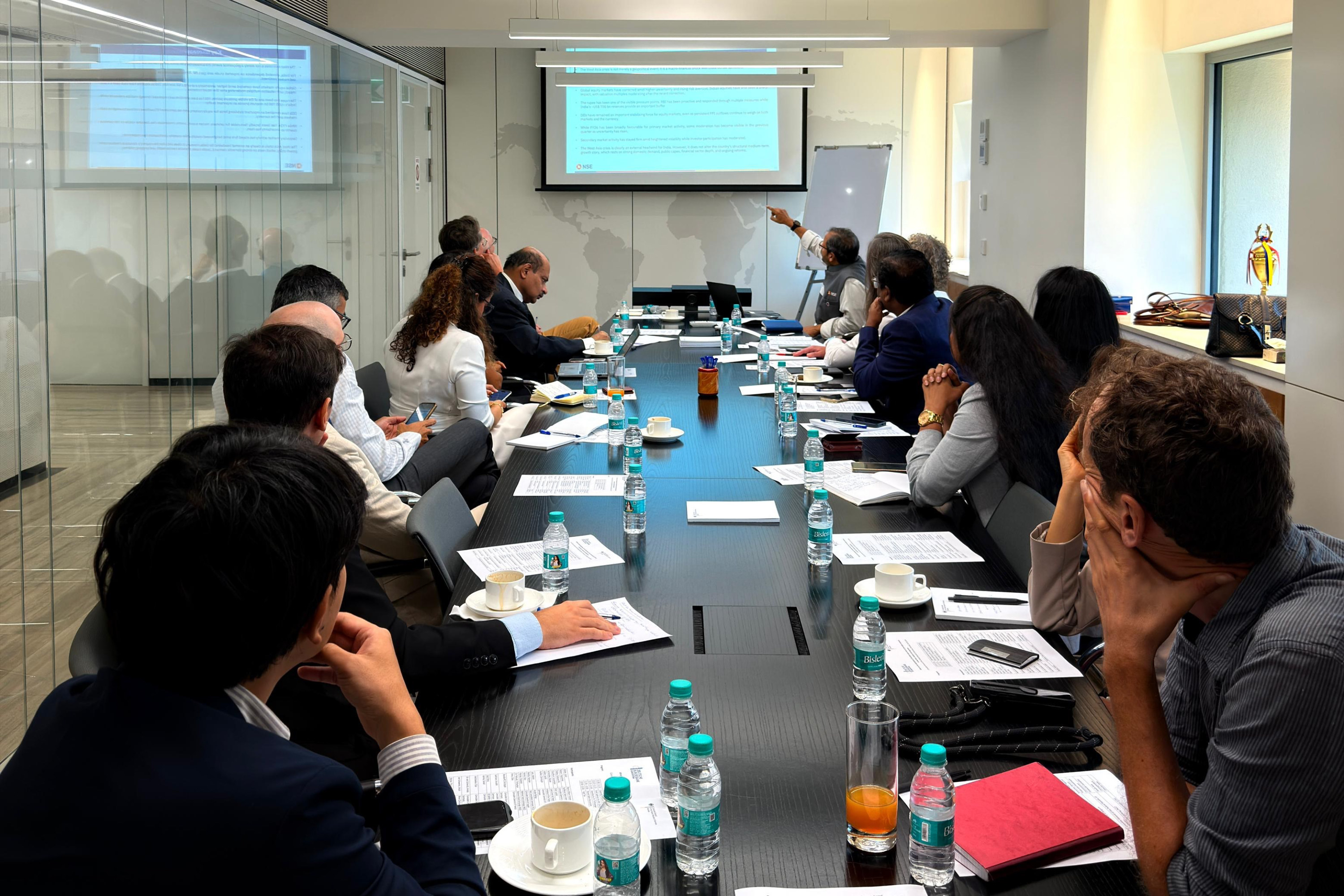
Dr Irmela von Schenck, representative of the Deutsche Bundesbank in India, hosted an event on “The implications of the West Asia crisis on the Indian economy in the short, medium and long term” at the German Consulate General in Mumbai on 6 May 2026. The keynote speech was delivered by Dr Tirthankar Patnaik, the well-known Chief Economist at the National Stock Exchange of India in Mumbai. Twenty participants, mainly economists from banks and consulates, provided their respective perspectives and insights into the discussion conducted under the Chatham House Rule.

India imports almost 90 % of its oil. It is therefore being hit particularly hard by the closure of the Strait of Hormuz and the destruction of oil supply infrastructure. Mainly due to the increase in oil prices, the Reserve Bank of India (RBI) has raised its inflation forecast for the current fiscal year to 4.6 %; inflation stood at 2.1 % in the last fiscal year. In addition, higher oil prices and the structural Indian current account deficit are putting pressure on the Indian rupee. On the day before the event, the rupee had reached an all-time low of 95.43 against the US dollar. Nevertheless, there are good reasons to consider the Indian economy to be more robust than it was in past critical phases, e.g. the Taper Tantrum of 2013. Inflation and the current account deficit are lower today, while reserve assets are significantly higher at around US$700 billion. They cover imports of 11 months, compared with six to seven months in 2013. Rising interest rates on government bonds and more fiscal measures pose risks to the consolidation course for the central government budget, particularly in view of higher fertiliser prices.
India is one of the fastest-growing major economies, with the RBI expecting real growth of 6.9 % for the current fiscal year. This growth is mainly driven by domestic activity, private consumption and public investment. India is therefore less vulnerable to global economic slowdowns than export-based economies.
The Bundesbank event provided the setting for an open and fruitful exchange, which was appreciated by all those present. This kind of event where economists and financial market experts can engage in a more in-depth exchange of ideas in a smaller group has not been held in Mumbai so far. The wish for similar follow-up events was expressed several times – a wish to be met at six month intervals.