
Statement on the publication of the Financial Stability Review 2026 of the Deutsche Bundesbank Press conference on the publication of the 2026 Financial Stability Review
Check against delivery.
Ladies and gentlemen,
“The readiness is all.”
When Hamlet utters these words before his final duel with Laertes, he’s saying that the future can’t be controlled. The key is to be prepared: “The readiness is all.” That’s what today is all about for me. In this vein, I welcome you to the presentation of this year’s Bundesbank Financial Stability Review.
The key message of the report will not surprise you: risks to financial stability remain elevated. Geopolitical tensions and external headwinds are shaping the environment. High and rising government debt is limiting the scope for responding to shocks. At the same time, the German economy is facing profound structural challenges. All of this at a time when valuations in financial markets are high and credit risk is growing.
The financial system is also undergoing change. Growing interconnectedness within the financial system is accelerating the spread of risks. Artificial intelligence and digitalisation can create new vulnerabilities, regardless of the opportunities they present.
For us, “The readiness is all” means that the financial system must be prepared for future headwinds.
1 High risk appetite despite external headwinds and economic policy uncertainty
The macro-financial environment has changed repeatedly in recent years, sometimes quickly and unexpectedly. Disruptions are occurring at ever shorter intervals. In 2026, it was primarily the conflict in the Middle East that weighed on economic developments. These headwinds were compounded by trade barriers, disruptions to global supply chains and persistent economic policy uncertainty. Germany’s export-based economy has been hit particularly hard by this.
So far, this has left little impression on financial markets.
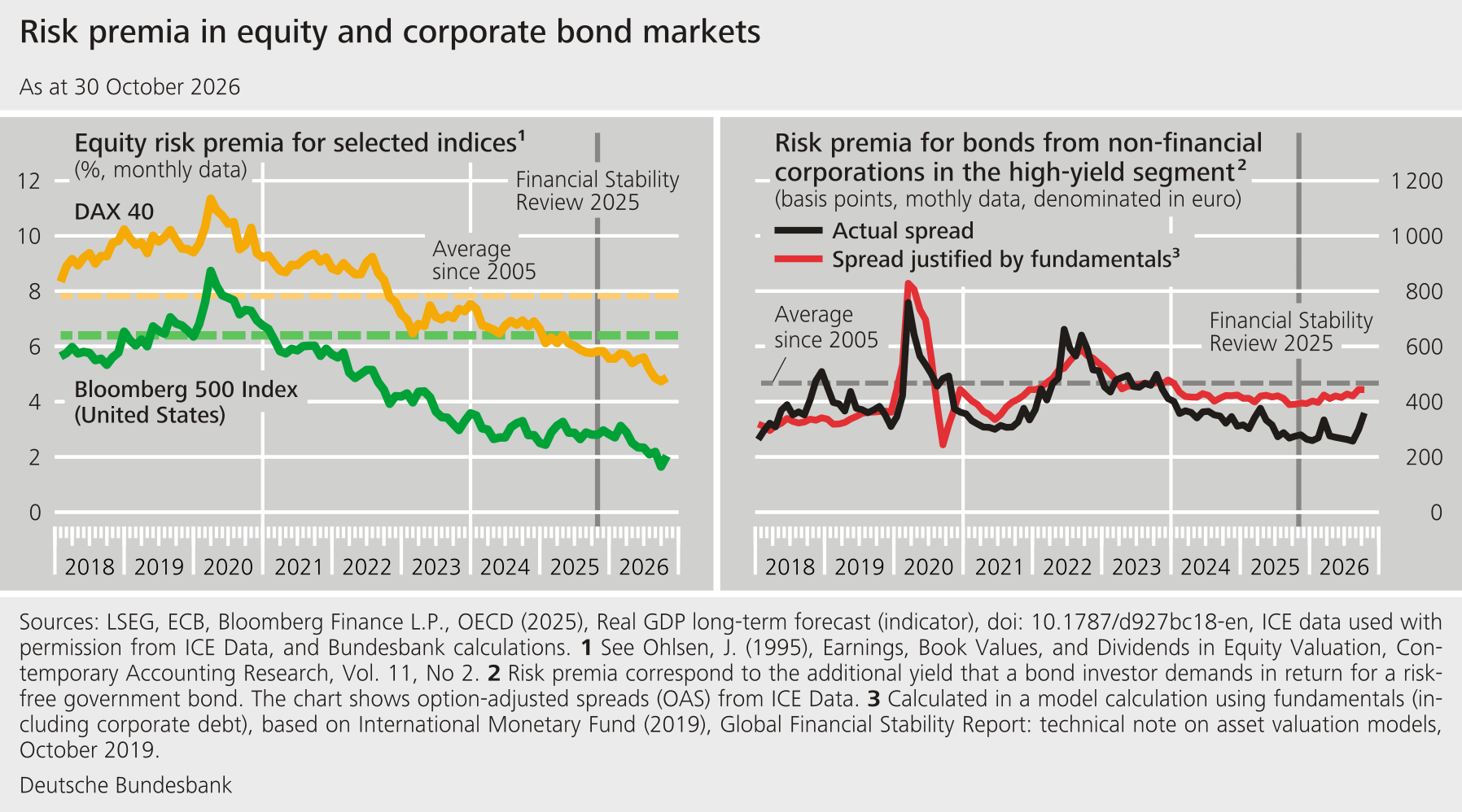
Valuations of equities and corporate bonds remain high: Risk premia are low (see the chart). Prices in financial markets reflect a level of confidence that is surprising given the geopolitical risks. No one can say if and when a correction will occur. And not every price correction jeopardises financial stability. If it plays out in an orderly fashion, it can help unwind overvaluations. However, if expectations change abruptly, prices can fall sharply and in a disorderly manner. My warning at last year’s press conference therefore remains valid: The potential for setbacks is considerable.
2 Credit risk: pressure on the corporate sector has intensified further over the past year
I would now like to turn to the situation in the corporate sector.
Our economy is deeply integrated in international trade and production networks. Trade barriers, supply chain disruptions and high energy and input prices are hitting Germany particularly hard. On top of this, there are structural challenges: high location costs, demographic change, harsher international competition and rapid technological changes – not least due to AI.
The pressure to adapt is enormous. This can also be seen in corporate defaults.
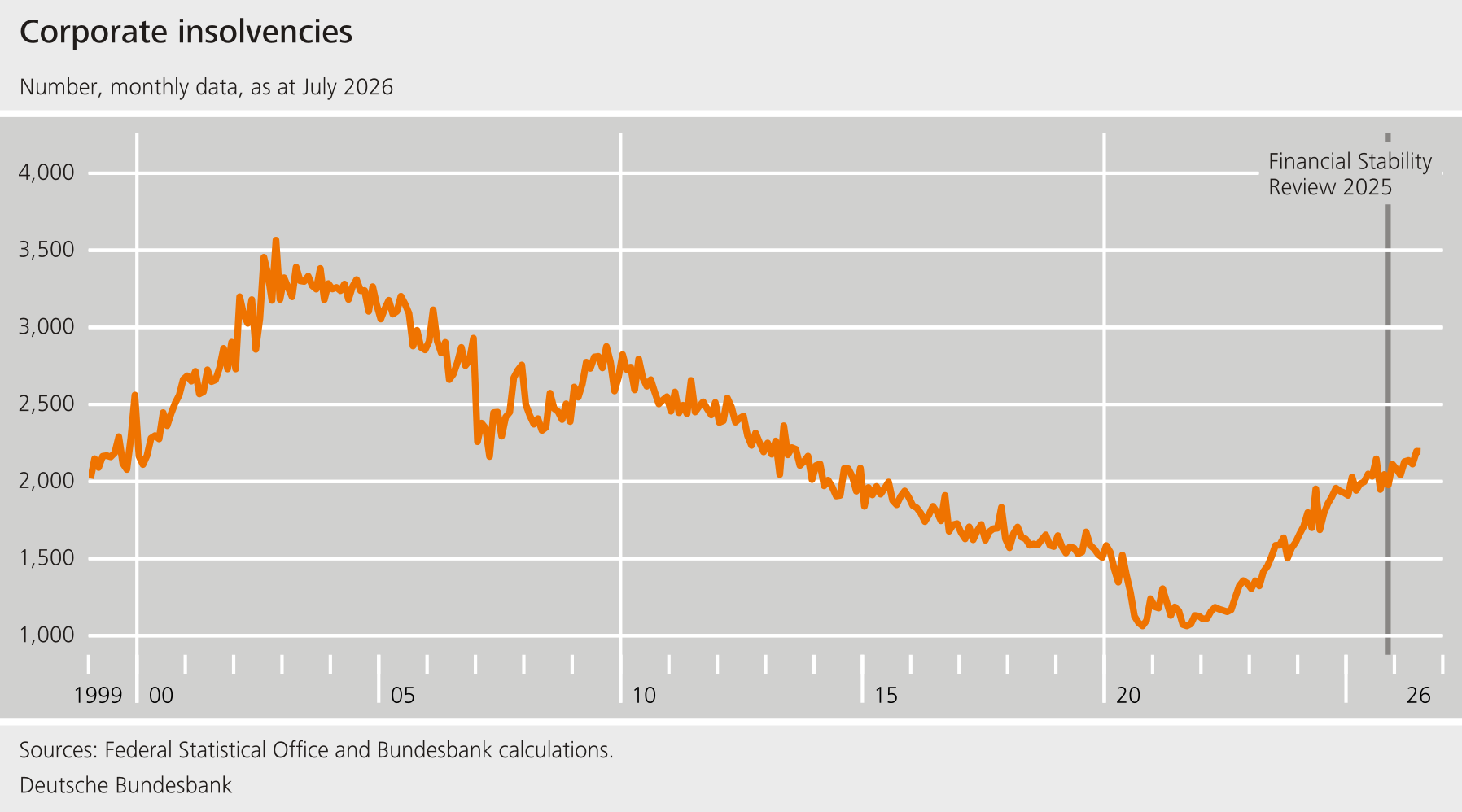
Monthly insolvencies are currently at their highest level since 2014 (see the chart). Higher financing costs are making the situation even more difficult. Enterprises that need to refinance loans from the low interest rate period are particularly affected.
This development is also having an impact on banks’ balance sheets. Non-performing loans have risen further since the middle of last year. Fortunately, credit risk has materialised in an orderly manner so far. Banks are still able to cope well with the pressures they are under. But the direction is clear: the ongoing economic weakness and structural headwinds facing enterprises are increasingly feeding through to banks.
What can be done in the light of these developments? It is crucial to create the conditions for long-term growth. Businesses need to open up to technological change and drive innovation. Policymakers need to remove barriers to growth through structural reforms. If we strengthen the long-term forces of growth, financial stability stands to benefit as well: It’s only when enterprises have sustainable business models and generate sound earnings that they can service their loans more reliably and cushion headwinds better.
However, the banking system, too, needs to be prepared to cope with a potential further deterioration. The report uses scenarios to examine resilience to risks from the corporate sector. I would like to emphasise that these are negative scenarios, not forecasts.
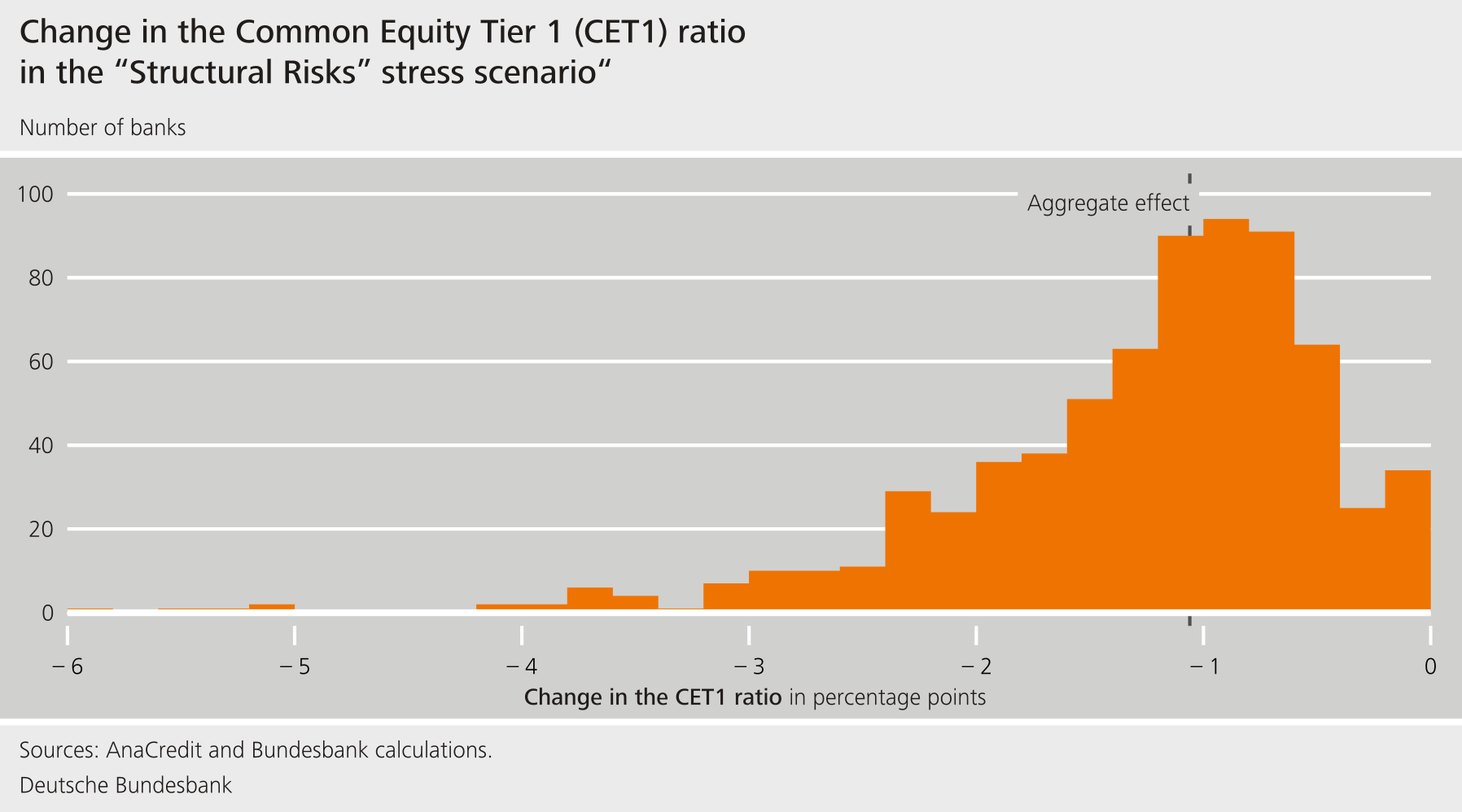
The results are clear: If structural pressures continue to intensify in particularly affected economic sectors – for example in the automotive sector and the chemical industry – the losses on German banks’ corporate loans are likely to rise noticeably overall. A significant number of banks would even be expected to see a substantial increase in these losses (see the chart). These include several larger institutions – that is to say, some of the “other systemically important institutions”, as they are known.
But, you might argue, banks can surely make use of their excess capital and capital buffers. That’s correct. However, the available capital buffers are only partially usable, as they overlap with other regulatory requirements. This is a point we've raised repeatedly in the past.
A buffer that cannot be fully used by banks in a stress event only performs its stabilising function to a limited extent. It is therefore important to simplify the regulatory framework and increase the effectiveness of the buffers.
3 Credit risk: vulnerabilities in new residential real estate loans
Another area where preparedness is necessary is residential real estate financing. Households remain robust overall. In fact, their debt is low overall relative to income and available liquid funds. However, lending standards for some new residential real estate loans are loose, pointing to vulnerabilities.
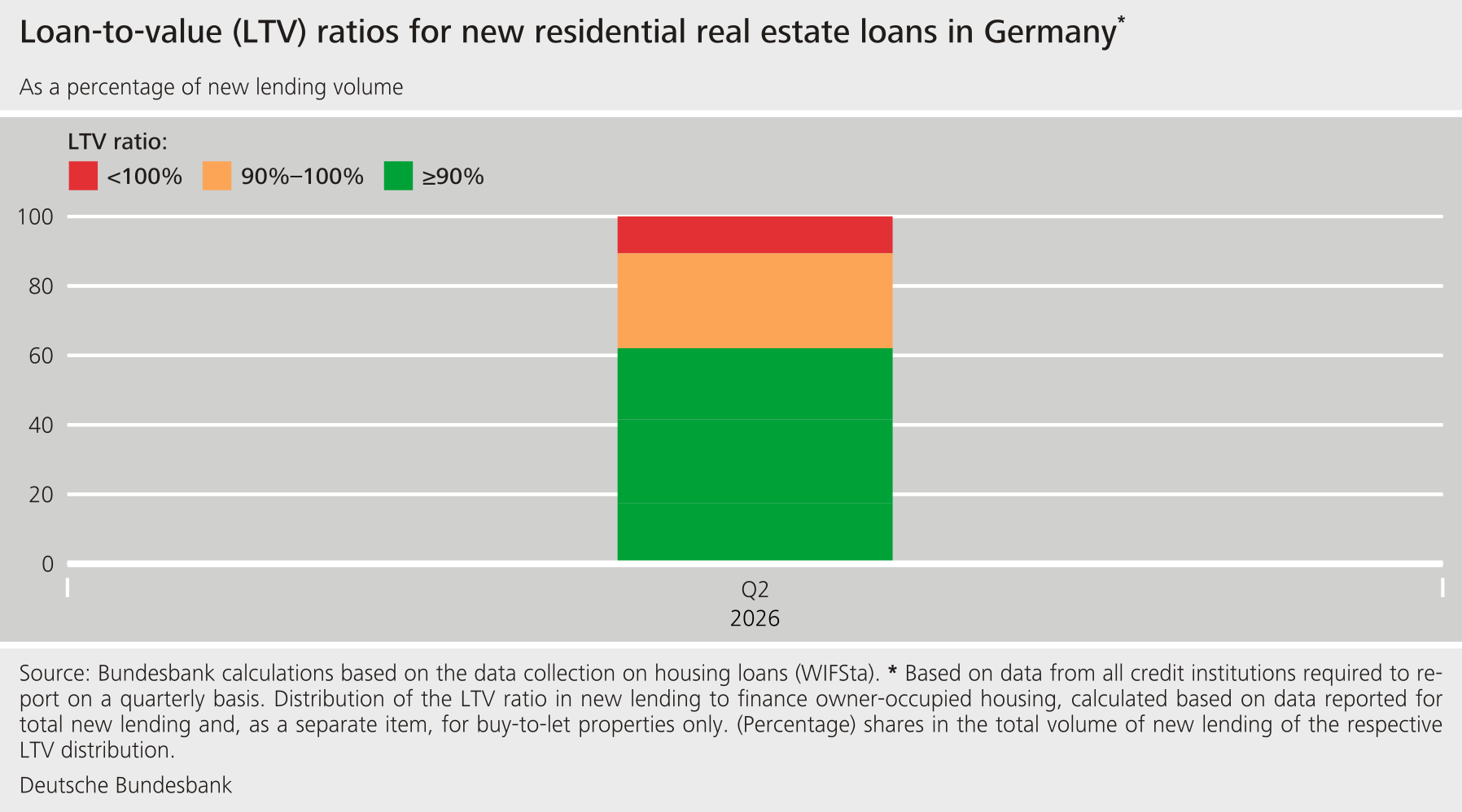
New data show that some households are financing the purchase of residential real estate with a high share of borrowed capital. For just under 40 % of the new lending volume, borrowers financed more than 90 % of the value of the property with debt in the second quarter of 2026. Moreover, for almost 11 % of the new lending volume, the loan amount exceeded the value of the property being financed (see the chart).
Of course, not all highly leveraged financing is problematic. It may make sense for people with high incomes. However, high loan-to-value ratios increase the potential losses for the lender in the event of a credit default. This is particularly true in the event of rising unemployment and a possible correction in residential property prices. A large share of loans with a high loan-to-value ratio makes the banking system more vulnerable to such developments and can thus increase systemic risks.
4 Risks from high government debt in the euro area have continued to rise
Public finances in the euro area are currently a major concern for me. Preparedness seems particularly important to me in this context.
As I said last year, the mixture of high and rising government debt and low economic growth remains toxic. These challenges are being exacerbated by higher interest burdens, rising expenditure on defence and infrastructure, and the consequences of demographic ageing. High debt ratios also reduce the fiscal space to stabilise the economy when faced with future challenges.
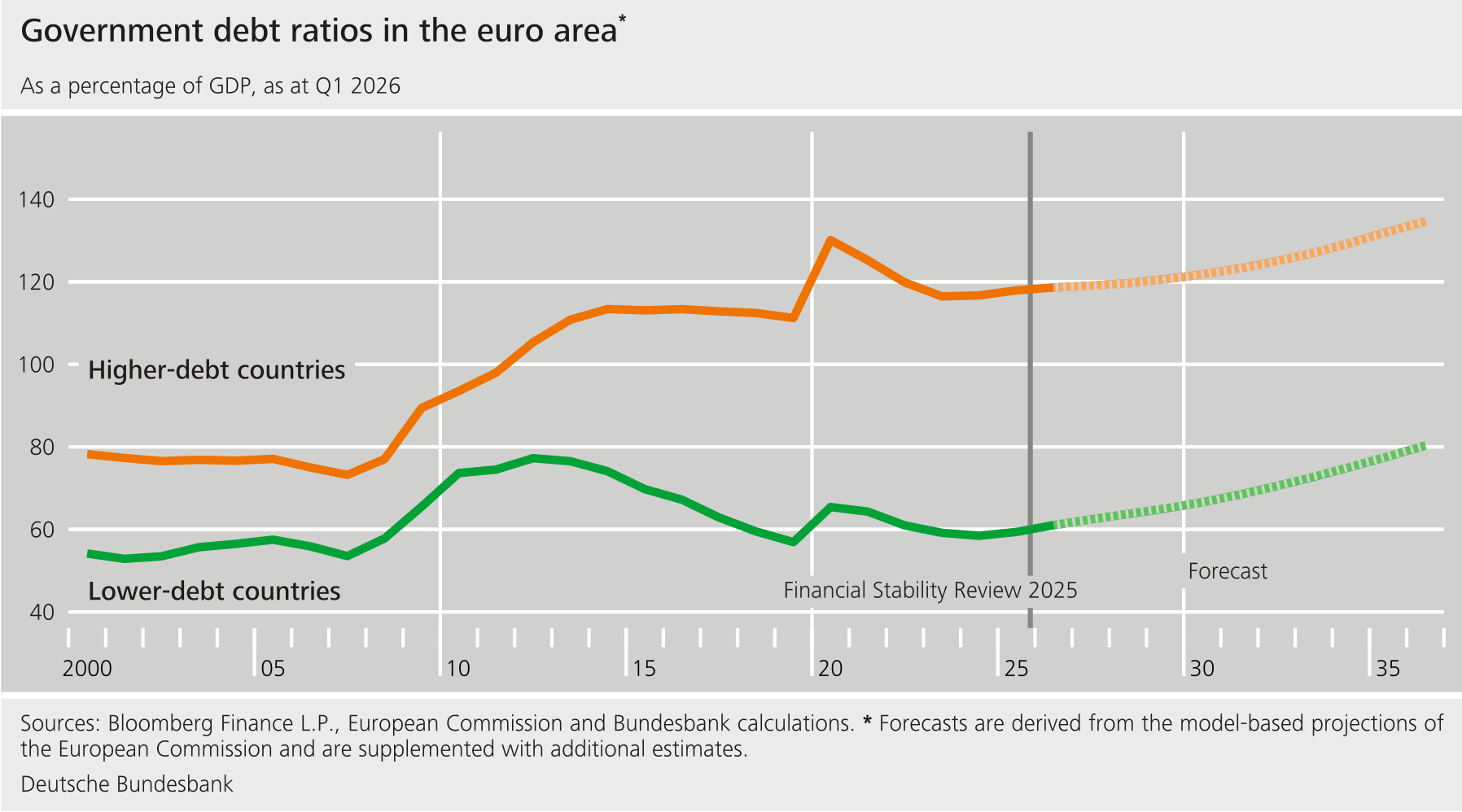
The European Commission’s projections highlight the scale of the action needed. If the policy stance remains unchanged, the debt ratio in the euro area would rise from 88 % of gross domestic product in 2025 to 105 % in 2036. A debt ratio of around 140 % is expected for the group of higher-debt countries by 2036 (see the chart).
That outcome is not inevitable. European governments need to take countermeasures now to ensure that public finances remain sustainable. This explicitly also applies to Germany. Of course, necessary adjustments are politically and socially demanding. This is precisely why they should be implemented at an early stage and gradually. Acting in good time can spread the load more evenly. Credible consolidation plans also strengthen confidence in public finances.
At this juncture, I would also like to point out the close linkage between governments and banks. If a country’s credit rating is downgraded, the risk premia on its bonds increase. This weighs on banks, insurers and funds that hold these bonds.
This relationship also works in the other direction. Distress at banks can put pressure on public finances. Since the euro crisis, we have made progress in limiting these risks. These days, banks are significantly better capitalised, and the European resolution framework better protects public finances. However, the risks stemming from the sovereign-bank nexus persist. Overall, we can observe that banks in Europe continue to face risks from high exposures to sovereign debt on their balance sheets. Effective rules are therefore needed to make banks diversify their sovereign exposures – through capital surcharges for high exposures to individual sovereigns or through concentration limits.
5 Risks surrounding funds rose significantly last year
It’s not just the banking sector that’s relevant for financial stability, but also funds and insurance companies.
Since mid-2023, German open-end real estate funds have seen increasing outflows. While real estate funds offered an attractive return during the low interest rate period, the situation has changed since interest rates have risen. This reallocation of funds is therefore not surprising. Due to their nature, open-end real estate funds are particularly vulnerable to withdrawals. Certain funds had to suspend share redemptions this year. Regulatory liquidity management tools are helping to limit the impact of liquidity bottlenecks.
I would now like to broaden my focus to the fund sector as a whole. In the report, we highlight an aspect that, in my view, has received too little attention so far. It is well known that funds are interconnected with other financial intermediaries, especially insurance companies. But they are also highly interconnected with each other. Funds hold considerable quantities of shares in other funds. This creates a powerful amplification mechanism. When investors withdraw funds from one fund, that fund may be forced to sell its shares in other funds in order to be able to service the withdrawals. The funds affected by this may also come under pressure and may then sell additional assets.
In a strained market, such sales can put additional pressure on the prices of securities. Losses then become mutually reinforcing.
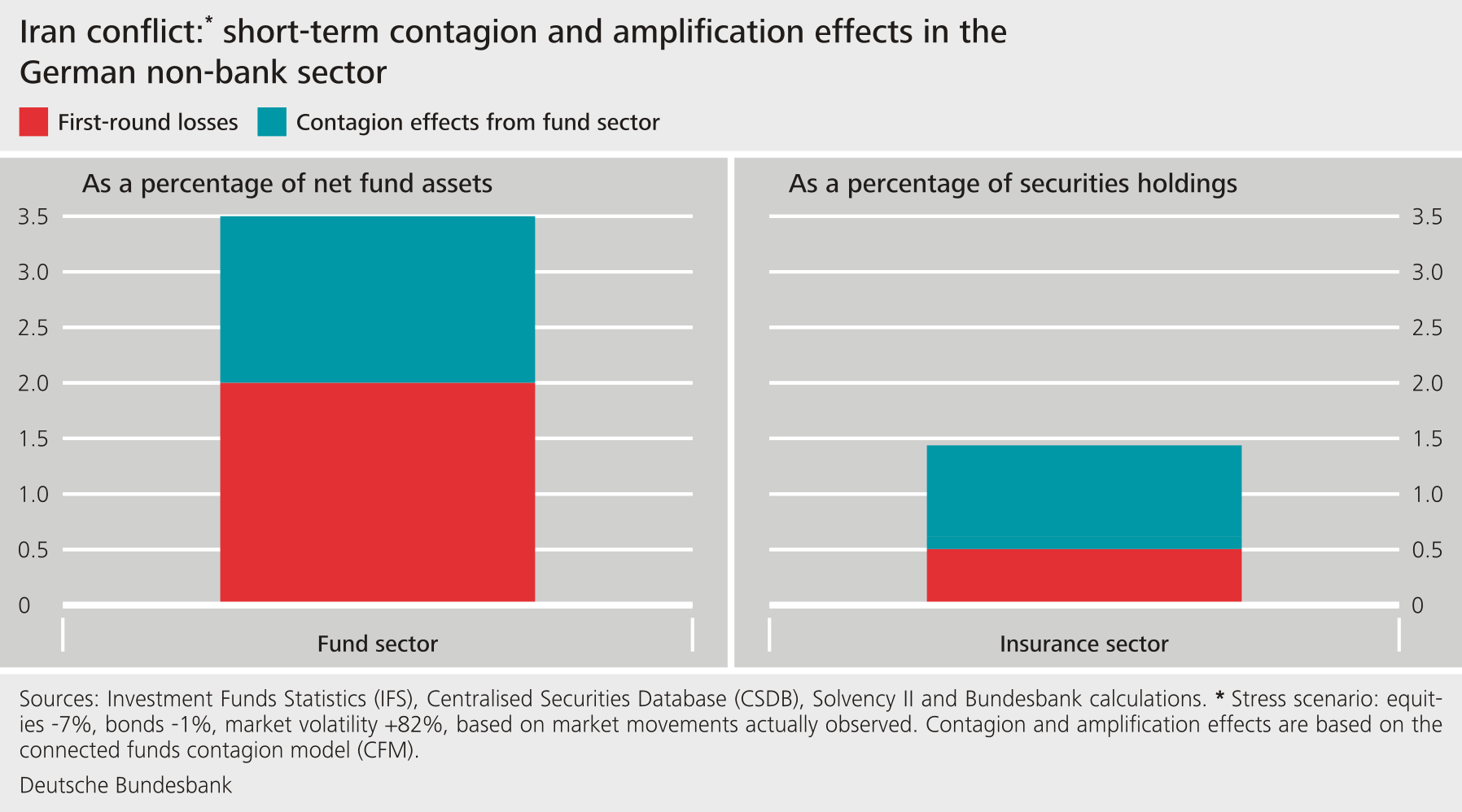
Our model calculations make this mechanism visible. The scenario is based on market events during the first days of the Iran conflict in March 2026 and assumes that equity markets will tumble and financial market volatility will increase. Subsequent contagion and amplification effects mean that the total losses in the fund sector are almost twice as high as the first-round losses, while the total losses in the insurance sector are almost three times as great (see the chart).
Here, too, this is not a forecast, but a scenario calculation. Moreover, the absolute size of the losses is less relevant than the key takeaway, which is that funds can significantly amplify market disruptions. This, together with the fact that they are highly interconnected with banks and insurance companies, makes them relevant for financial stability.
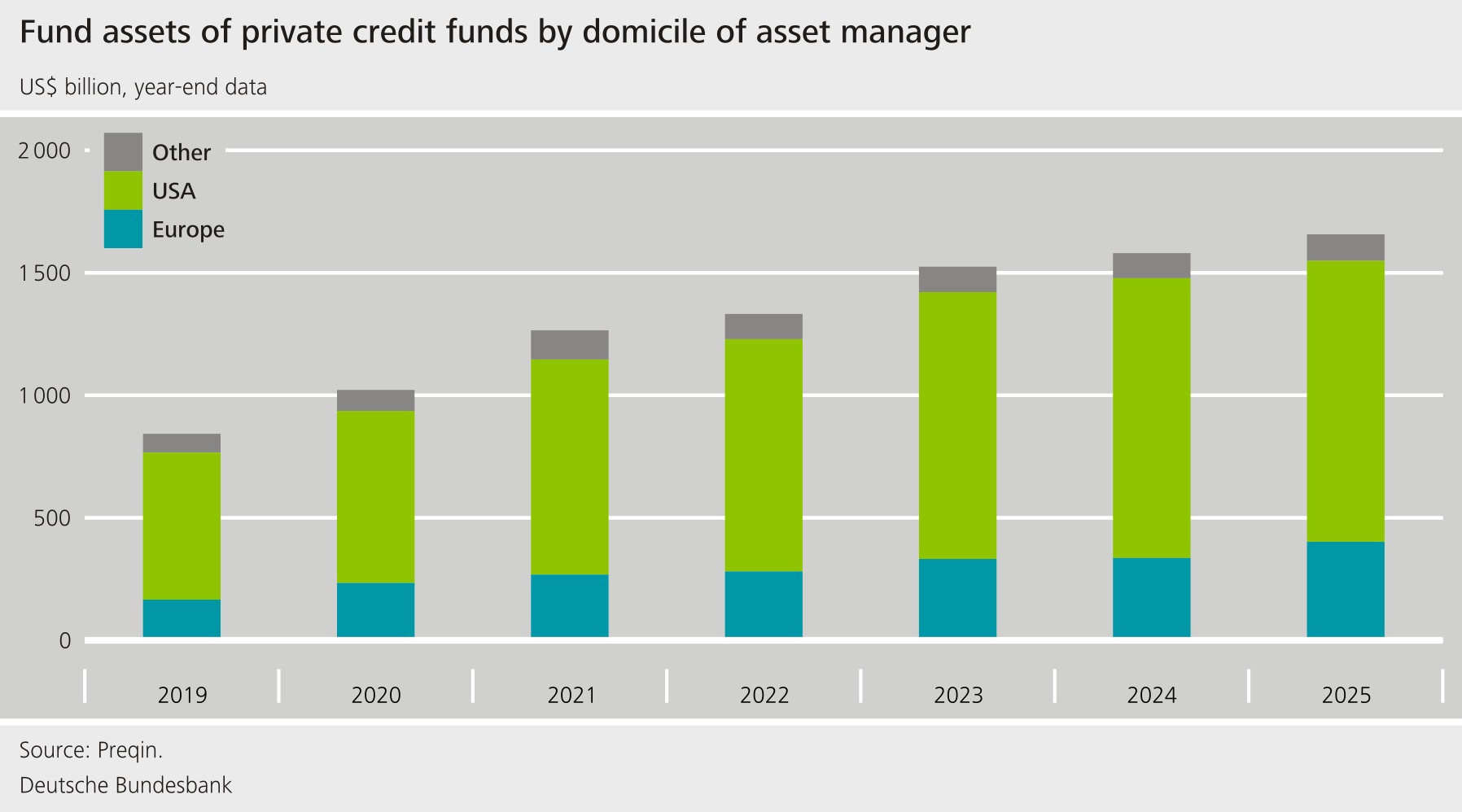
Private credit is also becoming more important as a contagion channel. This segment has seen strong growth internationally and is increasingly interlinked with banks, insurers and pension funds (see the chart). On aggregate, German financial institutions’ direct exposures to private credit funds appear limited. However, they are concentrated among a small number of actors.
Large losses in this internationally interconnected segment could trigger further contagion effects. Unfortunately, it’s difficult to gauge future risks more accurately. There are considerable information gaps as concerns leverage, liquidity risk, lending and interlinkages.
Without data, preparedness cannot be achieved with any degree of confidence. Creating transparency is therefore a financial stability instrument in itself.
6 Macroprudential supervision is focusing more strongly on operational vulnerabilities. AI is transforming cybersecurity
Another risk we highlight in the report is that operational vulnerabilities in the German financial system are growing.
Cyberattacks, hybrid threats and dependencies on a small number of critical third-party providers can lead to disruptions to critical functions of the financial system. Artificial intelligence is changing the risk situation, too. It can make attacks faster, more scalable, and more sophisticated. Of course, AI can also improve cyber defence. It can help to identify irregularities more quickly, analyse vulnerabilities and take countermeasures.
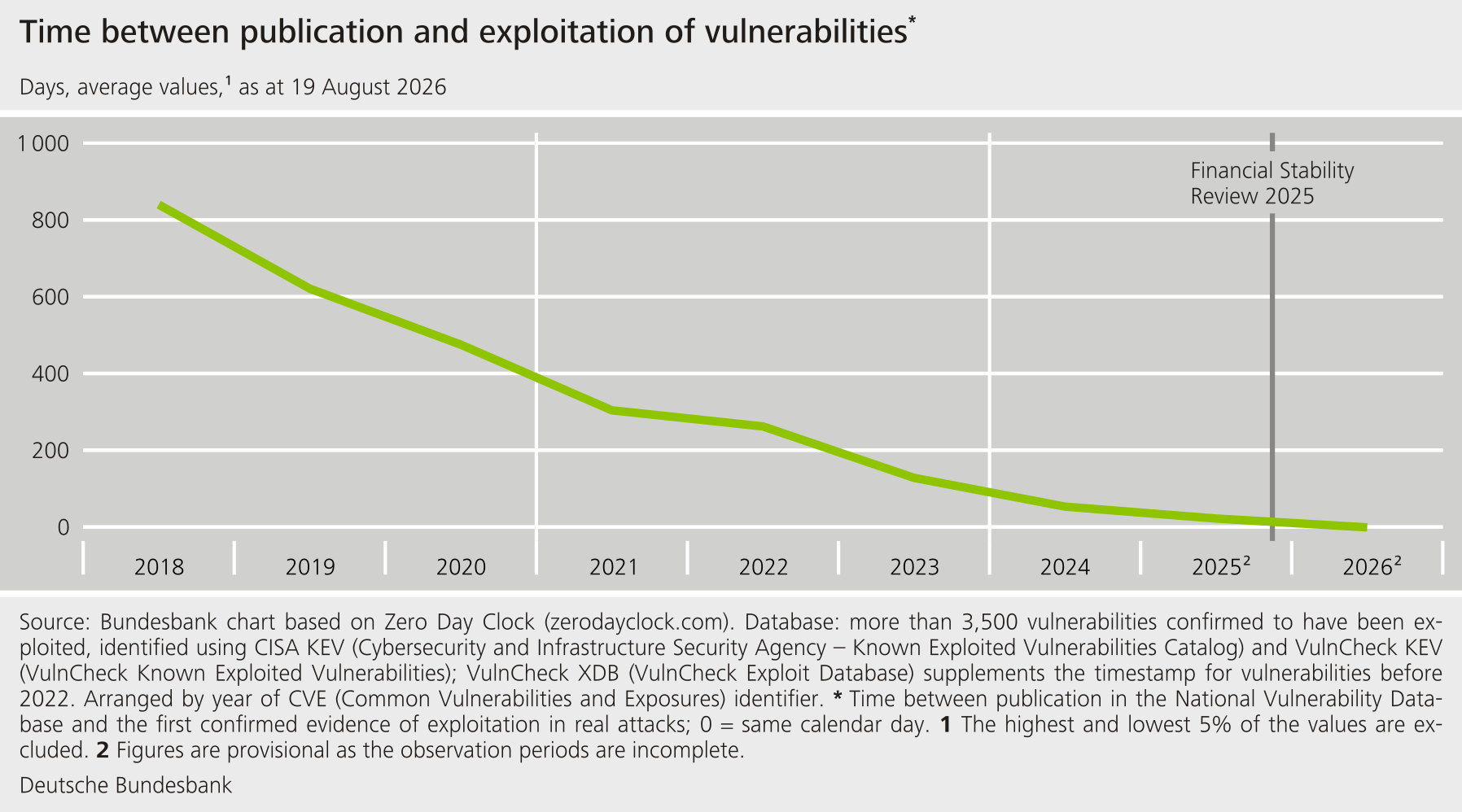
One sign of the growing threat situation is that security gaps are being exploited more quickly. The time between the discovery of a security gap and the first cyberattack has shortened considerably, from several weeks to as little as a few hours (see the chart).
Operational resilience is therefore also a financial stability issue. Financial institutions need to continuously review their IT systems, quickly eliminate vulnerabilities and limit their dependence on a small number of critical third-party service providers. If central services fail, many institutions can be affected at the same time – with consequences for critical functions of the financial system. From a macroprudential perspective, we therefore need to identify common dependencies and assess how disruptions can spread and amplify each other. To do this, we need to look beyond individual institutions and sectors.
7 What does this mean for macroprudential policy?
I’ve now talked a lot about the risks. What can we do to counter these risks? I’d like to mention four points that are particularly important to me.
First, the resilience of the banking system needs to be maintained. The existing macroprudential capital buffers remain appropriate in view of the heightened risks. They strengthen banks’ ability to absorb losses and maintain their lending even during periods of stress.
Second, capital buffers need to be usable in practice in a stress event. At present, capital buffers often overlap with other regulatory requirements. This is the case for large, systemically important banks, in particular. Therefore, the European regulatory framework should be made simpler and thus more effective, in particular by improving the usability of buffers. Unnecessary complexity needs to be reduced. However, this must not lead to deregulation that weakens the resilience of the banking sector.
Third, policymakers need to ensure sustainable public finances and, to this end, clearly prioritise spending. Growth-enhancing investments need to be given priority. At the same time, the sovereign-bank nexus needs to be weakened – through capital surcharges for high concentrations of sovereign exposures or through concentration limits.
And fourth: For non-bank financial intermediaries, especially for funds, we need a better data exchange in Europe, stronger reporting in less transparent segments such as private credit, and a flexible toolkit to limit systemic liquidity risks surrounding investment funds at an early stage.
The report also covers other aspects in addition to the developments and topics I’ve already mentioned. I would like to highlight one of them here:
Both artificial intelligence and stablecoins and tokenisation – that is, digital representations of assets – open up new possibilities. Processes can be automated; payments and securities transactions can be settled more efficiently. However, these opportunities are accompanied by changing risks. For stablecoins, users need to be sure they can be redeemed and that their value will remain stable. Artificial intelligence and tokenisation raise new technical and legal issues.
We need to monitor this change with an eye to the future. Our aim must be to enable opportunities and identify risks at an early stage. This requires a reliable regulatory framework that keeps pace with developments. This way, we can lay the groundwork for innovation and stability to go hand in hand.
8 Conclusion
The quote from Hamlet that I mentioned at the beginning of my speech gets to the heart of good financial stability policymaking. “The readiness is all” does not mean anticipating each and every adverse development, let alone preventing them. The Financial Stability Review cannot meet such expectations either. But good preparation is the best we can do given these risks. This includes informing you, the public, about our assessment of the risks.
The times are challenging and look set to remain so. We therefore need sufficient resilience, capital buffers that can actually be used in practice, reliable data and a macroprudential framework that keeps pace with developments – including the risks of an increasingly digitalised financial world.
This is because financial stability is not an end in itself. It enables the financial system to grant loans, settle payments, hedge risks and channel savings – even when the economy comes under pressure. In this way, preparedness creates the conditions necessary for growth and prosperity.
Thank you for your attention. I now look forward to your questions.