
Changing regional competition: What AnaCredit data tell us about corporate lending
How local are German banks’ operations? Answers can be found in the AnaCredit credit data statistics. This dataset can be used to assess how regional German banks’ loan portfolios to non-financial corporations (NFCs) are. The physical distance between bank and borrower can be measured using the postcodes of each party’s head office. This distance can also be tracked over time. In each case, the geographical location is based solely on the distance between the headquarters of the bank and those of the borrower. The exact locations of branches or plants located elsewhere, for instance, cannot be taken into account. However, this approach is meaningful enough for structural statements to be made about regional competition and how it has evolved.
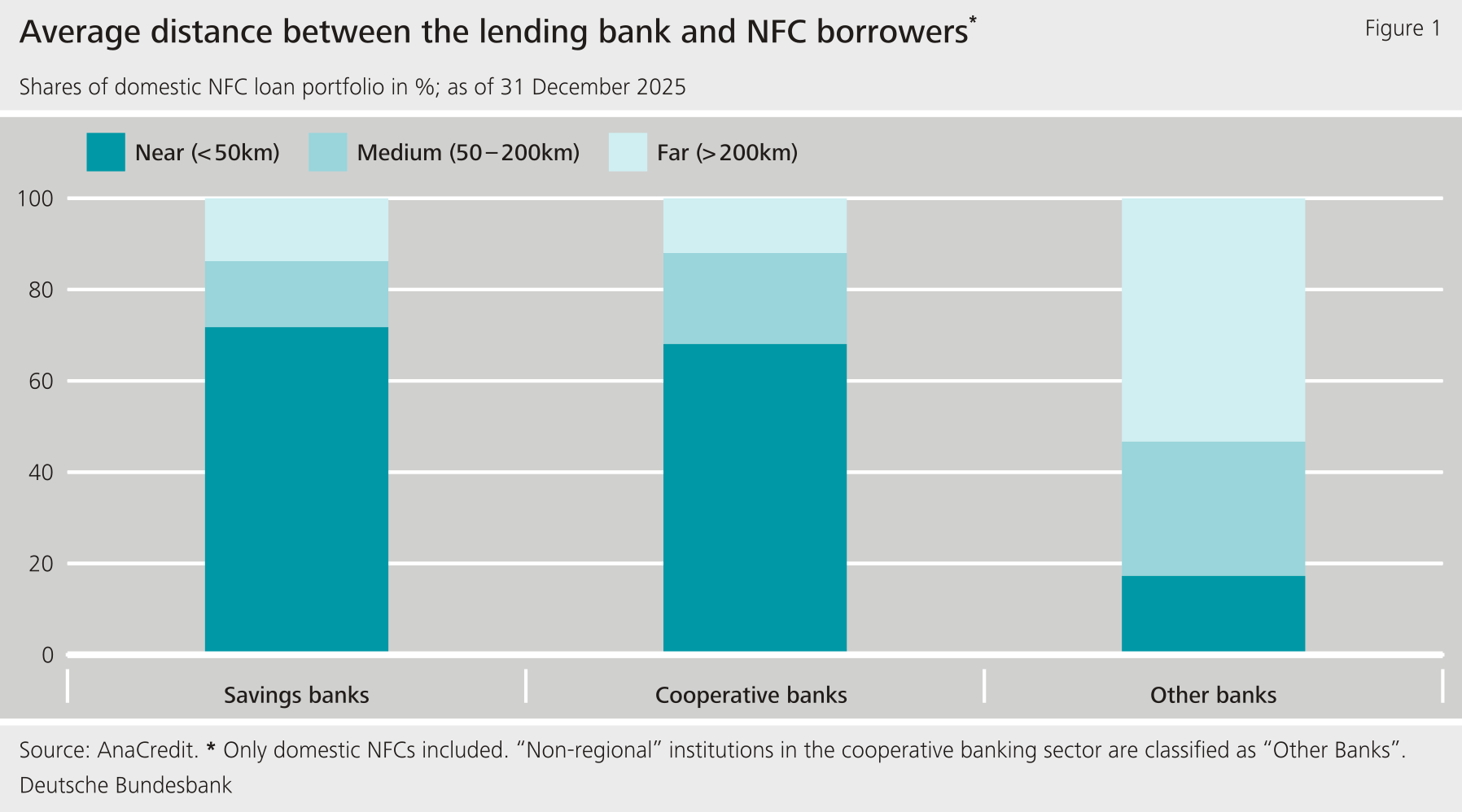
On average, distances between corporate customers and institutions are significantly shorter for types of banks with regionally based business models, especially savings banks and cooperative banks, than for institutions that operate across regions. Savings banks and cooperative banks have a significant market share in the German banking market and are traditionally anchored in their home regions. This regional principle is a key component of corporate financing in Germany. In the case of savings banks, the regional principle is based on public law and is linked to the owner’s region. For cooperative banks, the regional principle is more flexible. It stems mainly from the institution’s funding mandate, membership structure and links to the region that have developed over time. It is therefore hardly surprising that the majority of the credit relationships of savings banks and cooperative banks are based “nearby”, i.e. at a distance of less than 50 km (see Figure 1). By contrast, as expected, more than 80 % of the credit relationships of other banks are in the medium range (50‑200 km) or the long range (> 200 km). When evaluating the results it should be noted that, in contrast to the usual definition of the cooperative sector, which also includes some banks with specialised and supraregional business models (such as social and church banks), these supraregional cooperative banks were assigned to the category “other banks”.
Since the end of 2019, cooperative banks with a regional business model have, on average, expanded the geographical range of their lending to NFCs. The average distance between banks and their corporate customers has increased over time (see Figure 2). This increase cannot be explained by mergers. Although mergers between institutions can expand business areas, even factoring mergers out of the analysis, there is still a discernible trend towards regional business expansion at cooperative banks. Savings banks do not seem to show similar developments, however.
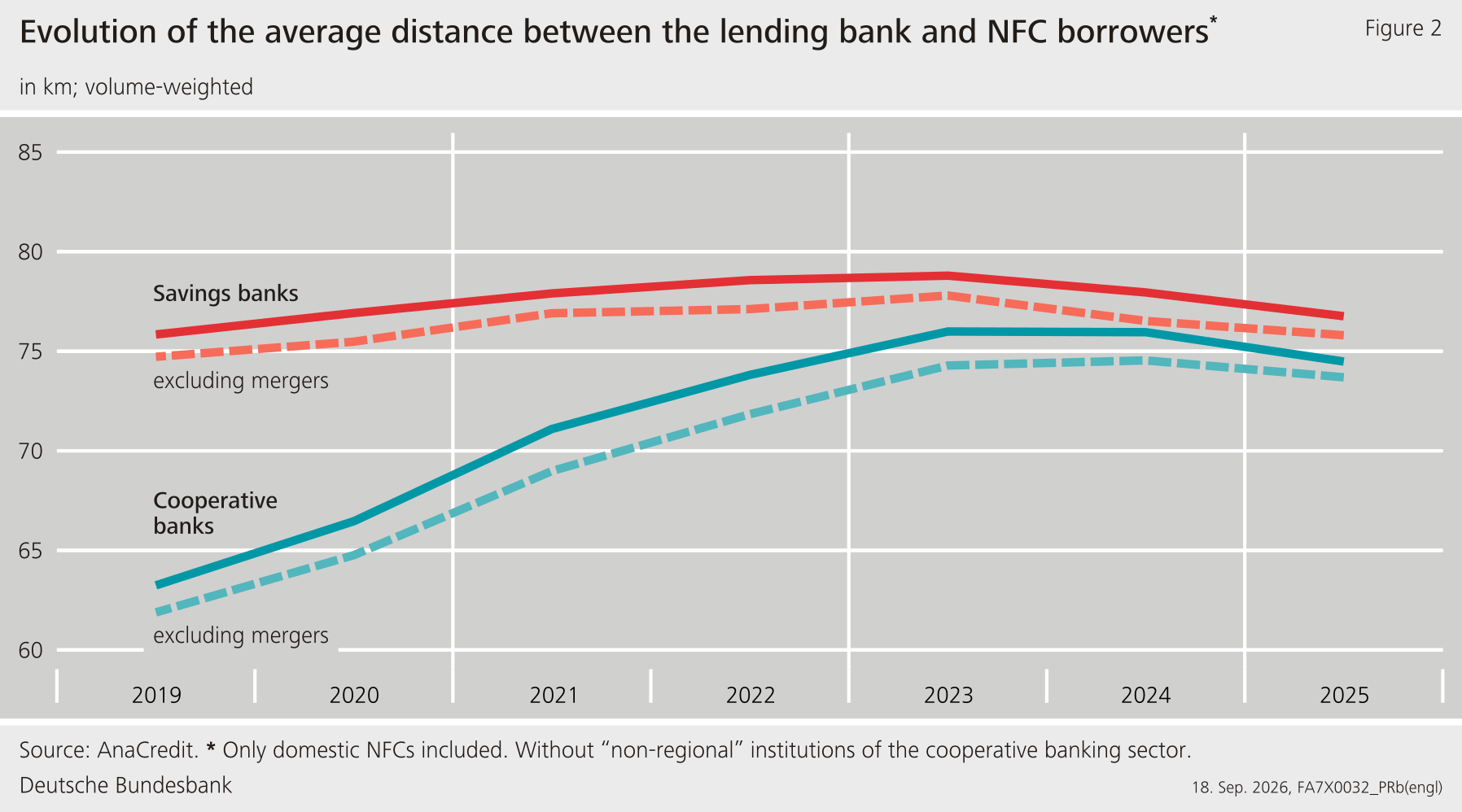
The strongest increases took place during the period of low interest rates and point to a search for yield beyond regional borders. In that kind of interest rate environment, banks' profits come under pressure. If margins in the traditional business area decline, loan demand falls and/or traditional credit substitution business becomes no more than a minor income source, this creates the incentive to expand loan portfolios across regions. Developments in loan portfolios between the end of 2019 and the end of 2025 support this assumption. For example, loans to domestic NFCs have risen much more significantly at cooperative banks than at savings banks. While savings banks recorded growth of around 30 %, the increase stood at roughly 60 % for cooperative banks with regional business models.
From a risk assessment perspective, expanding business areas can have both advantages and disadvantages. Without adequate risk management, rapid expansion outside of the business area and outside of familiar markets can entail risks. At the same time, regional expansion can make sense in terms of diversification, especially if the original business area is subject to structural economic vulnerabilities. The crucial factor is therefore whether the relevant knowledge about the new regional markets exists or can be built up in the risk management process.
From a regional perspective, too, there are indications of a slight change in competitive dynamics. At the level of the 400 German urban and rural districts, the average number of banks per district engaging in lending to NFCs rose moderately between the end of 2019 and the end of 2025. At the end of 2019, an average of 132 banks per district were active, compared with 138 at the end of 2025. This increase is particularly noteworthy because the total number of banks domiciled in Germany that fund domestic NFCs according to AnaCredit data fell from 1,442 institutions at the end of 2019 to 1,174 institutions at the end of 2025.
This means that there are fewer banks active in the market overall, while at the same time, a greater number of different banks are acting as lenders in many regions. Around 70 % of the districts recorded an increase in active banks, while 30 % recorded a decrease. This suggests that regional overlaps in competition have increased. In line with this, the average number of districts per bank – in other words, the number of districts in which a bank lends to NFCs – has also risen. This increase is stronger for cooperative banks than for savings banks. The boundaries of regional markets have therefore not disappeared, but they have become more blurred.
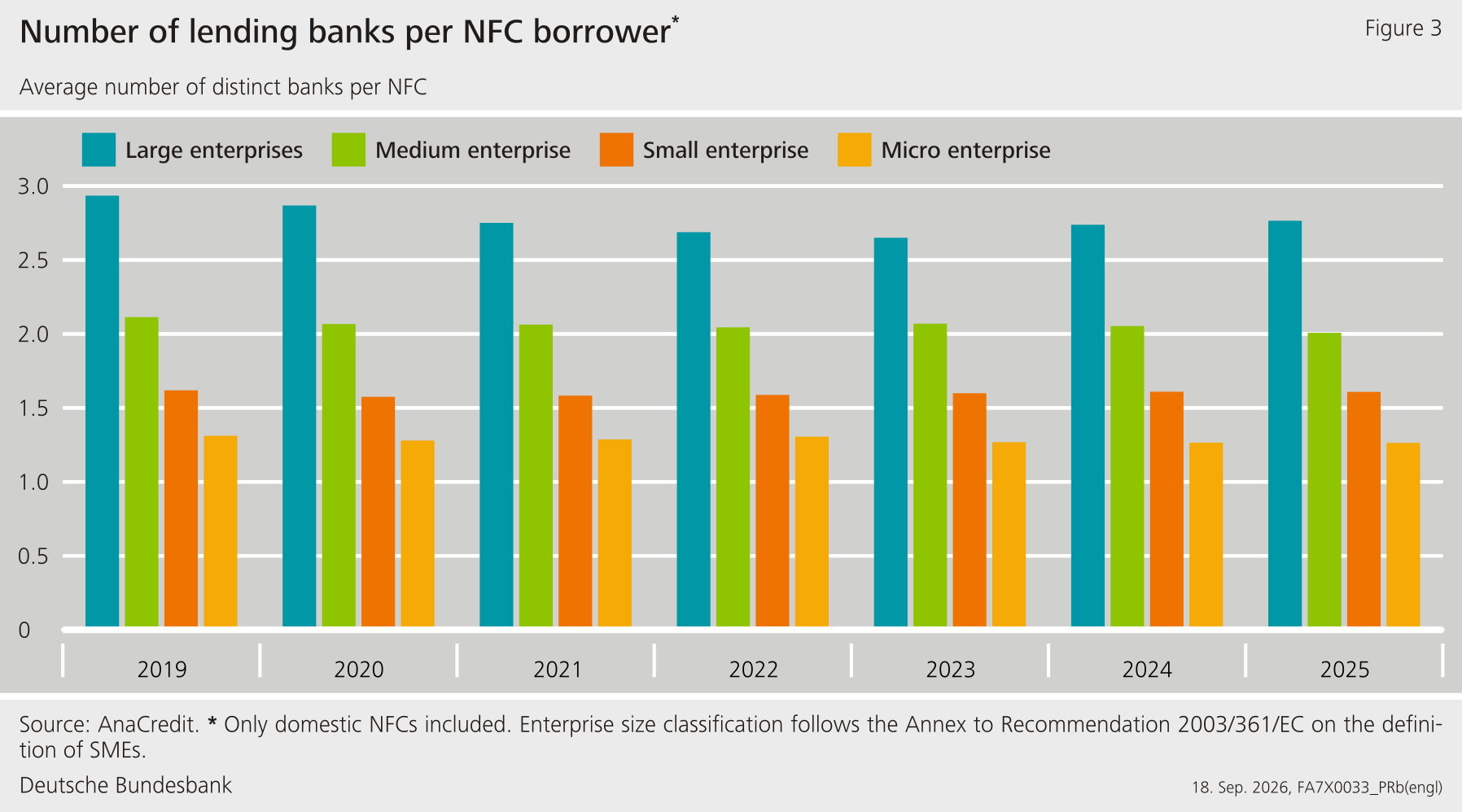
With regard to intensity of competition, there is no reliable evidence that enterprises are switching banks more frequently or have more parallel banking relationships. The average number of different banks providing funding per domestic NFC remained broadly stable between 2019 and 2025 (see Figure 3). Across all sizes of enterprise, it is constant at around 1.5 banks per enterprise. As expected, larger enterprises have more banking relationships on average than smaller ones; however, no significant change over time can be seen. The frequency with which NFCs switched lenders did not increase during the period under review, either.
To sum up, regional competition for corporate customers is changing and has probably become more intense in recent years. Cooperative institutions, in particular, have expanded their lending geographically; at the same time, the number of banks that are funding NFCs has increased in many districts. Regional business models are not disappearing as a result of this, but they are becoming less clear-cut. The overlap between business areas is increasing, meaning that competitive pressure for corporate customers is becoming more intense.
At the level of the enterprises themselves, however, there is no evidence of a fundamental change in financing structures. Enterprises do not have more banking relationships on average than before, nor are they switching lenders more frequently. This suggests that existing relationships with a principal bank remain stable. So far, then, growing competition has led not so much to more frequent changes of bank, but more to the greater presence of additional providers in regional markets.