
Bundesbank survey shows regulation is only of secondary importance for current lending and competition in German banking sector
Bundesbank survey shows regulation is only of secondary importance for current lending and competition in German banking sector
Is regulation an impediment to competition and lending in the banking sector? This has recently become a hot topic again, not least due to international debates on a possible easing of regulatory capital requirements. At its core is a balancing act that banks, supervisors and the real economy are all wrestling with: How can fair competitive conditions be safeguarded, credit supply improved and financial stability maintained all at the same time?
To give context to these questions, the Bundesbank conducted a survey of 15 predominantly significant institutions in the first quarter of 2026, asking about current competitive pressure – especially in lending business – and about the possible impact of the introduction of CRR III. Measured in terms of risk-weighted assets, the sample covers around 35 % of the German banking market and around 46 % of total assets. The results provide an indication of how larger market participants, in particular, currently see the competitive situation.
In Germany, savings banks, cooperative banks, private commercial banks and institutions domiciled in foreign countries compete for customers in different business areas with corresponding products. Lending business is particularly important for most institutions. Here, competitive pressure is generally described as very intense, and net interest income is the main source of income (see Chart 1). This applies in particular to institutions domiciled in Germany and in other EU countries. For the former, net interest income accounts for around 65 % of operating income; for the latter, the corresponding share is around 75 %. While these institutions compete particularly strongly for traditional lending to enterprises and households, institutions domiciled outside the EU, such as banks domiciled in the United States, are more active in capital market-related or commission-based business areas.
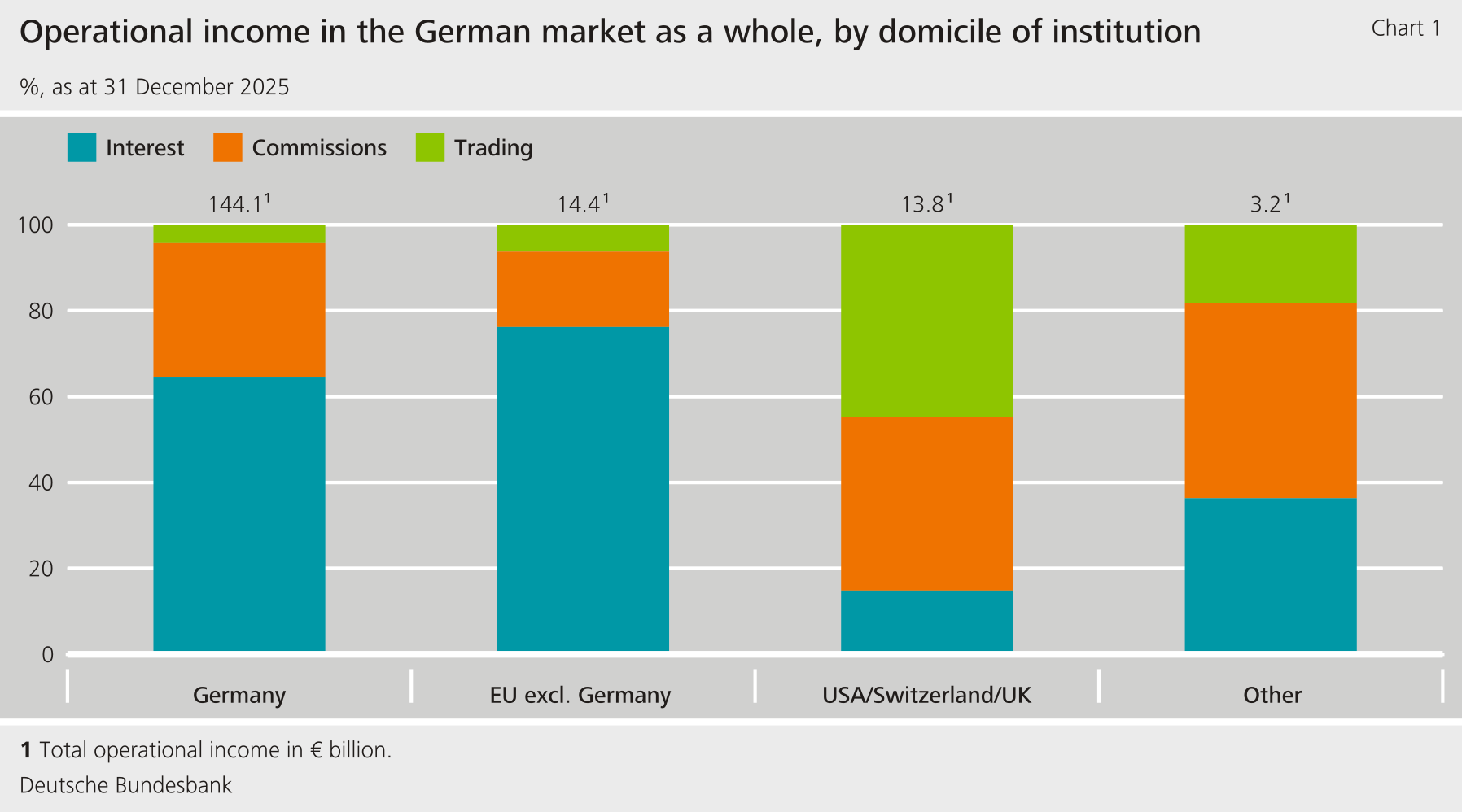
Differences in profitability structures are relevant when assessing competition. Institutions with different business models do not compete with one another with the same intensity in all segments. Competition in the banking sector is therefore not homogeneous. It differs – unsurprisingly – depending on the product, customer group, risk profile and business model. Large parts of the German banking sector therefore do not compete head-to-head with institutions outside the EU. This is likely to apply, amongst others, to most savings banks and cooperative banks – these, however, are not represented in the survey.
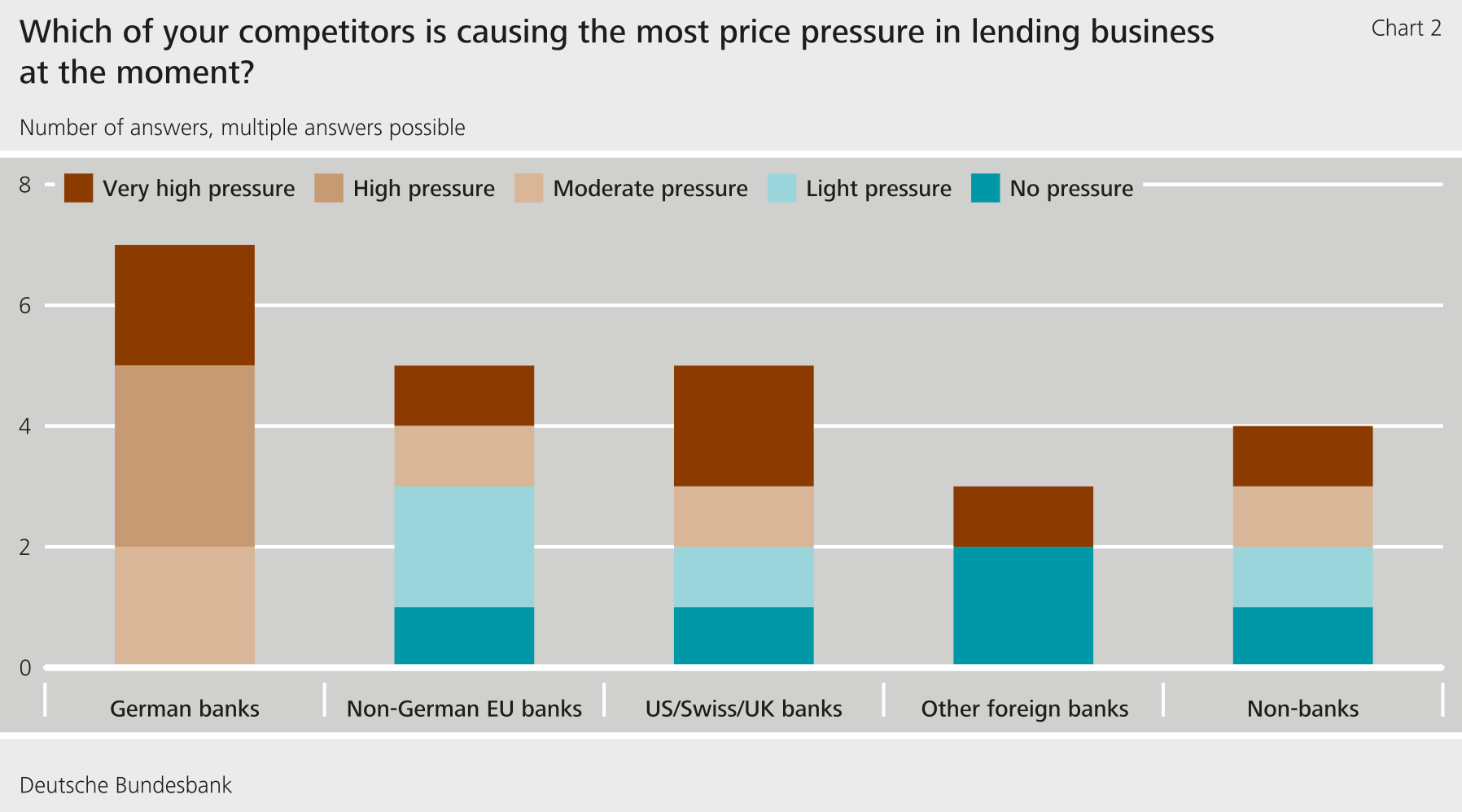
The survey confirms this picture. Many institutions report marked price pressures in lending business. According to the surveyed institutions, this is primarily attributable to other institutions domiciled in Germany (see Chart 2). Institutions domiciled in the EU as well those domiciled in the United States, the United Kingdom or Switzerland are also perceived as competitors, even if they are significantly less relevant.
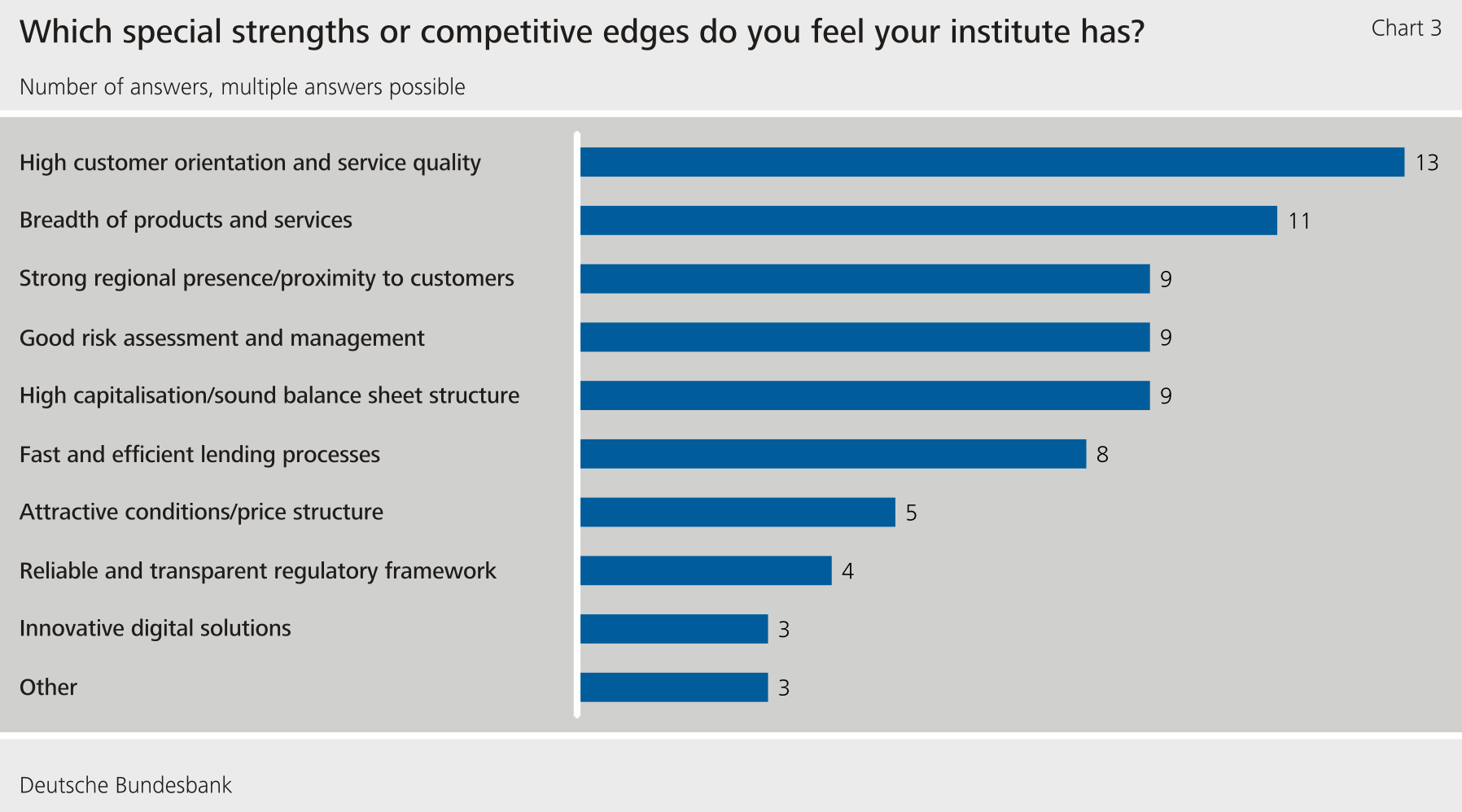
Competition is an important driver of an efficient banking system. It forces institutions to review cost structures, modernise processes, further develop digital offerings and offer customers tailor-made solutions. For example, the majority of participating institutions state their high customer orientation as a competitive edge, followed by their wide range of products, high capitalisation, good risk management and customer proximity (see Chart 3). Other reasons cited include industry-specific expertise through specialisation as well as sector-specific and structuring expertise.
For firms and households, intense competition can mean more favourable terms and conditions, more choice and better services. For the institutions, however, intense competition means that business models are consistently tested and must be constantly under development. Institutions that operate inefficiently over the long term, are slow to decide on loan applications or do not manage risks appropriately come under pressure.
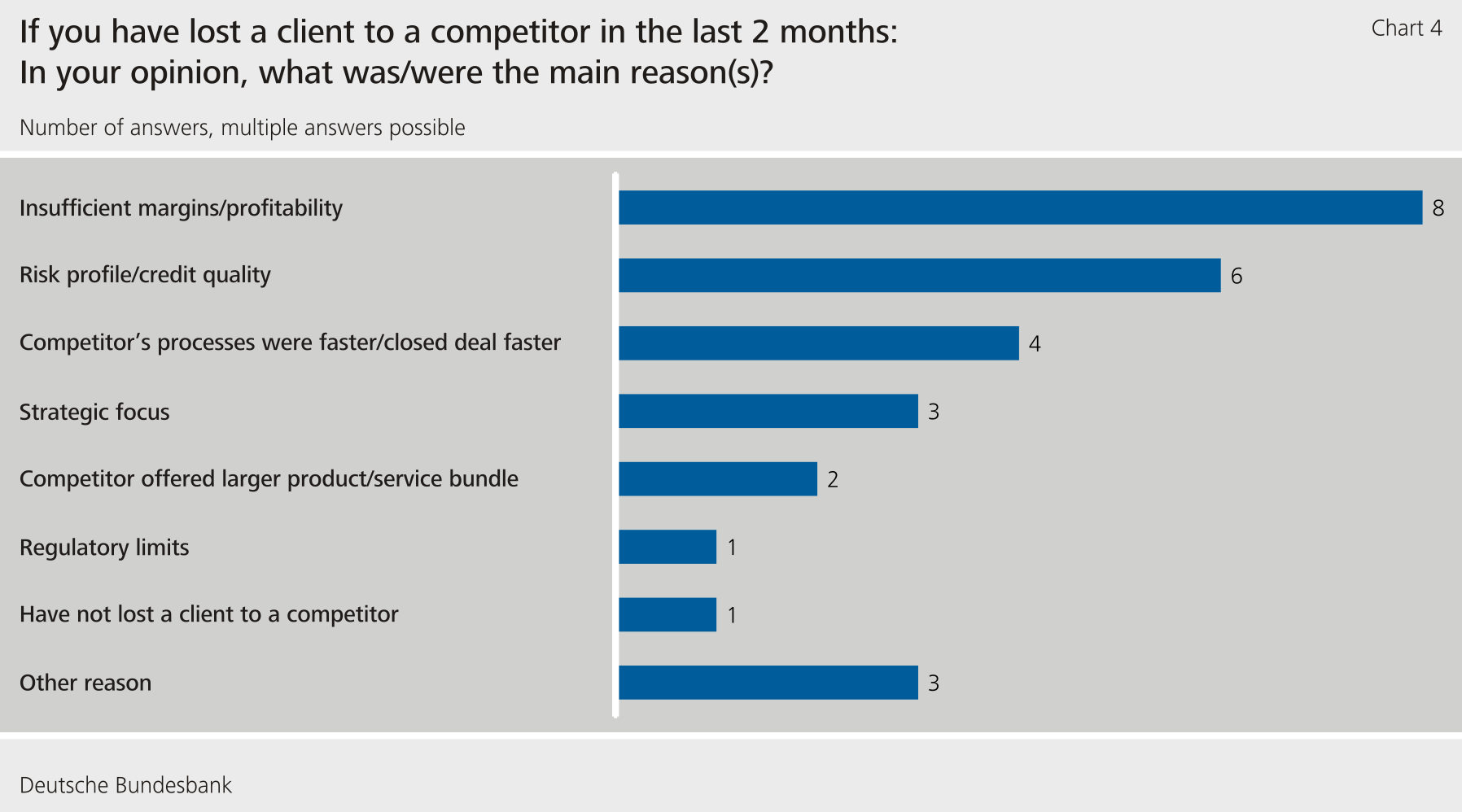
Loans lost to competitors are often not attributable to a lack of regulatory capital (see Chart 4). Instead, the causes cited include insufficient margins, credit quality on the part of loan applicants that is not consistent with the bank’s risk strategy, or faster credit processes on the part of competitors. It stands to reason that efficiency, risk appetite and customer proximity are key factors driving competitiveness in lending business.
Our survey also provides evidence that capital is not currently the bottleneck in lending. Participating institutions all held capital above – in some cases significantly above – the supervisory requirements. By their own account, this excess capital is primarily used for internal risk tolerance, to hedge against potential losses and to meet the expectations of markets, external credit assessment institutions and investors (see Chart 5).
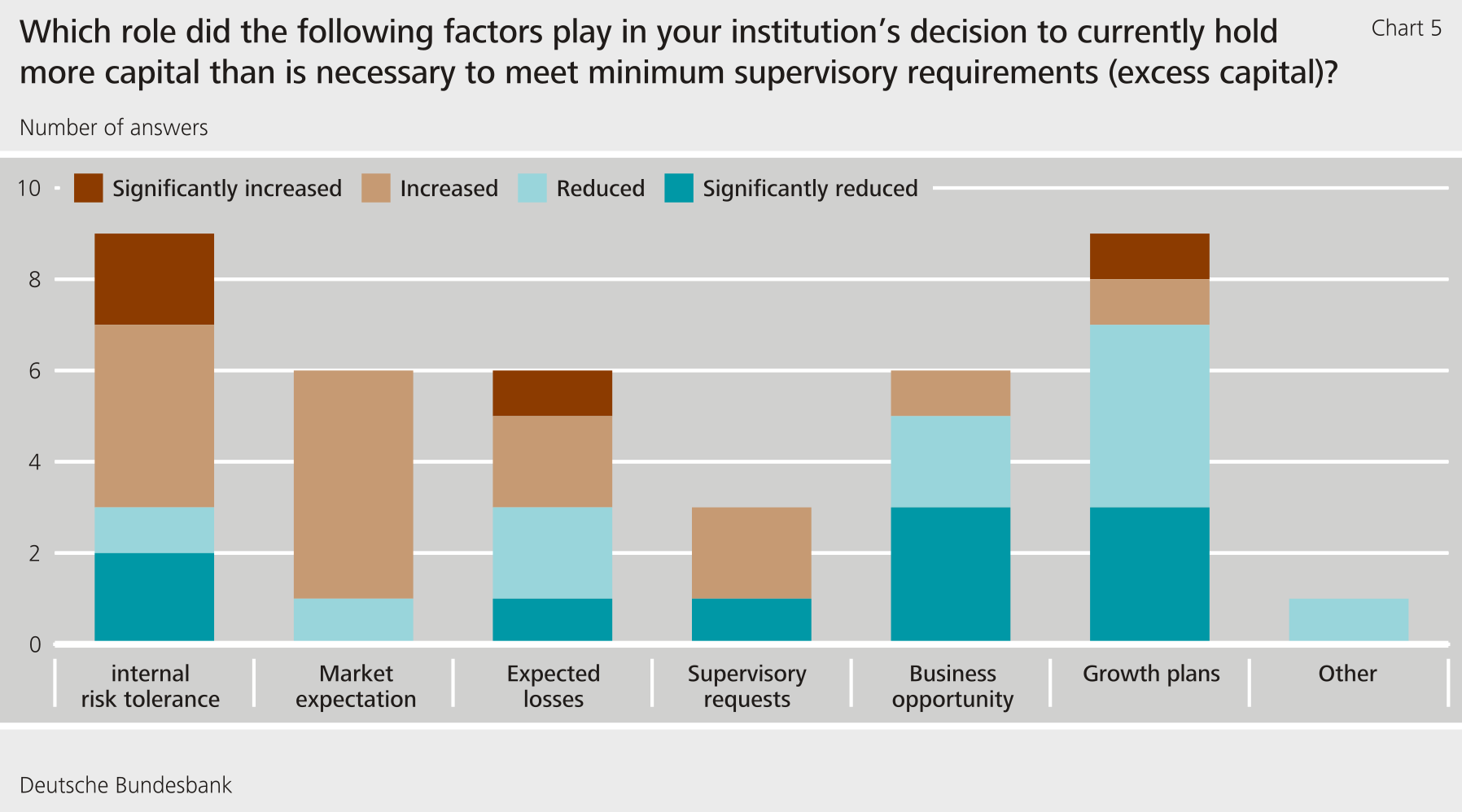
In this way, the results put into perspective the hypothesis frequently trotted out in the public debate that a lack of capital is the main reason why loans are not approved or clients are lost. A reduction in capital requirements will therefore not necessarily lead to more lending. On the contrary, lower capital requirements could weaken the resilience of the banking system.
Competitiveness arises from fair competition on a level playing field, not from the reduction of central stability standards. Institutions become more competitive if they are innovative, adapt to changing customer needs, become more efficient, manage risks appropriately and thus (further) develop sustainable business models. Regulation sets the guidelines for this and creates trust in the financial system and its actors.
And yet – the current regulatory structure has become very complex. Not all rules are fully comprehensible and proportionate, especially in combination. This is the starting point for our current work: excessively complex rulebooks, documentation requirements or procedures can place unnecessary strain on institutions. Simplifying regulations makes sense provided that this does not impair the resilience of institutions and the stability of the financial system.