
Resilience rather than deregulation: Why sound regulation ensures growth
In the current debate on simplifying banking regulation, many are calling for lower capital requirements to strengthen the competitiveness of German banks. The implicit argument is that regulation ties up capital, makes lending more expensive and curbs growth. We see it the other way around. Regulation does not hamper growth. Rather, a fragile banking system jeopardises growth just when the real economy needs reliable financing the most. A banking system that amplifies the next shock is the real threat to the economy and society. Capital requirements are therefore not an end in themselves, but enable banks to shoulder losses without immediately restricting their lending. Capital thus strengthens confidence, stabilises funding and increases banks’ ability to keep operating, even when market conditions are tight. Weakly capitalised banks are not a sign of strong competitiveness, but rather an expression of lower resilience.
The financial crisis of 2008‑09 remains a stark reminder that underscores the fundamental economic logic behind appropriate capital requirements. In an emergency, poorly capitalised banks can cause high follow-up costs for government, enterprises and households. Back then, bank bailouts in the double-digit billions in Germany weighed heavily on public finances. This does not include indirect costs such as credit shortages, lower GDP growth, unemployment, pension cuts or the costs of short-time working benefits.[1]
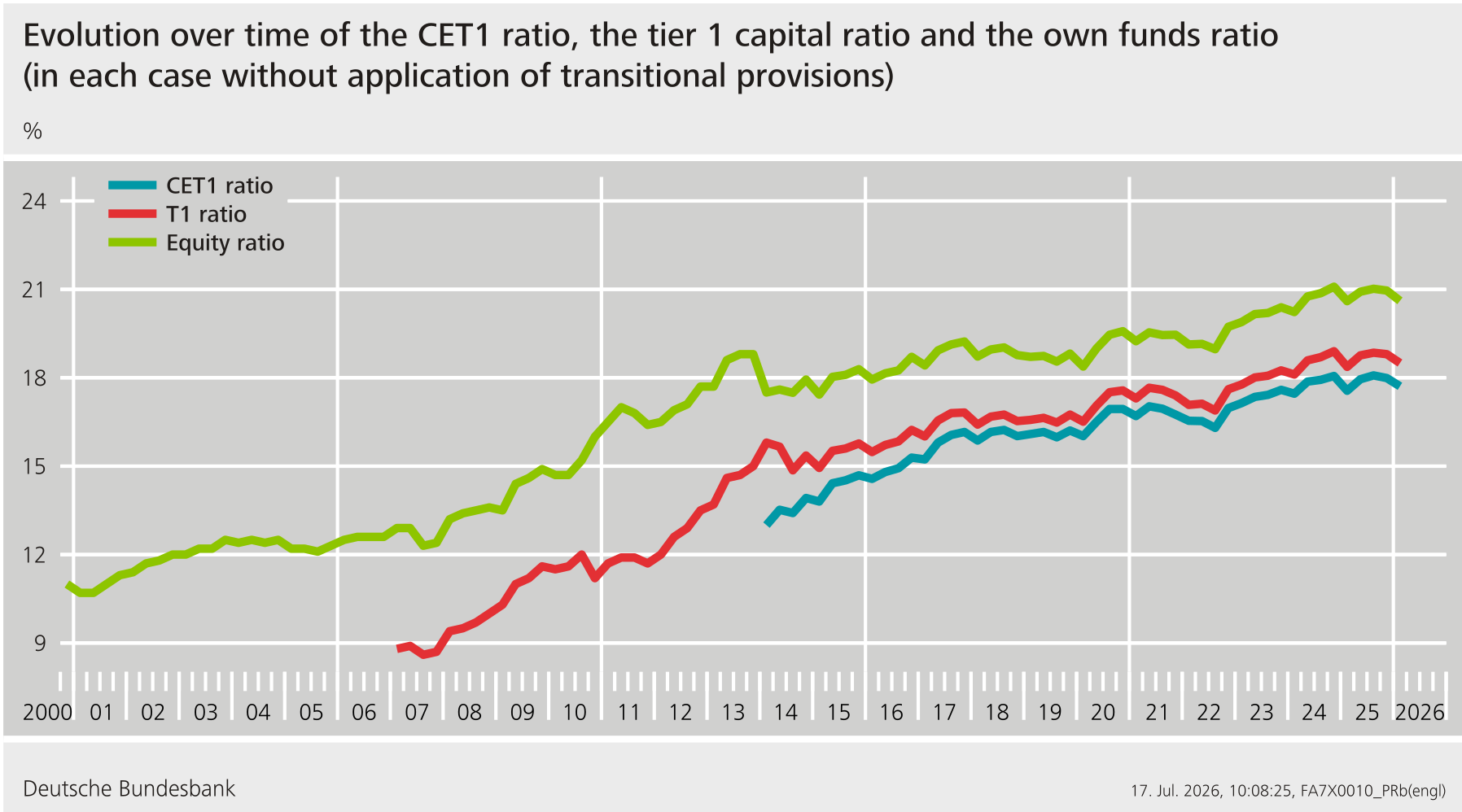
This is why resilience in the German banking sector has been consistently strengthened in the years since the financial crisis. The introduction of the Solvency Regulation (Solvabilitätsverordnung) made capital requirements more risk-sensitive and imposed stricter requirements on the quality of regulatory capital, also known as tier one capital. Figure 1 shows that, following the introduction of the Solvency Regulation, both the tier 1 capital ratio and the equity ratio of German institutions rose significantly. With the introduction of the CRR in 2014, the eligibility criteria for tier one capital were tightened and common equity tier one capital (CET1), a new central component of regulatory capital, was introduced. While the gap between tier 1 capital and the equity ratio still stood at 4.1 pp in 2014, it has virtually halved at the current end. A similar development can also be observed for the CET1 ratio. Compared with 2008, institutions therefore first have more capital and, second, have more capital of higher value, which can be used directly to absorb losses and, unlike tier two capital, is available for an unlimited period of time.
However, when assessing capital ratios, it must be borne in mind that greater use of internal models to calculate RWAs has also contributed to the rise in capital ratios. Large banks, in particular, have increasingly switched to internal models. Supervisors favour the use of internal models, as they enable more accurate risk measurement and thus better risk management. However, these models typically also generate significantly fewer RWAs than the conservatively calibrated standardised approaches. In addition to the build-up of capital, this factor has thus contributed to the growth in the equity ratio, as Figure 2 shows. In the period in which the Solvency Regulation applied between 2008[2] and 2013 (grey square), both capital accumulation (green bars above the zero line) and RWA reduction (purple bars above the zero line) took place in the German banking market overall.
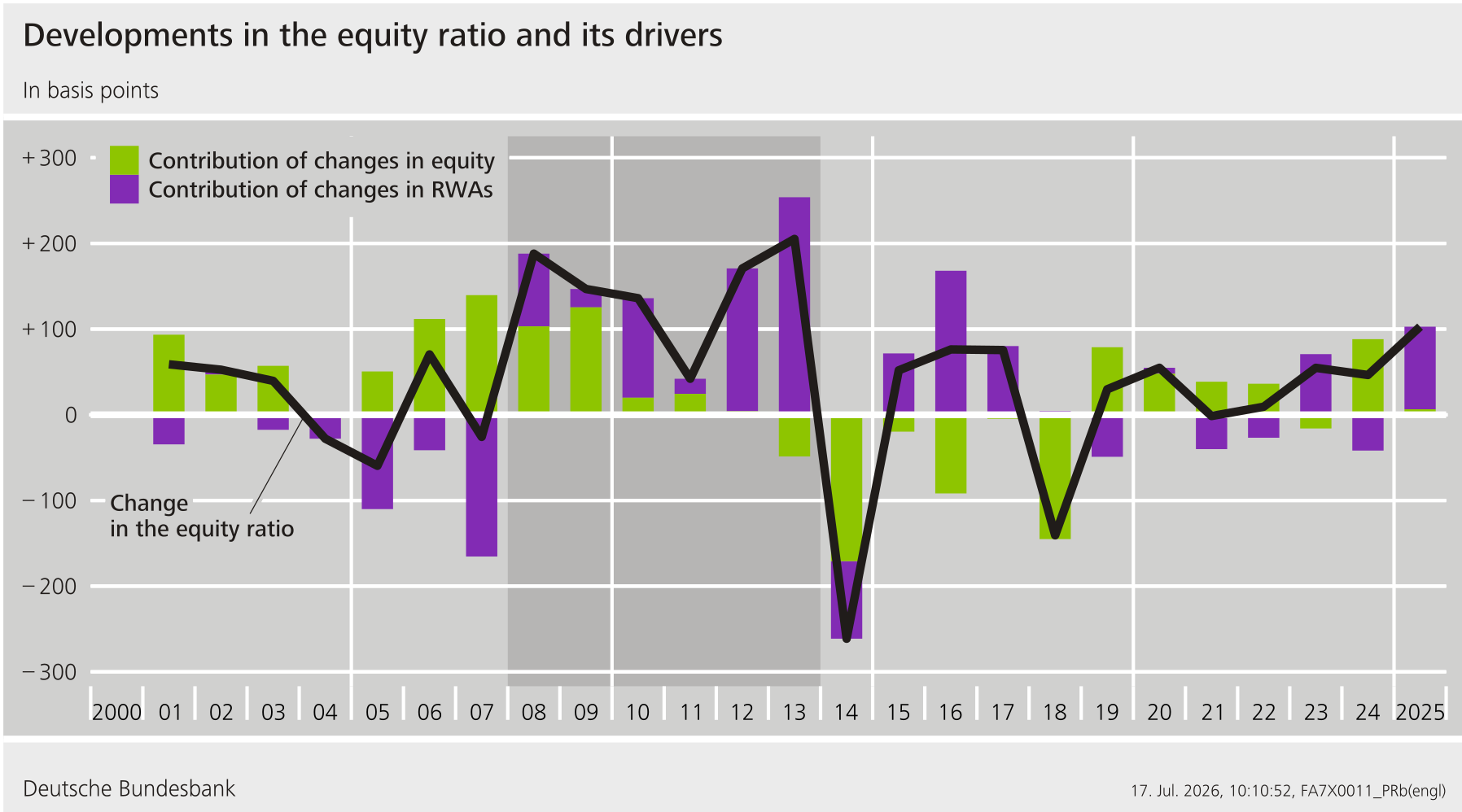
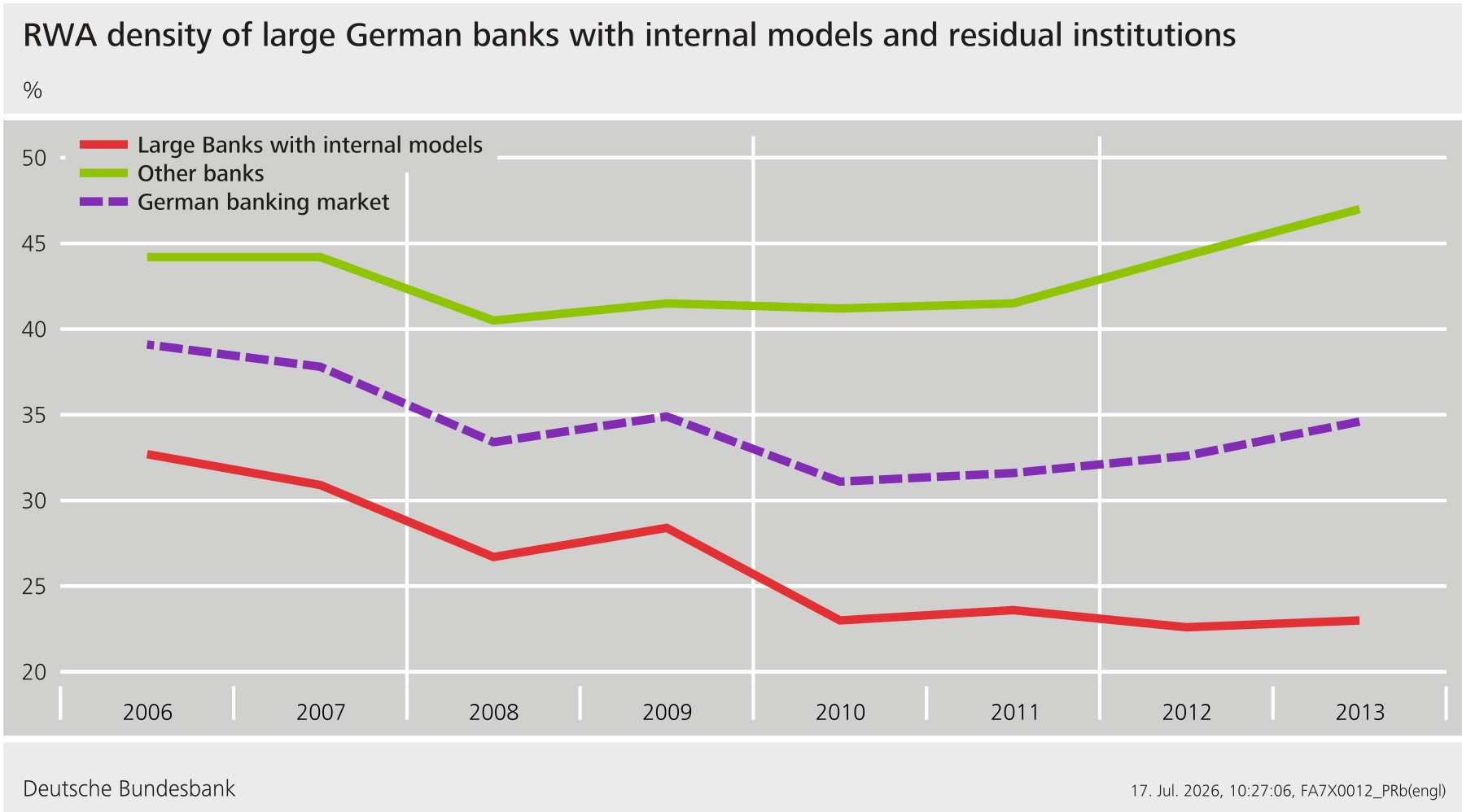
Figure 3 Shows that the RWA density (RWAs/total assets) of banks using internal models declined after the introduction of the Solvency Regulation. By contrast, the RWA density of the remaining institutions even increased slightly by the time the Solvency Regulation ceased to apply. Despite the benefits – including those desired by supervisors – arising from the use of internal models, their application must not lead to an unreasonable reduction in RWAs from a risk assessment perspective.
The introduction of the output floor is therefore intended to limit the excessive optimisation of RWAs. The RWA savings resulting from the use of internal models were capped at 27.5 %. This output floor, at the heart of the final Basel III reform package of 2017, was also applied to the German banking market when CRR III was introduced in 2025 and will be fully implemented by 2030. It acts as a lower bound that ensures that banks cannot excessively understate their risks.
All these reforms have proved their worth. In recent years, in particular, it has become clear that banking regulation and capital accumulation have contributed to greater resilience in the financial sector: The effects of the coronavirus pandemic, Russia’s war against Ukraine and the Iran war, as well as the failures of Silicon Valley Bank, Signature Bank and Credit Suisse, have not at any time seriously affected the German banking system.
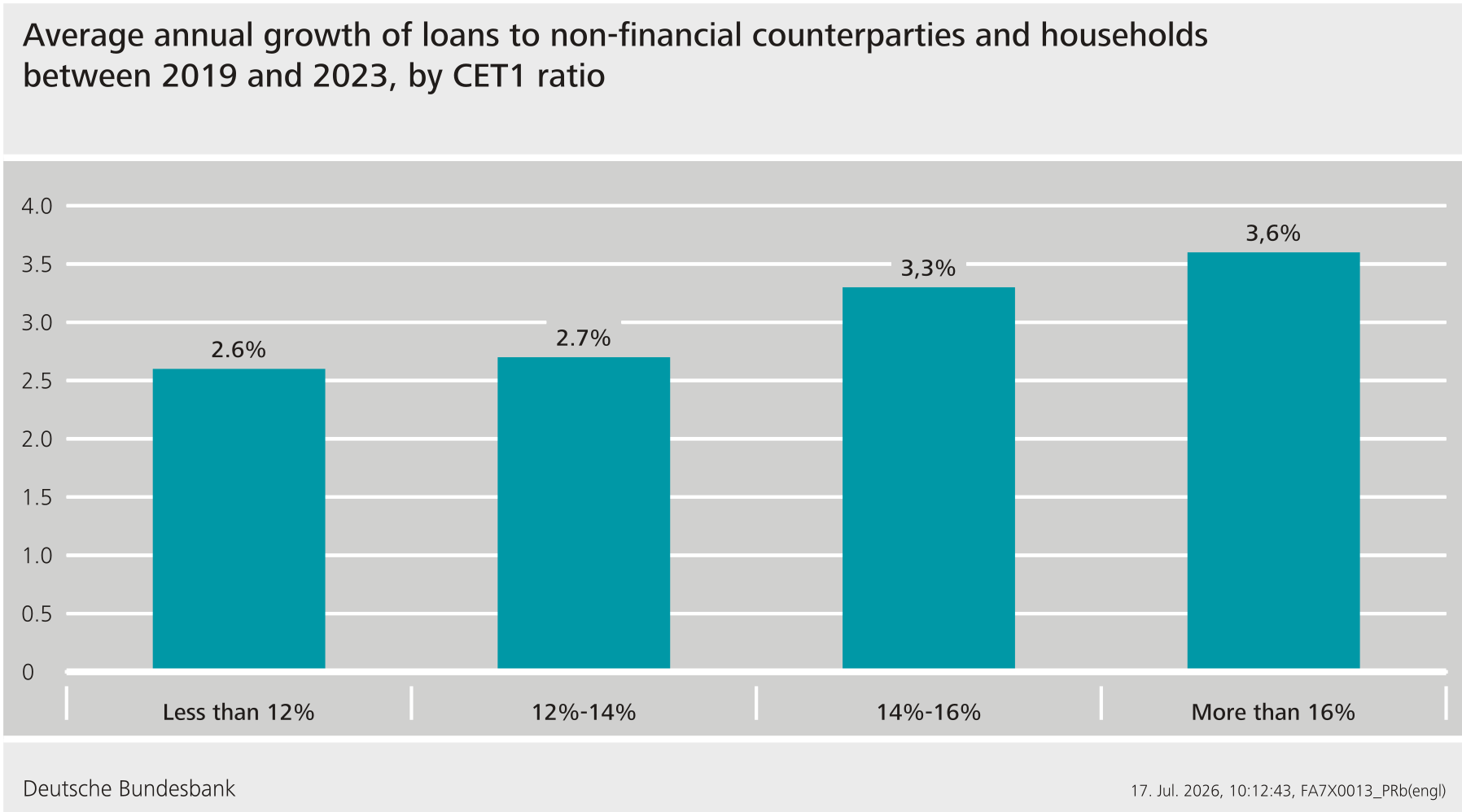
Moreover, there is no evidence that higher capital requirements could hamper German banks’ lending to enterprises and households. The key to the current debate is whether higher capital requirements for banks actually negatively impact their business activities. Figure 4 shows that loans to non-financial counterparties and households at institutions with higher CET1 ratios prior to the onset of the COVID-pandemic and the subsequent crises (Q4 2019) rose more sharply than at institutions with lower levels of capitalisation. Capital does not seem to be a barrier to lending, but an important foundation. A soundly capitalised institution has more scope for decision-making and can bear risks, create trust and provide loans even in economically challenging times.
Financial crises are not just historical events; they have real consequences for the general public. This underlines the importance of the reforms to impose higher capital requirements implemented to date, which are aimed at ensuring that future financial difficulties can be overcome without recourse to public funds. The crucial question is therefore not whether and to what extent capital requirements can be lowered, but how regulation can be made simpler, more consistent and, at the same time, conducive to stability. This is a path to which we are firmly committed, without changing the essence of the requirements. The reforms implemented since the crisis have strengthened the resilience of the banking system without affecting lending. Sound banks and appropriate capital requirements are therefore not a growth brake, but rather an insurance policy against the next crisis.
Footnotes:
- In the wake of the financial crisis, the number of employees on short-time work rose by around 1 million from 2008 to 2009. Source: statistik.arbeitsagentur.de
- For 2007, institutions still had the option of applying Principle I. The implementation of the Solvency Regulation was only mandatory from the start of 2008.