
Acquisition of financial assets and external financing in Germany in the third quarter of 2025 Results of the financial accounts by sector
Significant valuation gains in households’ financial portfolio
Real return for less wealthy households remains negative
External financing of non-financial corporations rising again
Continued sharp rise in households’ financial assets
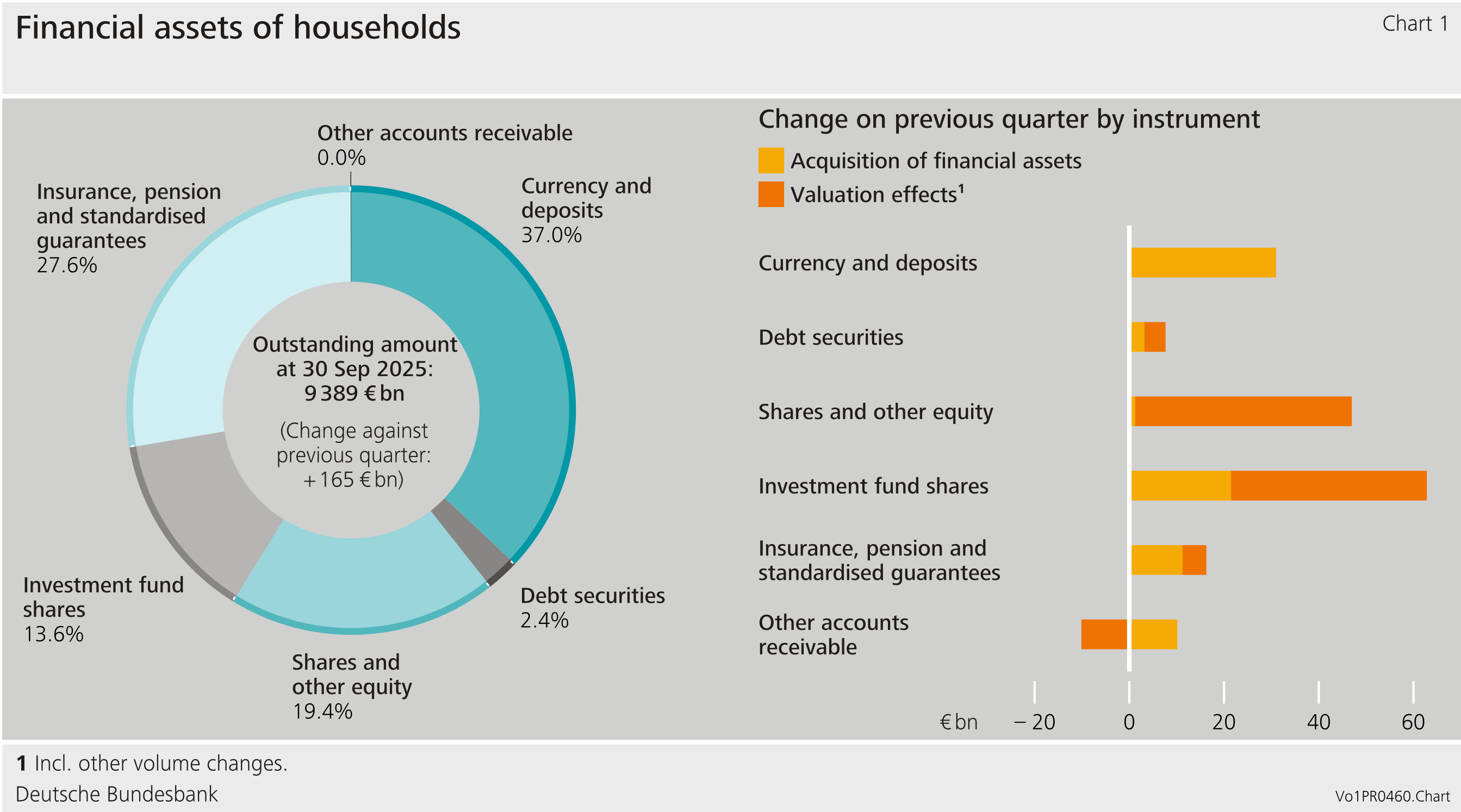
Households’ financial assets increased significantly in the third quarter of 2025, amounting to €9,389 billion as at the end of the quarter. Even in price-adjusted terms, financial assets reached a new record high after the decline in net financial assets had been recouped.
Nominal net financial assets rose by €165 billion compared with the previous quarter. This increase was due to two key factors. First, households built up new claims totalling €78 billion. Second, they benefited from valuation gains of €86 billion, which were mainly a result of the robust performance of global equity markets, especially in the United States and Asia.
While time deposits essentially stagnated, households built up both cash (+ €11 billion) and sight deposits (+ €23 billion). It would appear that households are currently placing great weight on flexibility and short-notice availability of their funds.
The increase in claims on shares and other equity amounted to €47 billion, of which more than half was attributable to foreign listed shares. Listed shares from domestic issuers were almost unchanged on balance compared with the previous quarter. Almost all of the growth (€46 billion) was attributable to valuation gains. Despite trade tensions and geopolitical uncertainties, US shares reached record highs, whilst European shares also rose. At €41 billion, valuation gains on investment fund shares were significantly above their level of the last five years. Together with net purchases totalling €22 billion, the growth in claims on investment fund shares thus amounted to a strong €63 billion. The persistent demand for investment fund shares shows that investors are continuing to favour diversified and high-yield forms of investment.
Debt securities saw somewhat more movement than in the previous quarter. They were purchased in the amount of €3 billion in net terms. In addition, they accounted for valuation gains of €4 billion. Insurance and pension claims were acquired on much the same scale as in the previous period (€11 billion, compared with €13 billion in the second quarter). Households recorded smaller valuation gains of €5 billion on these.[1]
Real return on financial assets rises overall
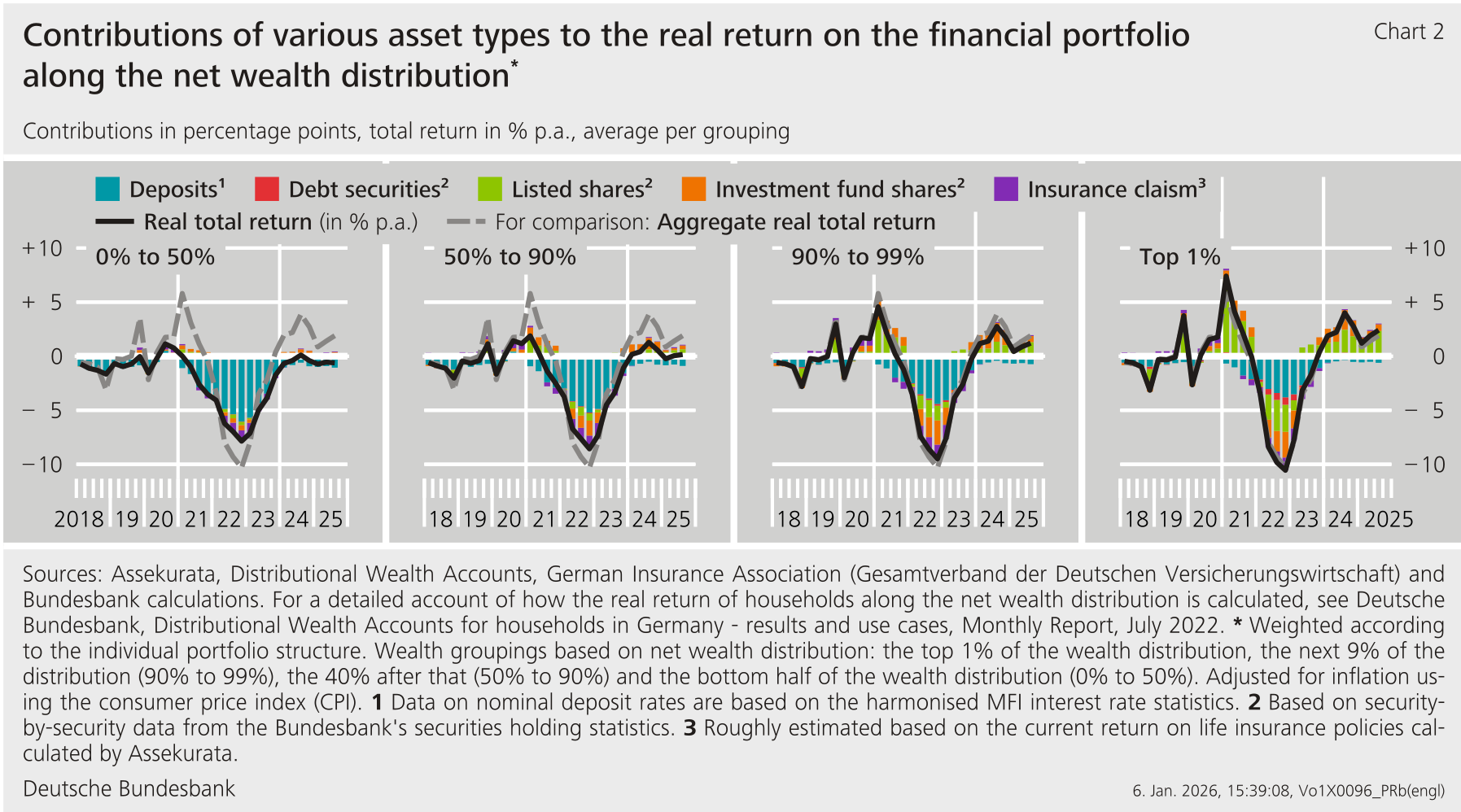
The real total return, i.e. the return adjusted for inflation, on financial assets represents the actual return on financial assets for households. With the Distributional Wealth Accounts (DWA), the Bundesbank provides additional data on the distribution of household wealth.[2] Considering the individual structures of financial assets, Chart 2 shows the real total return on financial assets along the net wealth distribution.
An analysis of wealth groups shows that the average possible real return for households in the wealthier half of the distribution rose slightly overall in the third quarter.[3] By contrast, the less wealthy half of households posted a negative return. These households hold their financial assets almost exclusively in the form of deposits and insurance claims, which are low-risk but tend to yield lower returns. The wealthiest 10 % of households, however, benefited from positive contributions from capital market investments, which played a significant role in increasing the real total return on their financial portfolios. Looking at all households together, the aggregate real total return increased to around 1.9 % in the third quarter of 2025, which is attributable mainly to shares and investment fund shares. A negative real return on deposits once again had a dampening effect.
Borrowing rises again, debt ratio remains stable
Households’ liabilities grew to a total of €2,167 billion in the third quarter of 2025. This was driven by increased borrowing, which totalled €16 billion. A higher figure was last recorded in the third quarter of 2022.
Owing to the slight increase in nominal gross domestic product, the debt ratio remained unchanged at 49.0 %.[4]
Overall, net financial assets rose by €148 billion to €7,221 billion.
Increase in external financing among non-financial corporations
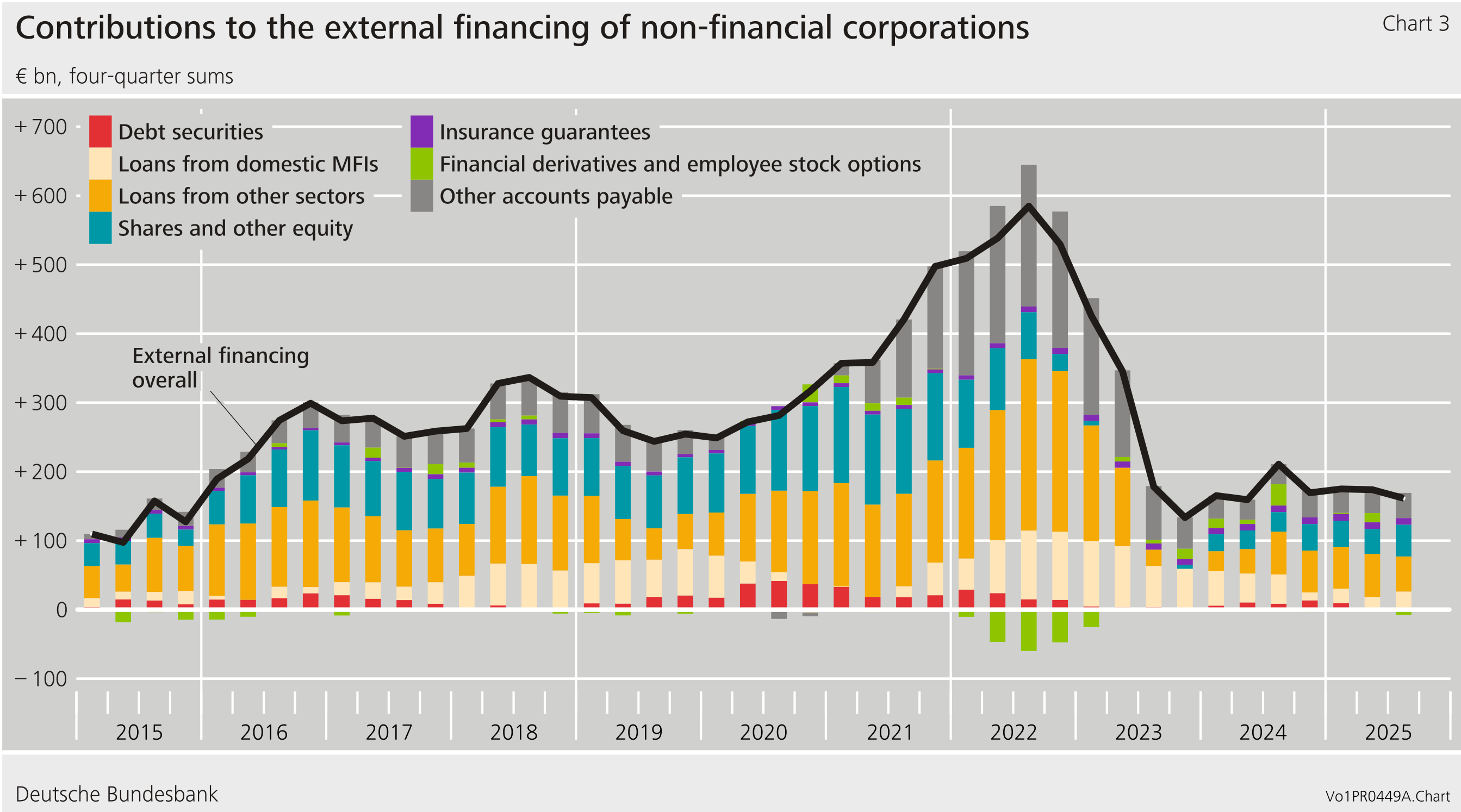
Non-financial corporations’ external financing grew by €8 billion to €47 billion in the third quarter of 2025, following weak growth in the preceding quarter. This increased use of external financing sources was linked to somewhat higher investment amongst enterprises.
Loan-based external financing increased from €17 billion in the previous quarter to €28 billion. A key driver of this was the increased borrowing from domestic monetary financial institutions (€9 billion in the third quarter compared with €1 billion in the second quarter) despite the more restrictive credit standards overall (see below). Borrowing from abroad amounted to €14 billion and experienced only minor fluctuations compared with the previous quarter and the first quarter of 2025. Overall, borrowing remained in line with developments since 2023.
Net issuance of debt securities was actually negative in the third quarter of 2025 (− €5 billion), following a zero value in the previous quarter, meaning that enterprises repaid outstanding debt instruments on balance. Conversely, net issuance of shares and other equity stood at €20 billion; this figure was last exceeded in the fourth quarter of 2021. The increased use of equity financing may be due to it being more attractive than bank loans. For instance, the results of the Bank Lending Survey (BLS) conducted in the third quarter of 2025 report a tightening of credit standards as a result of increased credit risk for loans to enterprises.
Looking at the year as a whole, based on four-quarter moving sums, external financing moved sideways and thus continued to show little momentum.
Overall, non-financial corporations’ liabilities were up by €72 billion to €12,111 billion as at the end of the quarter. In addition to external financing, this was attributable to relatively moderate valuation effects amounting to €25 billion.
The decreased dynamics of debt instruments compared with the previous quarter – coupled with the slightly higher nominal gross domestic product mentioned above – resulted in the debt ratio decreasing by 0.1 % to 68.1 %.[5] The debt ratio, which measures debt against economic output, is an important indicator of enterprises’ financial stability.
The financial assets of non-financial corporations rose by €81 billion, standing at €9,013 billion as at the end of the quarter under review. Overall, the net financial assets of non-financial corporations increased to − €3,097 billion, representing the first increase since the third quarter of 2023.
Owing to interim data revisions of the financial accounts and national accounts, the figures contained in this press release are not directly comparable with those shown in earlier press releases.
Footnotes:
The method for calculating households’ technical provisions is based on the Solvency II reporting regime, under which the discounted cash flow method is used to calculate/value these provisions: eur-lex.europa.eu. The relevant interest rate term structure for discounting technical provisions in Solvency II is determined by EIOPA on a monthly basis. At each valuation date, the provisions for all existing contracts must be valued at applicable interest rates. This form of marking to market means that, under Solvency II, technical provisions are significantly influenced by the current interest rate environment. This means valuation effects may be stronger in certain quarters.
The DWA financial portfolio comprises the following asset types: deposits, debt securities, listed shares, investment fund shares and insurance claims (life insurance and private pensions). For more information on the DWA, see also: bundesbank.de
Specifically, the net wealth distribution is divided into four wealth groupings: the top 1 % of the distribution, the next 9 % of the distribution (90 % to 99 %), the following 40 % of the distribution (50 % to 90 %), and the less wealthy half of the distribution (0 % to 50 %). Net wealth is calculated as the difference between total assets (financial portfolio plus real estate and business assets) and liabilities (loans for house purchase and other debt).
The debt ratio represents debt as a percentage of nominal gross domestic product (four-quarter moving sum).