General Search
Multiple search words are automatically linked with "AND". Text enclosed in quotation marks (") returns only the pages in which this text occurs exactly. With the search filters next to the results you have the possibility to further limit your search.
-
Invitation to bid for 10-year Federal bond to be issued by auction
155 KB, PDF
-
Announcement – Federal Treasury discount paper (Bubills)
134 KB, PDF
-
Neue Geschäftsverteilung im Vorstand der Deutschen Bundesbank
Der Vorstand der Deutschen Bundesbank hat mit sofortiger Wirkung eine Anpassung der Geschäftsverteilung beschlossen.
-
International investment position
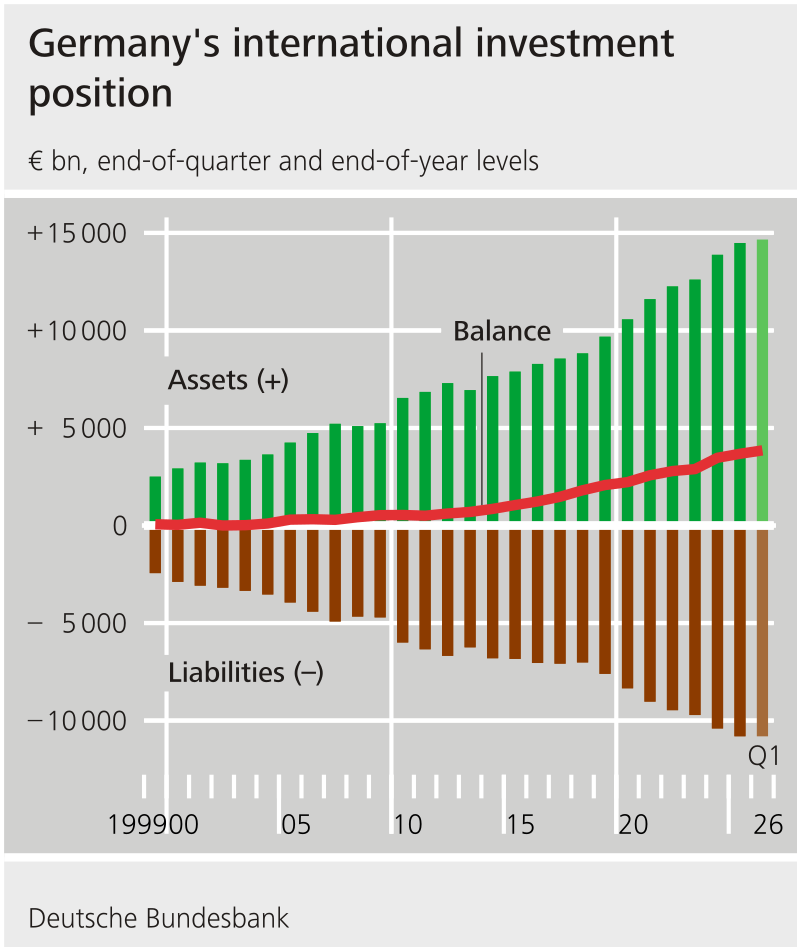
In the first quarter of 2026, the German net international investment position (i.i.p.) increased by €175 billion to €3.9 trillion; that equates to 86 % of gross domestic product (GDP). German claims on non-residents now stand at €14.7 trillion. This compares to German liabilities amounting to €10.8 trillion.
-
Auction result - Federal Treasury discount paper (Bubills)
327 KB, PDF
-
Stabilität in Zeiten des Umbruchs: 50 Jahre Einlagensicherungsfonds Feier beim Bundesverband deutscher Banken e.V.
-
Invitation to bid multi-ISIN auction – Reopening of two Green German Federal securities
183 KB, PDF
-
Invitation to bid for 3-months Bills of the European Stability Mechanism (ESM)
147 KB, PDF
-
Kathrin Schulte-Südhoff President of the Regional Office in Baden-Württemberg
Since 1 July 2026
President of the Regional Office in Baden-Württemberg -
Macroprudential surveillance by the G-FSC
The entry into force of the German Financial Stability Act (Finanzstabilitätsgesetz) at the beginning of 2013 gave macroprudential surveillance in Germany a legal basis. The macroprudential forum in Germany is the German Financial Stability Committee (Ausschuss für Finanzstabilität or AFS).