January results of the Bank Lending Survey in Germany Credit standards in all loan categories tightened
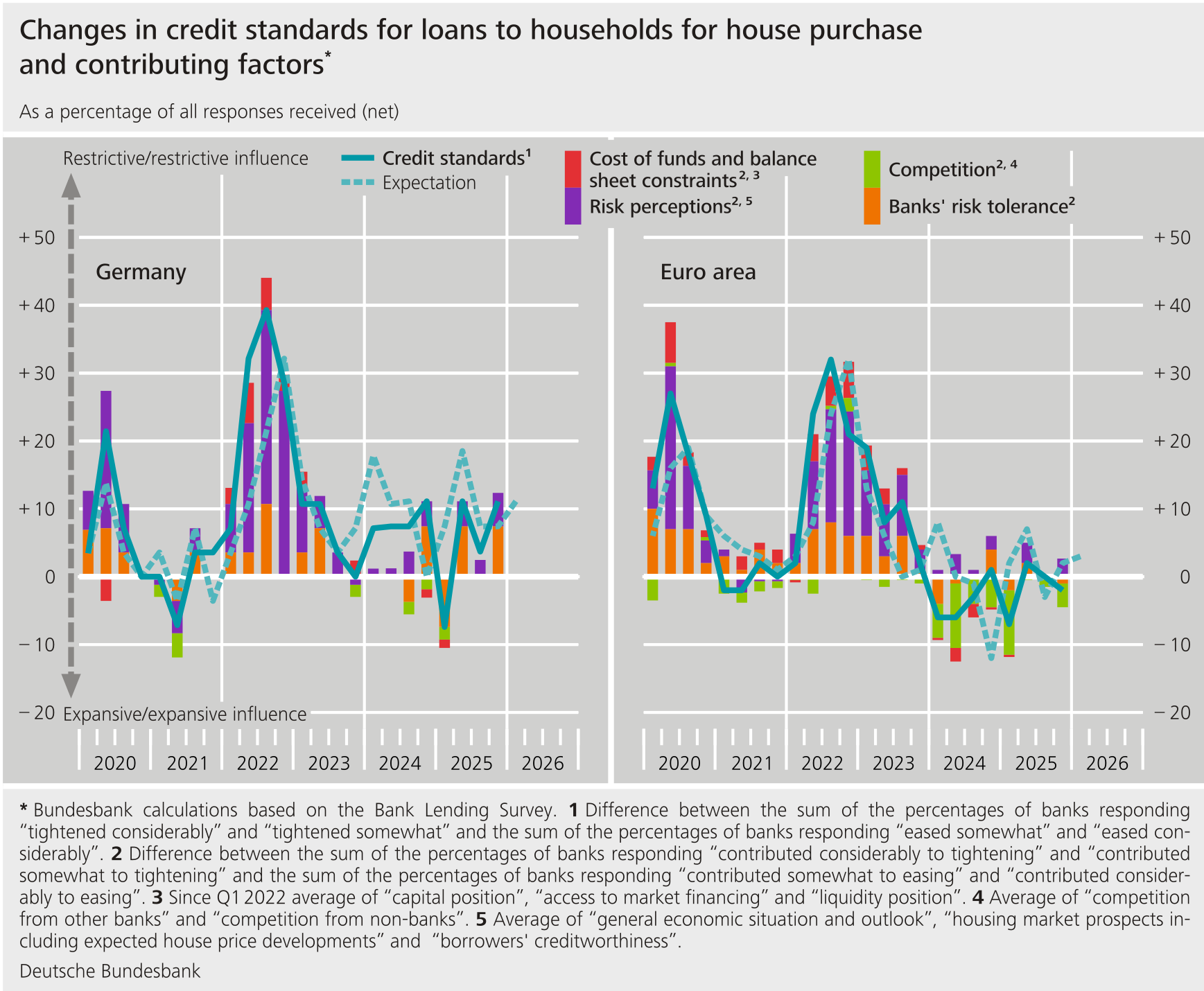
The German banks responding to the Bank Lending Survey (BLS) tightened their credit standards for loans to enterprises in the fourth quarter of 2025 to an extent not seen since 2023. Credit standards for loans to households were tightened as well. The tightening in each category was greater than in the previous quarter. The banks justified these adjustments on the grounds of their reduced risk tolerance and a further increase in credit risk.
The surveyed banks made their credit terms and conditions for loans to enterprises more restrictive as well. They eased their credit terms and conditions for loans to households for house purchase marginally. For consumer credit and other lending to households, the surveyed banks left credit terms and conditions unchanged.
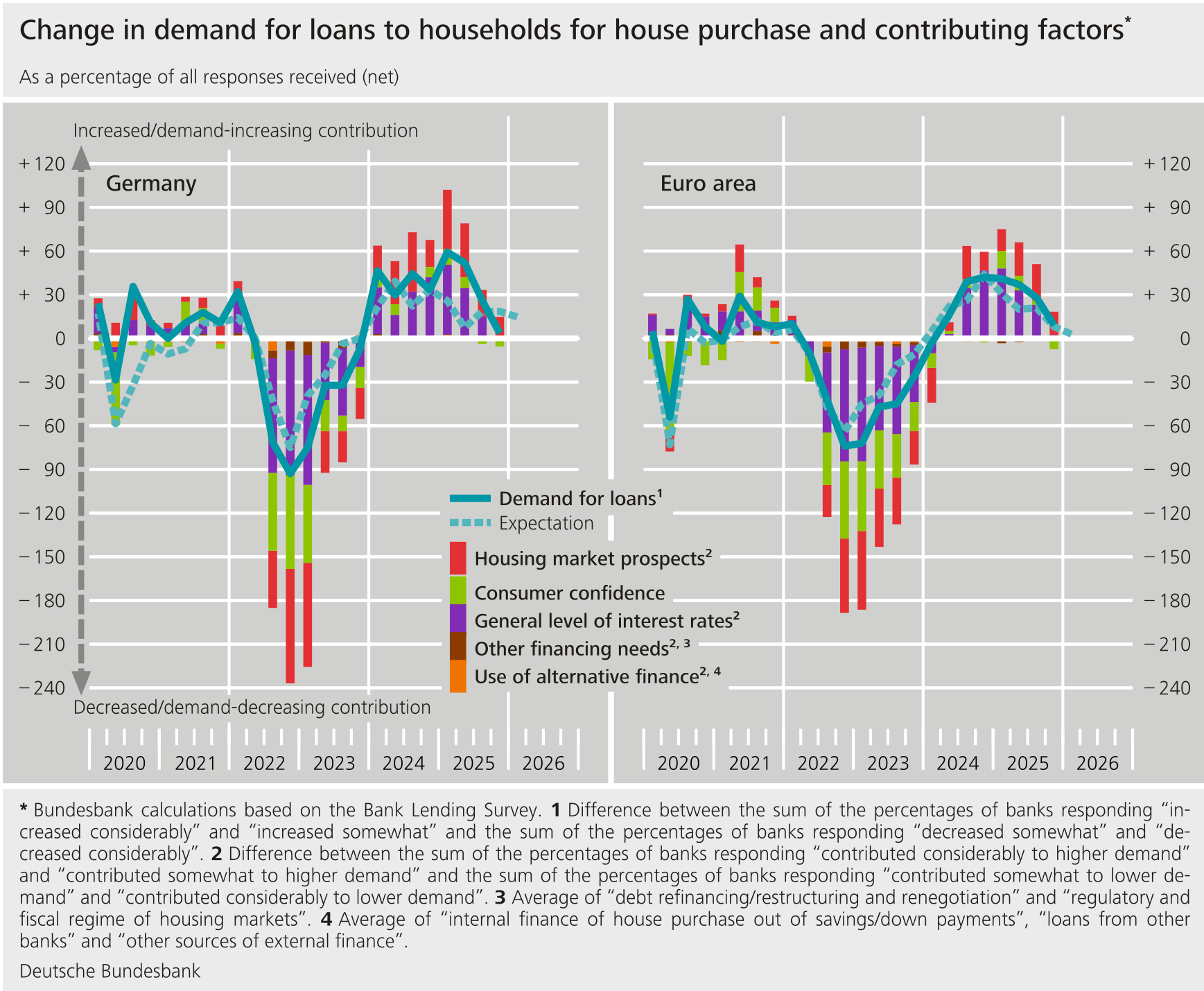
Demand for loans to enterprises and for loans to households for house purchase rose slightly on balance. Demand for consumer credit and other lending to households remained unchanged.
The BLS banks indicated that regulatory and supervisory requirements had had a restrictive effect on credit standards in all loan categories over the past 12 months. They are expecting a restrictive impact on overall lending business over the next 12 months as well.
The non-performing loans (NPL) ratio and other indicators of credit quality had a tightening impact on banks’ credit standards in all loan categories.
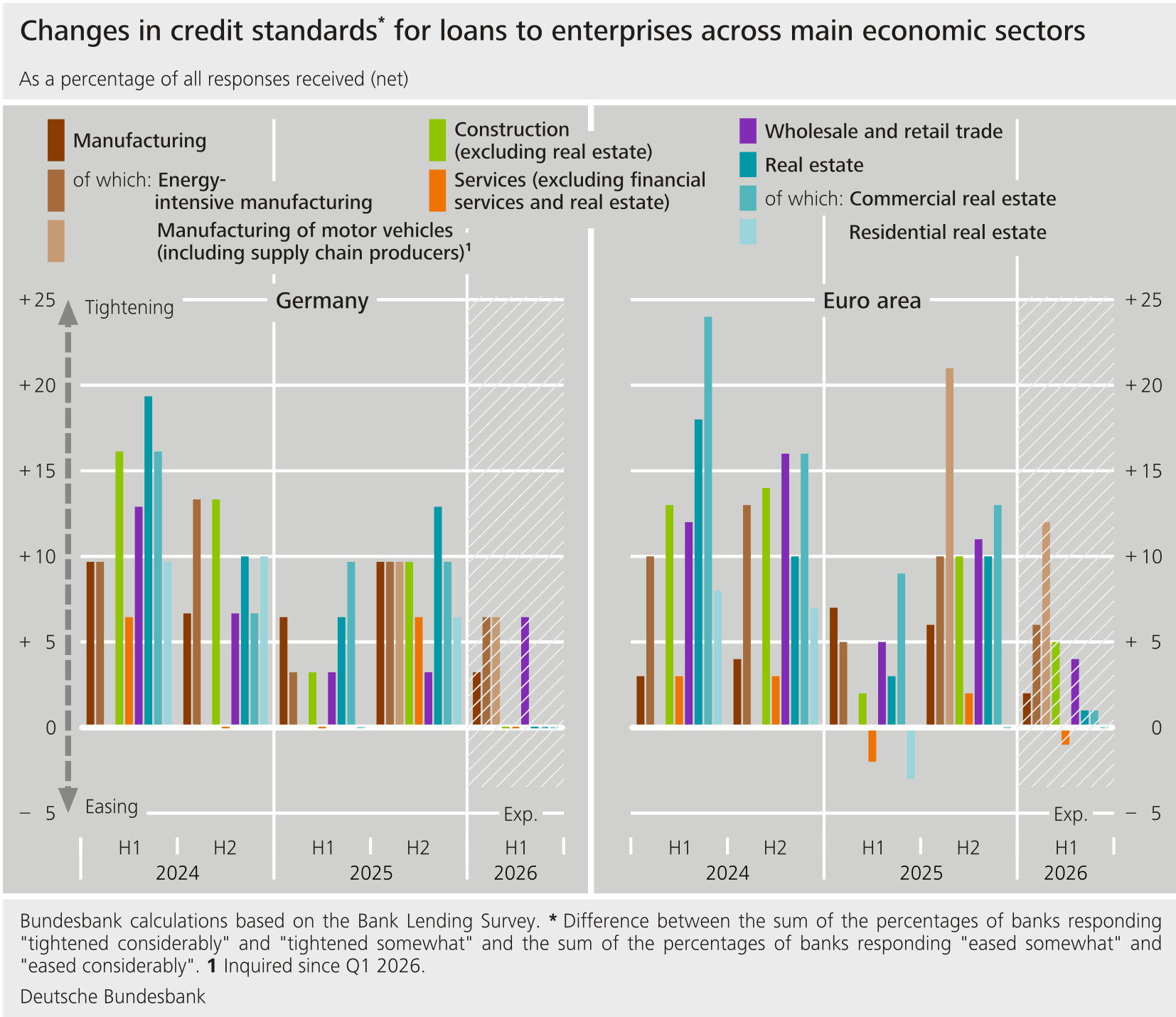
The tightening of credit standards for loans to enterprises was strongest vis-à-vis the real estate sector, manufacturing and construction (excluding real estate) over the past six months.
Over the past 12 months, the majority of banks surveyed have been exposed to the impact of changes in trade policies and related uncertainty through their loans to enterprises, albeit to a small extent. This was mainly reflected in a deterioration in NPL ratios and other indicators of credit quality, as well as reduced risk tolerance.
The BLS covers three loan categories: loans to enterprises, loans to households for house purchase, and consumer credit and other lending to households. On balance, the surveyed banks tightened their credit standards (i.e. their internal guidelines or loan approval criteria) for loans to enterprises and loans to households. The net percentage of banks that tightened their requirements was + 16 % for loans to enterprises (compared with + 10 % in the previous quarter), + 11 % for loans to households for house purchase (compared with + 4 % in the previous quarter), and + 11 % for consumer credit and other lending to households (compared with + 7 %% in the previous quarter). Banks had not tightened credit standards for loans to enterprises so strongly since 2023, affecting large enterprises more than small and medium-sized enterprises. Tighter credit standards for loans to enterprises were not what the banks had originally been planning in the previous quarter, when they had still been expecting no adjustments to be made. The tightening of credit standards in business with households, meanwhile, was largely in line with what the banks had been planning.
The rationale given by the banks for the tightening of credit standards for loans to enterprises and for loans to households was reduced risk tolerance and increased credit risk. As in previous quarters, this assessment was based on the general economic situation and the economic outlook. For loans to enterprises, there were also sector-specific and firm-specific factors in the mix. For loans to households, a reduction in creditworthiness again came into play. In the first quarter of 2026, the banks are planning to tighten their credit standards further in all loan categories.
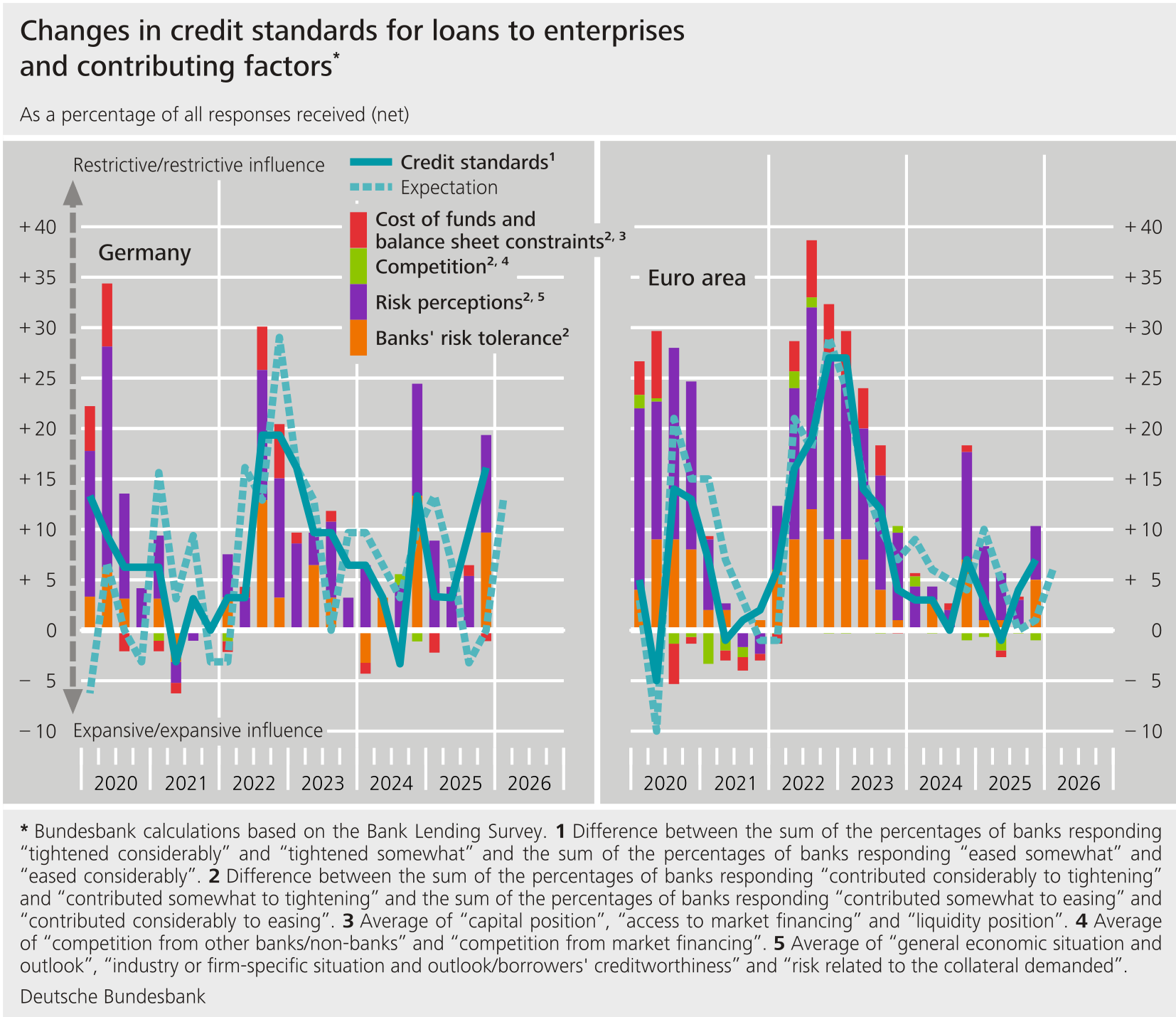
On balance, the banks tightened their credit terms and conditions (i.e. the terms and conditions actually approved as laid down in the loan contract) for loans to enterprises. According to the banks, the restrictive adjustments were the outcome of higher lending rates and an increase in margins irrespective of credit ratings. It was primarily the deterioration in the economic situation as well as industry-specific and firm-specific factors that had a restrictive impact. Terms and conditions were eased somewhat for loans to households for house purchase due to competition and left unchanged for consumer credit and other lending.
The surveyed banks assessed that demand for bank loans in Germany had risen on balance for loans to enterprises and loans to households for house purchase in the fourth quarter of 2025. This growth, however, was lower than in the previous quarter and fell short of the banks’ expectations from the previous survey round. The banks attributed the higher demand for loans to enterprises primarily to increased financing needs for inventories and working capital. Only large enterprises reported increased funding needs for fixed investment. In addition, the banks attributed growing demand for loans for house purchase to households’ perception that the outlook for the residential real estate market had improved. The general level of interest rates had a neutral impact on demand after providing clearly positive stimulus in previous survey rounds. Demand for consumer credit and other lending to households remained unchanged following seven consecutive quarters of growth. The loan rejection rate for loans to enterprises rose again, though by a smaller margin than in the preceding quarter. The rejection rate also increased for consumer credit and other lending to households, but remained unchanged for loans for house purchase. For the first quarter of 2026, the banks are expecting to see demand increase further for loans to enterprises and loans to households for house purchase, but decline for consumer credit and other lending. This is likely to be due to deteriorating labour market conditions.
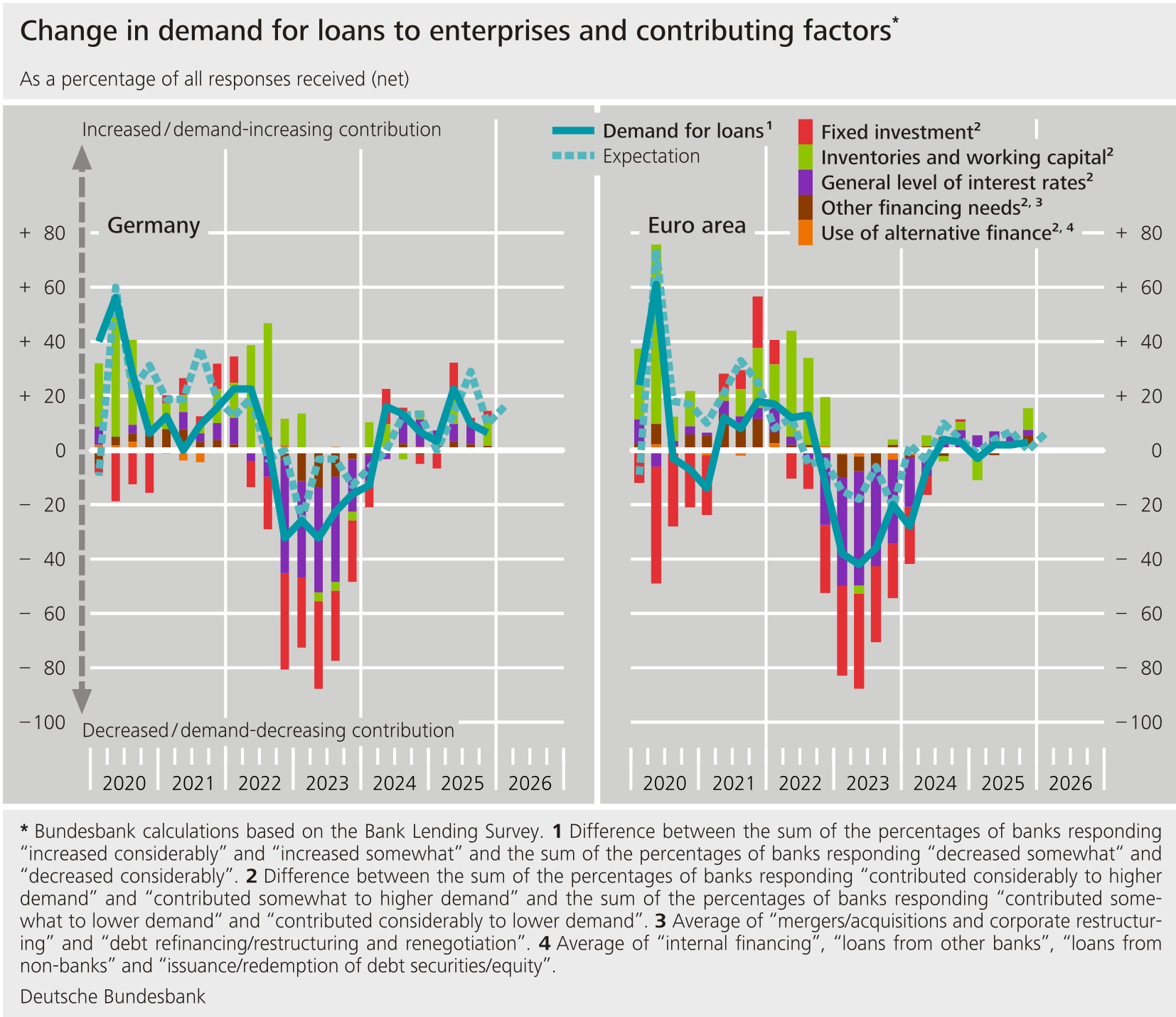
The January survey contained ad hoc questions on banks’ funding conditions, on the impact on banks’ lending policies of new regulatory or supervisory actions relating to capital, leverage, liquidity and provisioning as well as questions relating to the impact of non-performing loans (NPLs) and other indicators of credit quality. In addition, a question was asked about credit standards for new loans and demand for loans across main sectors of economic activities, along with a question on the impact of trade barriers and related uncertainty.
Against the backdrop of conditions in financial markets, German banks reported virtually no change in their financing situation compared with the previous quarter. Banks responded to new regulatory and supervisory actions by continuing to strengthen their capital position in 2025, mainly through retained earnings. In addition, the banks indicated that regulatory and supervisory actions had had a restrictive effect on credit standards across all loan categories. The banks are planning to further strengthen their capital position over the next 12 months. In addition, they expect their risk-weighted assets to increase against the backdrop of regulatory and supervisory actions. This is likely to reflect, in particular, the new rules on the calculation of risk-weighted assets under the Basel III reform package.[1] With regard to credit standards, banks expect regulatory and supervisory actions to continue to have a restrictive impact over the next 12 months due to, amongst other things, the provisions of Directive (EU) 2023/2225 on credit agreements for consumers applicable from 20 November 2026.[2]
In the fourth quarter of 2025, the NPL ratio (the stock of gross NPLs on the bank’s balance sheet as a percentage of the gross carrying amount of loans) and other indicators of credit quality, owing to their size, had a particularly restrictive impact on credit standards for loans to enterprises and loans to households. For the first quarter of 2026, the banks are expecting credit quality primarily in the category of loans to enterprises to have a restrictive effect on their credit standards.
Credit standards have been made more restrictive in all major economic sectors over the past six months. They were tightened most sharply vis-à-vis the real estate sector (commercial real estate), manufacturing and construction (excluding real estate). Over the next six months, banks are only planning to tighten their standards vis-à-vis manufacturing and retail. In the banks’ assessment, demand for loans to enterprises has been heterogeneous in the key sectors of the economy over the past six months: the banks reported growth primarily in the residential real estate sector, while demand in construction (excluding real estate) declined. In the commercial real estate sector, demand went back up for the first time since mid-2022. The banks recorded broadly unchanged demand in retail, services and manufacturing. For the next six months, banks expect loan demand to increase in most key sectors of the economy. Only in the services sector do they see funding needs remaining unchanged, and the retail sector’s demand for loans is even expected to decline.
Over the past 12 months, the majority of banks in Germany surveyed by the BLS have been exposed to the impact of changes in trade policies and related uncertainty through their loans to enterprises, albeit to a small extent. According to the banks, this was mainly reflected in a deterioration in NPL ratios and other indicators of credit quality, as well as reduced risk tolerance. Overall, trade barriers and related uncertainty had a restrictive effect on credit standards for loans to enterprises and a small dampening effect on demand for loans. For 2026, banks are expecting the impact of trade barriers and related uncertainty to be somewhat smaller than in the previous 12 months.
The Bank Lending Survey, which is conducted four times a year, took place between 15 December 2025 and 13 January 2026. In Germany, 33 banks took part in the survey, with a response rate of 100 %.
Footnotes:
Deutsche Bundesbank (2024), The EU banking package.
Directive (EU) 2023/2225 comprises numerous amendments that strengthen consumer protection and respond to the challenges of digitalisation. These include, for example, changes to the information requirements on the part of the creditor or to the standards for assessing the consumer’s creditworthiness.