
Geopolitical hybrid threats Norbert Metiu, Martin Völpel
DOI: doi.org/10.71734/DP-2026-11
Rising geopolitical tensions are leading to an increase of hybrid threats, such as cyberattacks, infrastructure sabotage, espionage, economic and political coercion, disinformation campaigns and other forms of hybrid warfare. But how do these hybrid threats affect economies? We introduce a novel index to measure geopolitical hybrid threats (GHT) and examine their macroeconomic and financial impact. Our findings reveal that hybrid threats primarily suppress aggregate demand by heightening uncertainty, undermining confidence, and tightening financial conditions, while also triggering policy responses in the form of increased defense spending and monetary easing. This contrasts with the predominantly supply-side effects of geopolitical risk documented in the literature.
What are geopolitical hybrid threats and what are their economic consequences?
Hybrid threats blur the boundaries between war and peace, highlighting the complex and multifaceted nature of geopolitical tensions between states. These threats encompass a wide range of hostile activities, from high-profile Soviet espionage cases revealed in the 1980s to more recent incidents, including the 2014 annexation of Crimea by Russian irregular forces known as the “little green men,” Russian interference in the 2016 U.S. presidential election, the 2017 WannaCry global cyberattack attributed to North Korean hackers, and the 2022 sabotage of the Nord Stream pipeline in the Baltic Sea. Unlike traditional military conflicts, hybrid threats often operate below the threshold of open warfare, undermining international relations and stability. Despite the growing significance of hybrid threats, their macroeconomic impact remains largely unexplored, primarily due to the absence of an adequate measure. To address this gap, we first quantify hybrid threats using newspaper coverage frequency. We then conduct a comprehensive analysis of their macroeconomic and financial effects using a structural vector autoregression (VAR) model, which allows us to shed light on the main transmission channels.
Measuring geopolitical hybrid threats
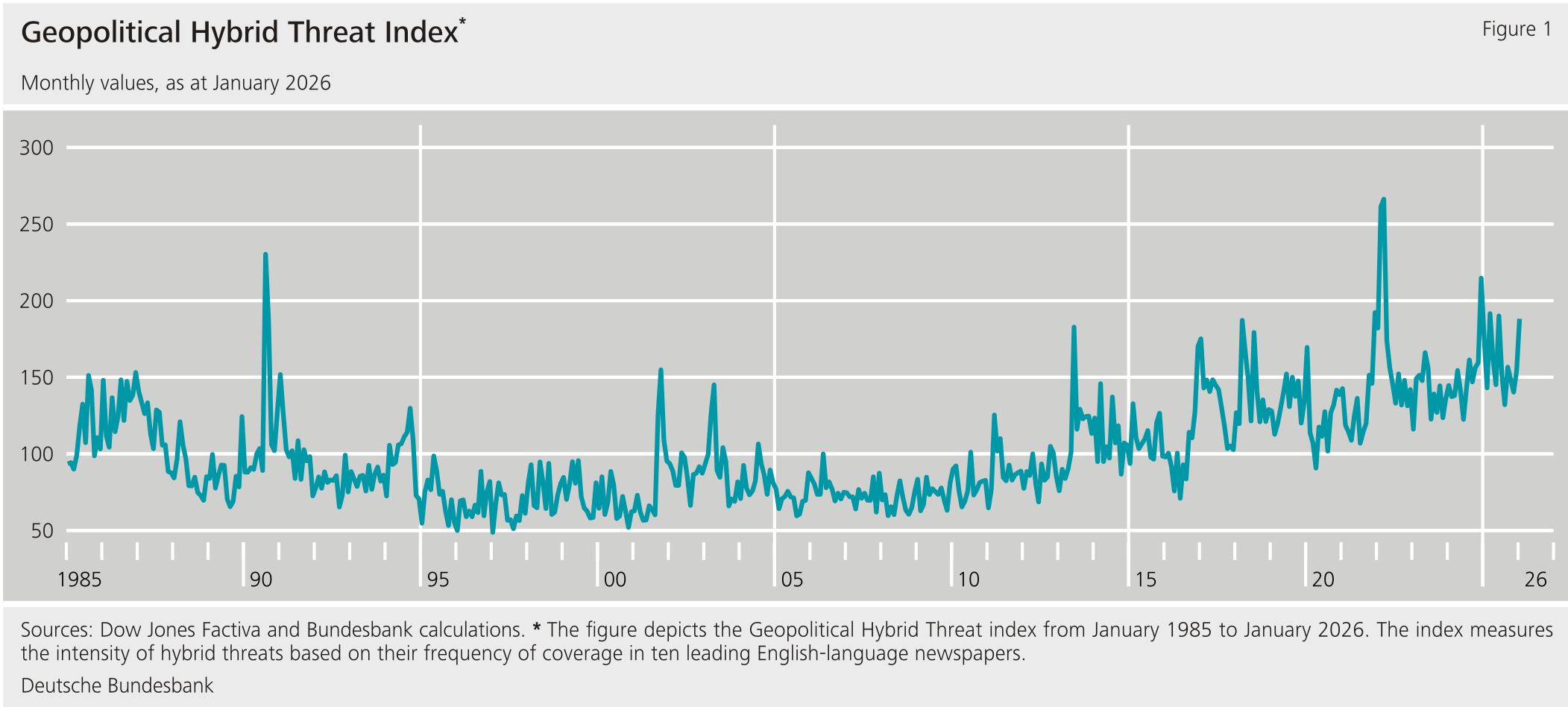
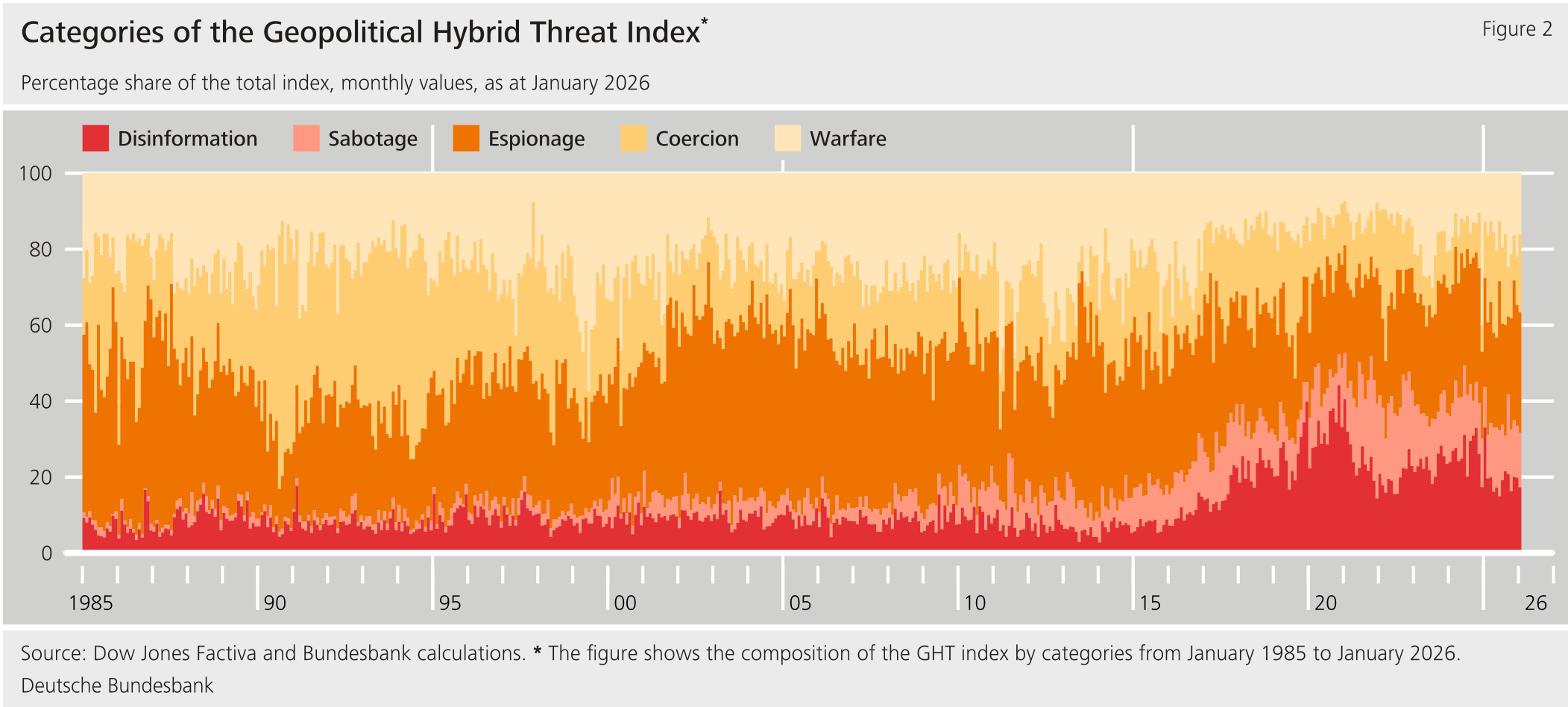
We develop a novel Geopolitical Hybrid Threat (GHT) index using textual analysis of articles from ten leading English-language newspapers, covering the period from 1985 to 2026. The index tracks the frequency of specific terms related to geopolitical hybrid threats, including sabotage of critical infrastructure (both physical and cyber), economic and political coercion, espionage, disinformation and other forms of hybrid warfare. The GHT index shows a sharp rise in hybrid threats since the mid-2010s, surpassing levels observed during the late Cold War (see Figure 1), which underscores the growing prominence of hybrid threats. A decomposition indicates that the strategic use of disinformation and sabotage of critical infrastructure, including cyberattacks, have become increasingly important in recent years (see Figure 2).
Analyzing the macroeconomic and financial impact of hybrid threat shocks
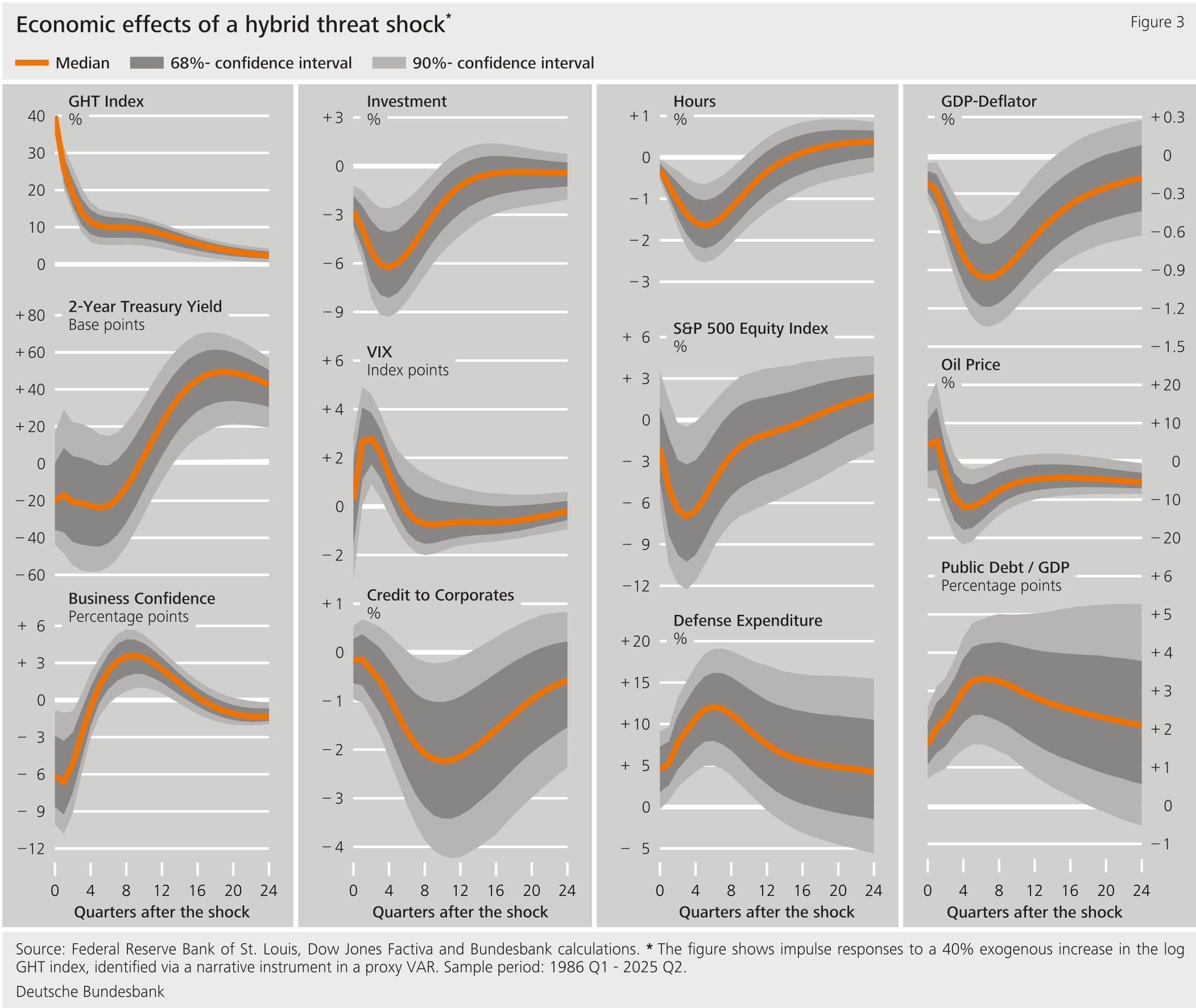
We study the macroeconomic and financial impact of hybrid threats using a structural vector autoregression (VAR) model with U.S. and global data from 1986-Q1 to 2025-Q2. To isolate exogenous hybrid threat shocks, we employ a narrative event proxy for identification. Three main results emerge from our analysis (see Figure 3). First, an exogenous increase in hybrid threats generates macroeconomic effects akin to a negative demand shock: measures of real economic activity and prices decline, business and consumer sentiment deteriorate, and both macroeconomic and financial uncertainty rise. Second, a hybrid threat shock leads to a tightening of indicators of financial conditions, which raise firms’ external financing costs and further weigh on demand. Third, the shock prompts expansionary policy responses: monetary policy eases, while defense spending increases to enhance military capabilities, reflecting the risk that hybrid threats could escalate into overt conflict. This results in a sustained accumulation of public debt.
Conclusion
The construction of the novel GHT index enables us to analyze the macroeconomic and financial impact of geopolitical hybrid threats, integrating several strands of literature. Overall, hybrid threat shocks appear to depress economic activity primarily by weaking aggregate demand, in contrast to the predominantly supply-side effects of geopolitical risks stemming from outright military and conflicts documented in the existing literature (e.g. Caldara and Iacoviello 2022, Bondarenko et al. 2024, Caldara et al. 2026). Instead, the impact of hybrid threat shocks aligns more closely with the macroeconomic consequences of uncertainty shocks (e.g. Leduc and Liu 2016, Basu and Bundick 2017). This association is intuitive and aligns with the objective of hybrid warfare to destabilize societies and sow fear and uncertainty among target populations. The erosion of confidence prompts heighted caution among business and consumers, which in turn depresses aggregate demand rather than constraining supply. In response, monetary policy eases and fiscal policy expands through higher defense spending financed by public debt. On balance, the negative demand effects seem to outweigh the stimulative effects of these expansionary policies.
These findings suggest several promising avenues for future research. Further work is needed to understand how businesses, households, and the financial sector adapt to hybrid threats and how they can build resilience. In addition, assessing potential hybrid threat scenarios withing a structural macroeconomic framework would offer valuable insights for policymakers seeking to mitigate their economic consequences.
References
Basu, S., Bundick, B., 2017. Uncertainty shocks in a model of effective demand. Econometrica 85, 937–958.
Bondarenko, Y., Lewis, V., Rottner, M., Schueler, Y., 2024. Geopolitical risk perceptions. Journal of International Economics 152, 104005.
Caldara, D., Iacoviello, M., 2022. Measuring geopolitical risk. American Economic Review 112, 1194–1225.
Caldara, D., Conlisk, S., Iacoviello, M., Penn, M., 2026. Do geopolitical risks raise or lower inflation? Journal of International Economics 159, 104188.
Leduc, S., Liu, Z., 2016. Uncertainty shocks are aggregate demand shocks. Journal of Monetary Economics 82(C), 20–35.
Metiu, N., M. Völpel, (2026), Geopolitical hybrid threats, Bundesbank Discussion Paper, No 11/2026.
788 KB, PDF