April results of the Bank Lending Survey in Germany Credit standards for firms tightened further
In the first quarter of 2026, the German banks responding to the Bank Lending Survey (BLS) further tightened their credit standards for loans to enterprises, doing so to the extent previously expected. The impact of the war in the Middle East that began in February has not yet led to additional tightening by banks. Credit standards for consumer credit and other lending to households also tightened, while those for loans to households for house purchase remained virtually unchanged.
The surveyed banks made their credit terms and conditions more restrictive across all loan categories.
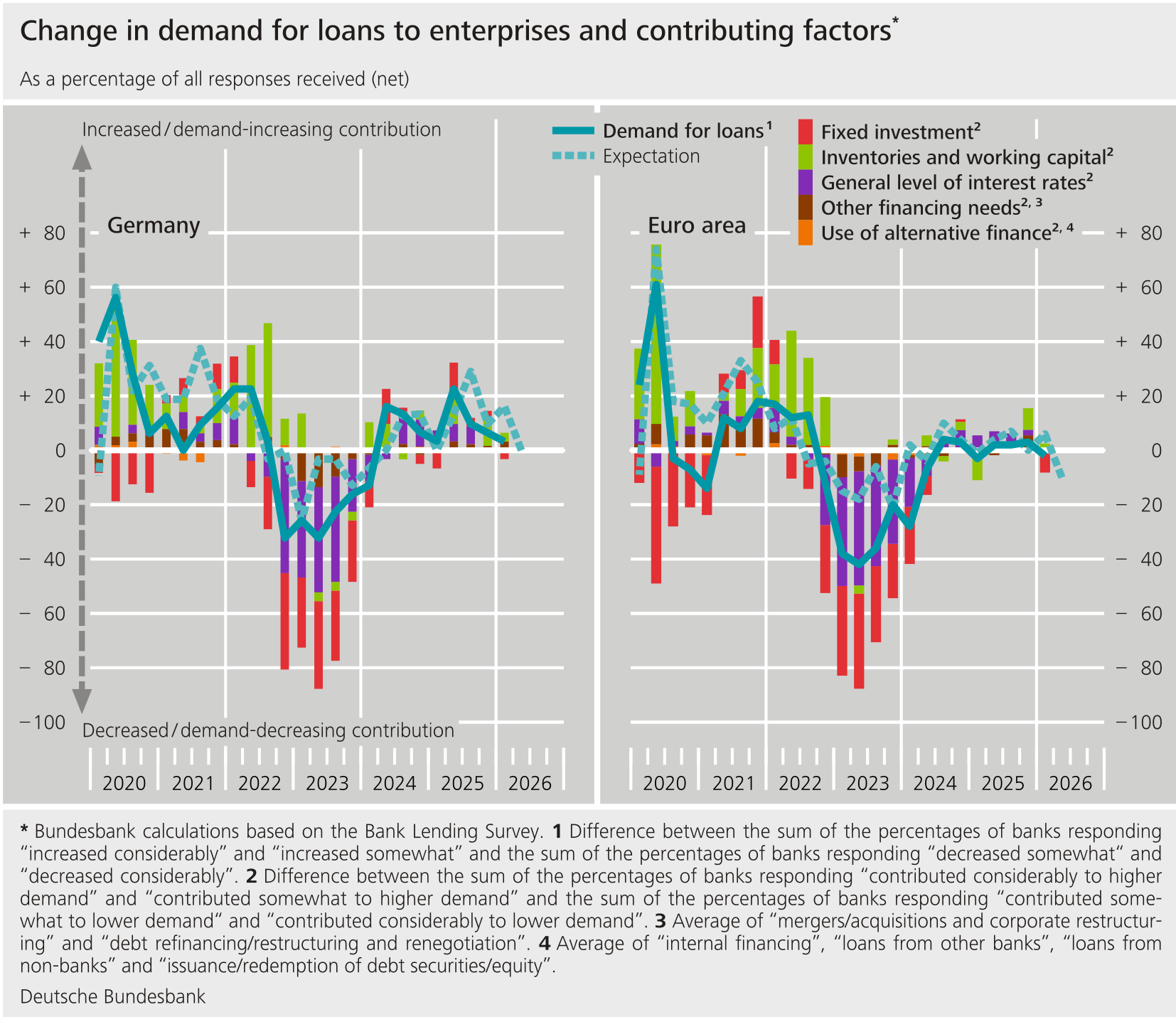
Demand for loans to enterprises rose marginally. For the first time since 2023, there was a decrease in demand for loans to households, which was more pronounced for consumer credit and other lending.
The non-performing loans (NPL) ratio and other indicators of credit quality had a tightening impact on banks’ credit standards for loans to enterprises.
The ECB Governing Council’s past and expected key interest rate decisions contributed slightly to an improvement in banks’ profitability in the 2025–26 winter half-year. For the 2026 summer half-year, too, banks are expecting key interest rate decisions to have a positive impact on their profitability.
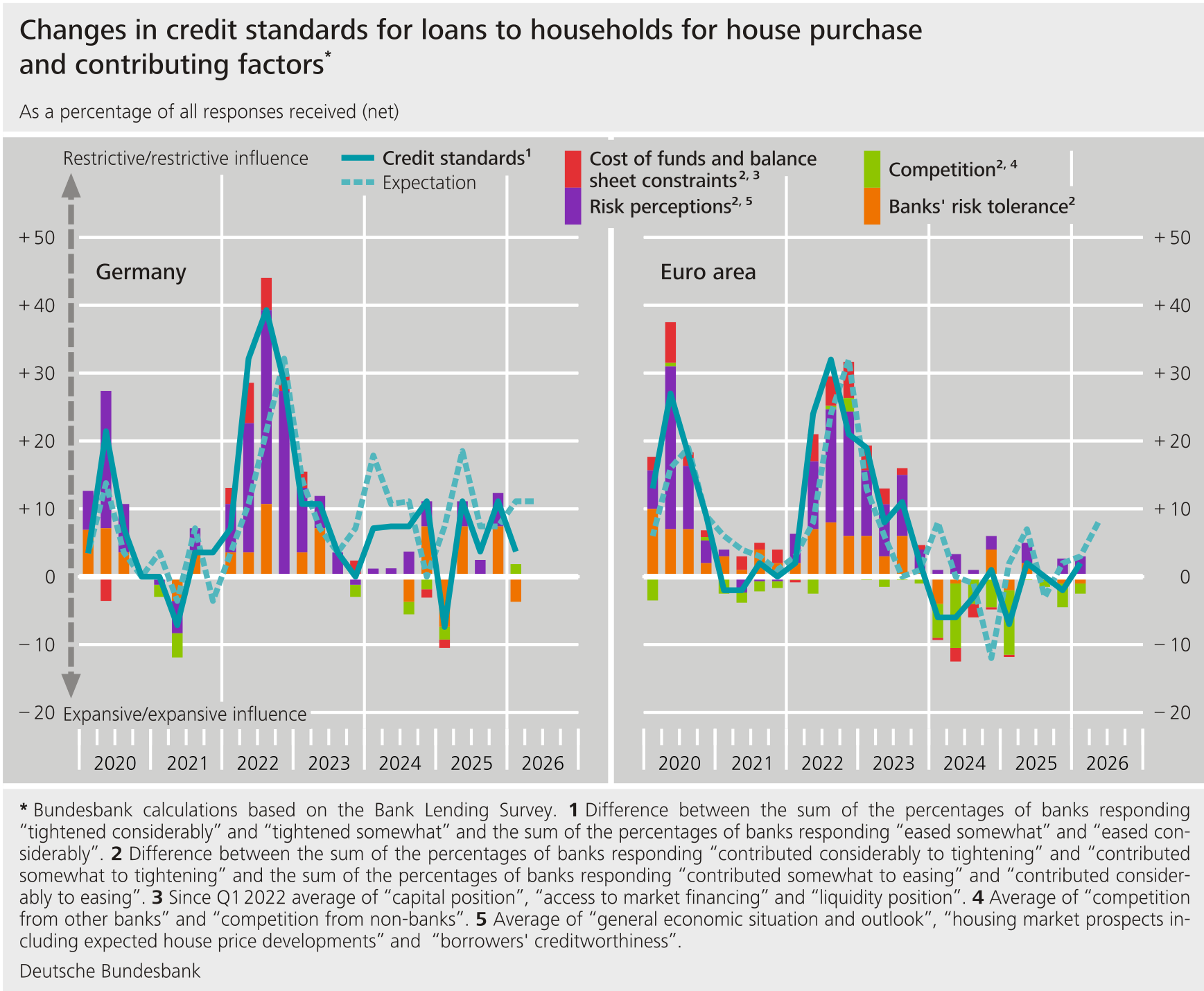
The BLS covers three loan categories: loans to enterprises, loans to households for house purchase, and consumer credit and other lending to households. On balance, the surveyed banks tightened their credit standards (i.e. their internal guidelines or loan approval criteria) for loans to enterprises and loans to households. The net percentage of banks that tightened their requirements was + 16 % for loans to enterprises (compared with + 16 % in the previous quarter), + 4 % for loans to households for house purchase (compared with + 11 % in the previous quarter), and + 11 % for consumer credit and other lending to households (compared with + 11 % in the previous quarter). The tightening of credit standards for loans to enterprises was in line with what the banks had originally been planning in the previous quarter. It affected large enterprises as well as small and medium-sized enterprises to a similar extent.
Banks justified the tightening of credit standards for loans to enterprises and for consumer credit and other lending to households mainly on the basis of increased credit risk and their reduced risk tolerance. For loans to enterprises, banks attributed this assessment primarily to sector-specific and firm-specific factors. In this context, geopolitical and energy-related developments in connection with the war in the Middle East had only a small impact on credit standards, according to the banks’ responses. In consumer credit and other lending, a decline in households’ creditworthiness was a factor once again. In both loan categories, the subdued general economic situation and outlook also contributed to the tightening of credit standards, as in previous quarters. For the second quarter of 2026, banks are expecting to tighten credit standards for loans to enterprises to a similar extent as in the first quarter. However, given the uncertainty over how the war in the Middle East will progress, banks are not ruling out further adjustments. In business with households, banks are expecting to tighten credit standards for loans for house purchase while leaving them broadly unchanged for consumer credit and other lending.
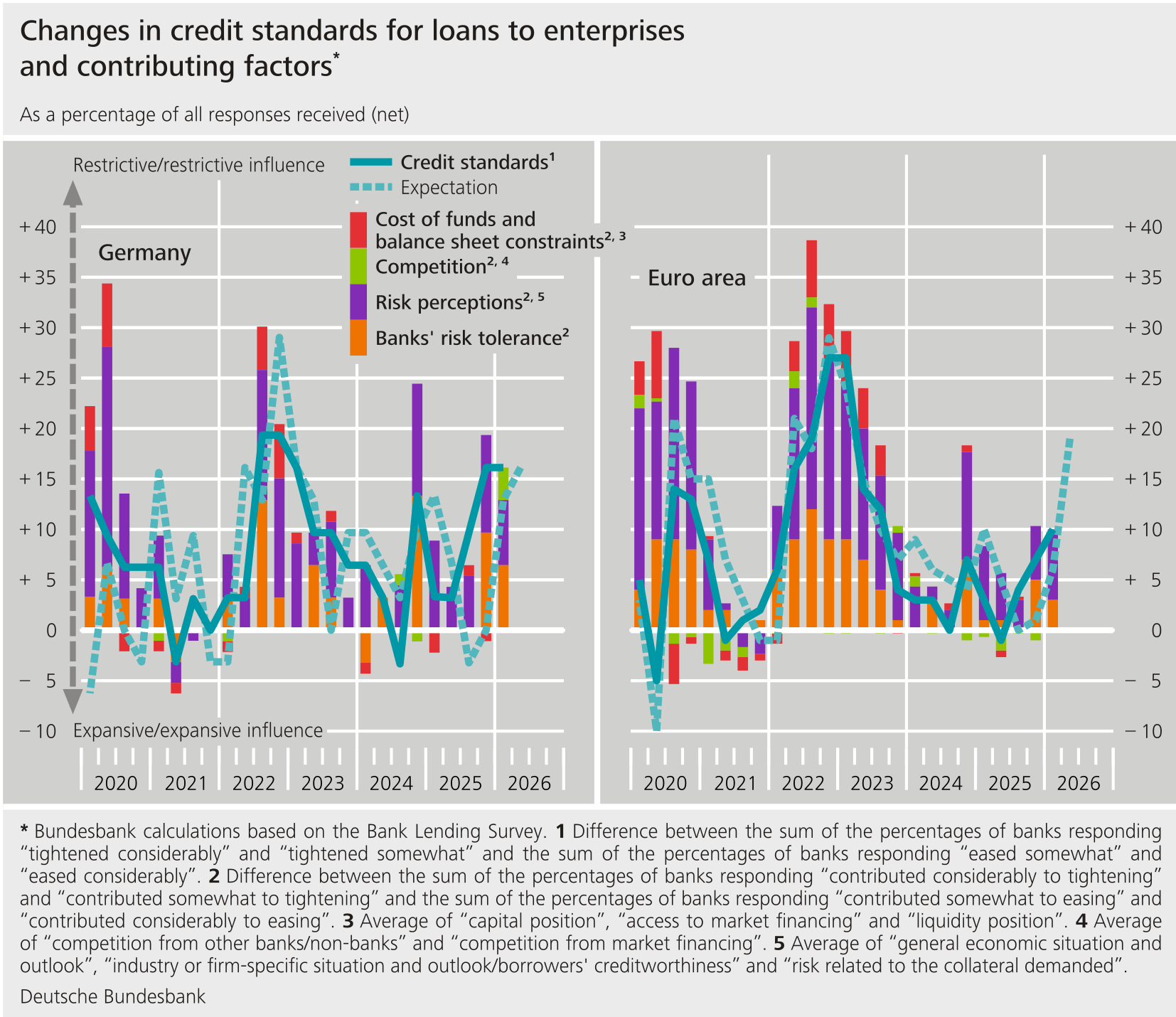
On balance, banks tightened their credit terms and conditions (i.e. the terms and conditions actually approved as laid down in the loan contract) for loans to enterprises. According to the banks, the restrictive adjustments were the outcome of significantly higher lending rates and a slight increase in margins irrespective of credit ratings. They also applied stricter collateral requirements. Sector-specific and firm-specific factors as well as the subdued economic situation and outlook were the main factors to have a tightening impact. Higher funding costs also contributed to the tightening. Banks also made terms and conditions for households more restrictive on balance. In both loan categories, banks raised lending rates and reduced the size of loans granted. In the case of consumer credit and other lending, they additionally increased their margins regardless of the risk category of the loans and tightened collateral requirements. Regarding loans for house purchase, by contrast, banks narrowed their margins on average-risk loans. Banks justified the restrictive adjustments on account of their reduced risk tolerance and increased funding costs. In the case of consumer credit and other lending, banks’ higher perceived credit risk additionally had a tightening impact.
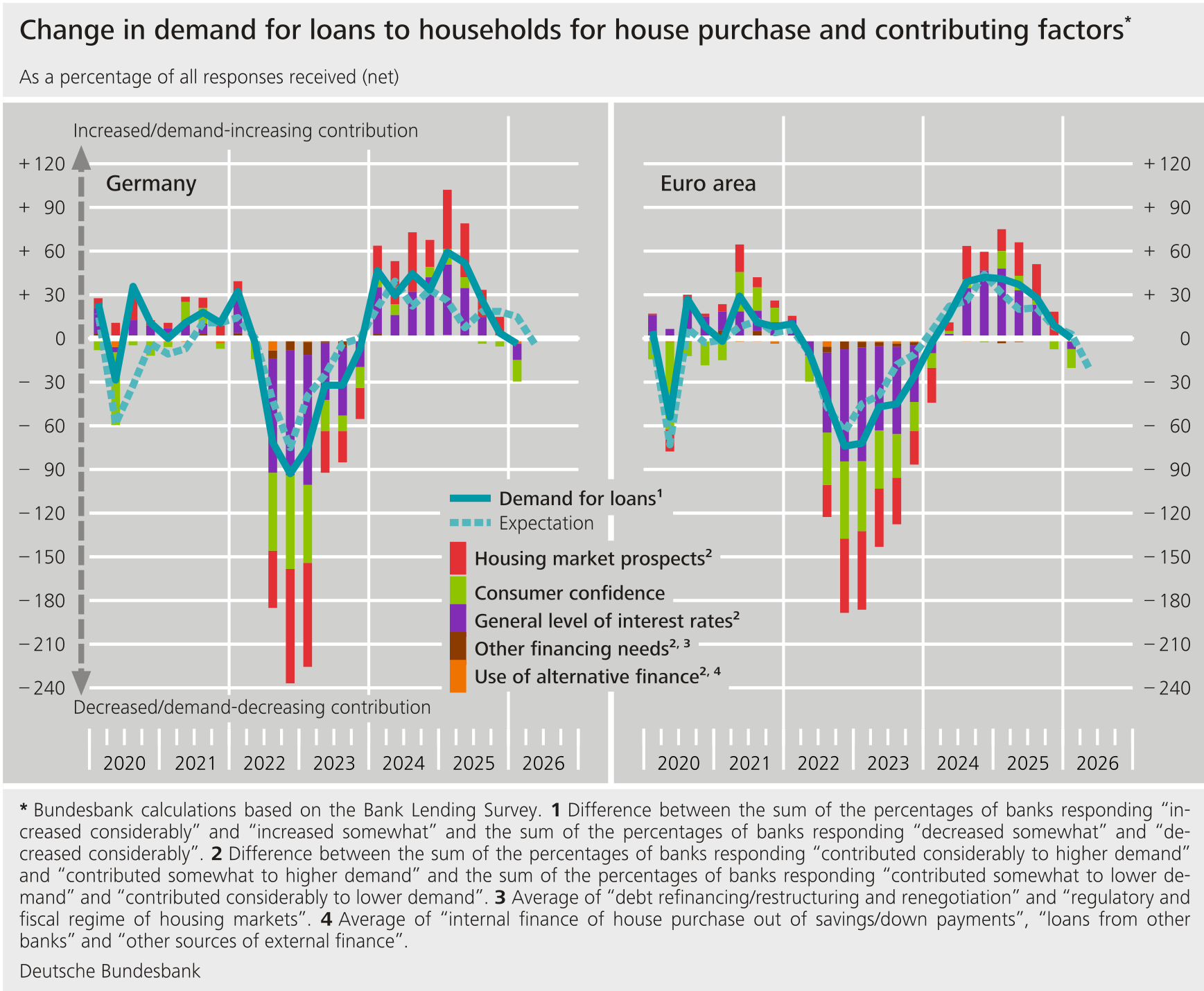
According to the surveyed banks, demand for bank loans to enterprises in Germany rose marginally in the first quarter of 2026, while demand for bank loans to households fell on the quarter for the first time since 2023. For loans to enterprises, the recovery in demand that had started in the first half of 2024 therefore continued, though the momentum of the demand growth slowed further. Furthermore, the increase in demand in the first quarter fell short of banks’ expectations from the previous quarter. The marginal increase in demand for loans to enterprises was attributable solely to large enterprises. Demand for loans to small and medium-sized enterprises declined somewhat. In addition, the increase in funding needs only concerned short-term loans. Banks attributed the marginally higher demand for loans to enterprises primarily to increased financing needs for mergers, takeovers and corporate restructurings. In addition, enterprises sought more bank loans for inventories and working capital. By contrast, funding needs for fixed investment declined in view of the prevailing uncertainty.
Households’ demand for loans for house purchase, consumer credit and other lending declined for the first time since 2023. The decline was small for loans for house purchase, but more pronounced for consumer credit and other lending. In both categories, demand fell short of banks’ expectations from the previous quarter. The loan rejection rate for loans to enterprises went up again. The rejection rate also increased for consumer credit and other lending to households, but remained virtually unchanged for loans for house purchase. For the second quarter of 2026, banks are expecting financing needs to stay more or less constant across all loan categories.
The April survey round contained ad hoc questions on participating banks’ financing conditions and about the impact of NPLs and other indicators of credit quality on the institutions’ lending policies. In addition, a question was asked about the impact of key interest rate decisions on banks’ profitability, as was a question about securitisation and its impact on bank lending.
Given the conditions in financial markets, German banks reported a slight deterioration in their funding situation. This mainly concerned funding via short-term debt securities. Banks stated that the ECB Governing Council’s past and expected key interest rate decisions marginally improved banks’ profitability in the 2025–26 winter half-year. For the 2026 summer half-year, banks are expecting key interest rate decisions to have a positive impact on their net interest income as well as on their profitability.
In the first quarter of 2026, the NPL ratio (the stock of gross NPLs on the bank’s balance sheet as a percentage of the gross carrying amount of loans) and other indicators of credit quality had – owing to their levels – a tightening impact on credit standards for loans to enterprises. For the second quarter of 2026, too, banks are expecting credit quality to have a tightening effect on their credit standards for loans to enterprises.
With regard to their securitisation business, banks reported using securitisations primarily to manage their credit risk and to release capital for new lending. According to the banks, the biggest investors were insurance corporations and pension funds, private investment funds and other banks. Over the past 12 months, banks’ securitisation activity led to a slight increase in their lending volume to firms. Banks are expecting significantly stronger positive effects on their lending volume over the next 12 months.
The Bank Lending Survey, which is conducted four times a year, took place between 19 March and 7 April 2026. In Germany, 33 banks took part in the survey, with a response rate of 100 %.