General Search
Multiple search words are automatically linked with "AND". Text enclosed in quotation marks (") returns only the pages in which this text occurs exactly. With the search filters next to the results you have the possibility to further limit your search.
-
Reopening Federal bond issue – Auction result
147 KB, PDF
-
Geldmengenentwicklung im Euroraum: März 2026
462 KB, PDF
Die Jahreswachstumsrate des weit gefassten Geldmengenaggregats M3 stieg im März 2026 auf 3,2 % nach 3,0 % im Februar. In den drei Monaten bis März betrug sie durchschnittlich 3,2 %.
-
Announcement of a multi-ISIN auction – Reopening of two Green German Federal securities
182 KB, PDF
-
Investment funds statistics Issue July 2026
-
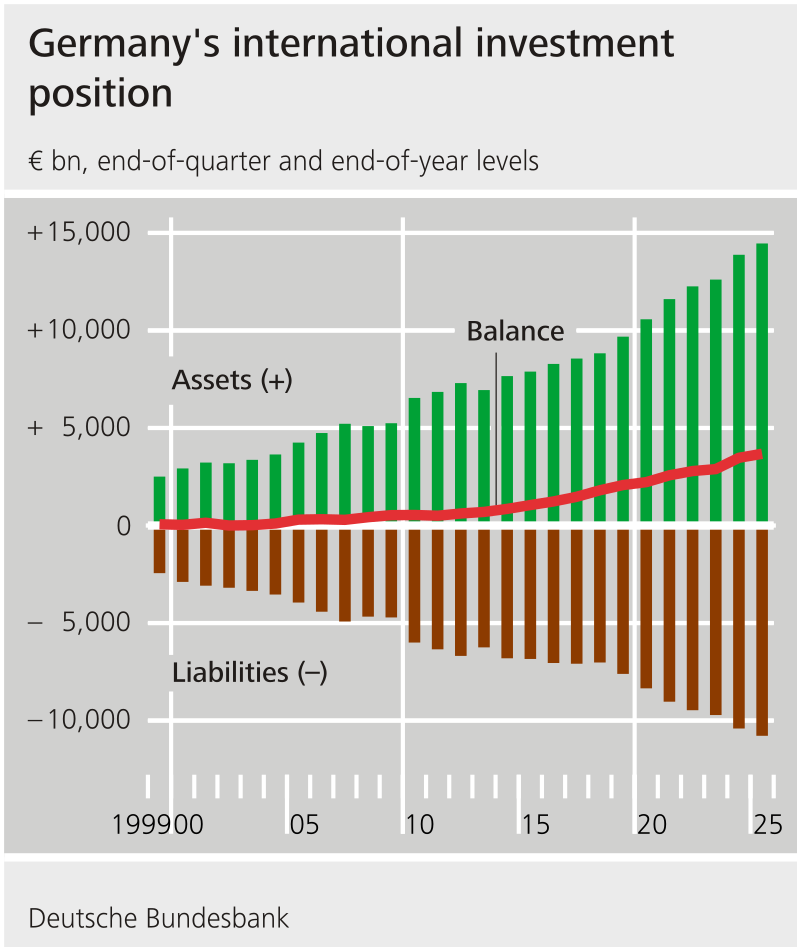
International investment position
-
Securities holdings
The securities holdings statistics provide a picture of the structure of securities held in Germany.
-
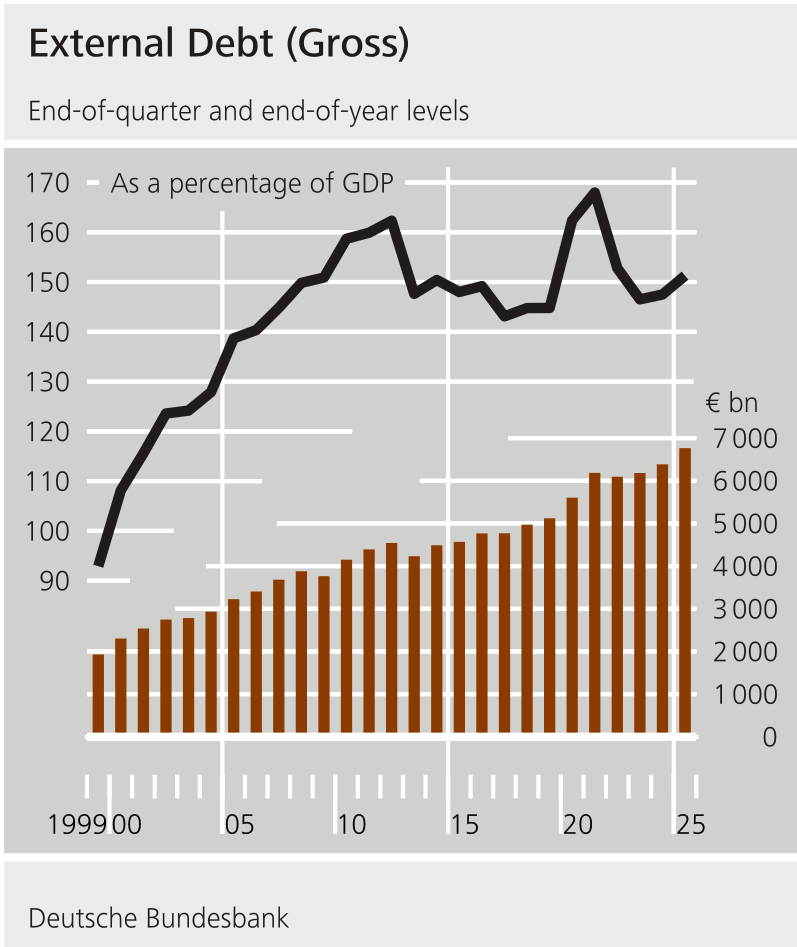
External debt
-
-
Ergebnisse der EZB-Umfrage zu den Verbrauchererwartungen: März 2026
132 KB, PDF
Der Median der in den vergangenen zwölf Monaten wahrgenommenen Inflation stieg im März auf 3,5 % nach 3,0 % im Februar. Der Median der Inflationserwartungen für die kommenden zwölf Monate und jener der Erwartungen bezüglich der Inflation in drei Jahren, die im Februar beide bei 2,5 % gelegen hatten, erhöhten sich im März auf 4,0 % bzw. 3,0 %.
-
Tägliche Rendite der börsennotierten Bundeswertpapiere
101 KB, PDF
-
Wirtschaftliche und finanzielle Entwicklungen im Euroraum nach institutionellen Sektoren: viertes Quartal 2025
934 KB, PDF
Die Ersparnisbildung (netto) im Euroraum erhöhte sich im Jahr 2025 auf 873 Mrd €, verglichen mit 867 Mrd € im Vierquartalszeitraum bis zum dritten Quartal 2025. Die Verschuldung der privaten Haushalte im Verhältnis zum Einkommen sank 2025 auf 81,4 %, verglichen mit 81,7 % ein Jahr zuvor. Die Verschuldung der nichtfinanziellen Kapitalgesellschaften im Verhältnis zum BIP (konsolidierte Messgröße) ging 2025 auf 65,8 % zurück, verglichen mit 67,3 % ein Jahr zuvor.
-
Announcement – Federal Treasury discount paper (Bubills)
223 KB, PDF
-
Invitation to bid by auction – Reopening 10-year Federal bond
129 KB, PDF
-
Ergebnisse der Umfrage zum Kreditgeschäft im Euroraum vom April 2026
301 KB, PDF
Kreditrichtlinien angesichts höherer Risikoeinschätzung und geringerer Risikotoleranz über alle Kreditkategorien hinweg verschärft. Banken erwarten im zweiten Quartal aufgrund geopolitischer Spannungen, der energiebezogenen Entwicklung und höherer Finanzierungskosten eine weitere Straffung der Kreditrichtlinien. Kreditnachfrage der Unternehmen und privaten Haushalte dürfte durch den geringeren Finanzierungsbedarf für Anlageinvestitionen, das schwächere Verbrauchervertrauen und die gesunkenen Ausgaben für Gebrauchsgüter zurückgehen. Fast die Hälfte der Banken im Euroraum nutzen Verbriefungen zur Gewährung neuer Kredite, Steuerung des Kreditrisikos und Erhöhung von Liquidität und Finanzmitteln; erworben werden die verbrieften Kredite überwiegend von Nichtbank-Finanzinstituten.
-
German economy expected to have grown slightly despite being under strain
22.04.2026 DE
In spite of ongoing strains and additional headwinds as a result of the war in the Middle East, real gross domestic product (GDP) is likely to have increased slightly in the first quarter of 2026 after seasonal adjustment,
says the Bundesbank in its April Monthly Report. Nonetheless, industry is suffering from structural barriers to growth, which are undermining its competitive position. Furthermore, the significant rise in fuel prices in March has weighed heavily on households’ purchasing power. The Bundesbank’s experts anticipate that inflation will remain significantly elevated over the coming months as well. -
The digital euro and European sovereignty
23.04.2026 DE
It is not wise to outsource our sovereignty,
said Bundesbank President Joachim Nagel in a speech at the House of the Euro in Brussels. He gave this speech at an event on the digital euro and its importance for Europe’s strategic autonomy. Mr Nagel stressed the need to make Europe’s payment infrastructure more independent and more resilient. The digital euro provides this opportunity, Mr Nagel said. -
Long time series On economic development in Germany
A new set of tables provides an overview of German economic development since 1948. For selected indicators, comparable data from other countries and groups of countries are also available.
-
German balance of payments in February 2026
The German current account recorded a surplus of €20.0 billion in February 2026. This was €3.9 billion up on the previous month’s level.
-
Price competitiveness
The same methodology as the real effective exchange rates of the euro is used to calculate price competitiveness indicators for individual euro area countries.
-
Corporate financial statements
Statistical data on the business activities of German enterprises are published on the basis of single-entity financial statements pursuant to the German Commercial Code (HGB) and on the basis of consolidated financial statements according to International Financial Reporting Standards (IFRS).
-
Methodology and quality Negotiated pay rates and labour costs
Notes on methodology
-
Negotiated pay rates and labour costs
The labour cost index measures developments in labour costs per man-hour worked and is harmonised across Europe. It indicates from a cost perspective the risks to price stability and contributes to the location and competition analyses in a European comparison.
-
National Producer and consumer prices
The continual observation of price stability is based on analyses of price statistics. Particular attention is usually paid to the German Harmonised Index of Consumer Prices (HICP) and the national Consumer Price Index (CPI), which are both published by the Federal Statistical Office and often used throughout the EU and as inflation measures.
-
Employment and labour market
The labour market is where enterprises' demand for the production factor labour meets household's supply of working time.
-
Foreign trade prices
The continual observation of price stability is based on analyses of price statistics. Particular attention is usually paid to the German Harmonised Index of Consumer Prices (HICP) and the national Consumer Price Index (CPI), which are both published by the Federal Statistical Office and often used throughout the EU and as inflation measures.
-
Orders received and stock of orders
Orders received is a leading indicator for cyclical developments. The figures are compiled monthly by the Federal Statistical Office and published both as a value index and as a volume index for the manufacturing and construction sectors respectively. The number of permits granted for structural engineering work also indicates the level of economic movement to be expected in that sector.
-
Real interest rates on households' deposits Real interest rates for private households
Real interest rates are interest rates that have been adjusted for developments in purchasing power. They are broadly calculated as the difference between the nominal interest rate and the inflation rate (in the case of low interest rates and relatively stable prices).
-
Expected real interest rates
Expected real interest rates are calculated based on nominal yields and inflation expectations from analyst surveys.
-
Securities issues
Here you will find information on issuance by monetary financial institutions ("securities issues").
-
Payments statistics
The "payments" section includes data on the payment systems employed and transaction volumes as well as statistics on securities settlement systems.
-
-
Financial vehicle corporations
Since December 2009, the statistics on financial vehicle corporations (FVCs) have included a quarterly survey, carried out at the end of the quarter, of the assets and liabilities of all FVCs in Germany.
-
-
Investment companies
As to the investment fund statistics, comprehensive information is collected on funds open to the general public, specialised funds and closed-end funds which were created by domestic investment companies pursuant to the Kapitalanlagegesetzbuch.
-
OTC derivatives Semi-annual OTC derivatives statistics (BIS)
The statistics on amounts outstanding of OTC derivatives are part of a survey coordinated by the Bank for International Settlements (BIS), which is conducted semi-annually by central banks in major financial centres.
-
Monetary aggregates
The monetary policy strategy of the Eurosystem attaches great importance to monetary developments.
-
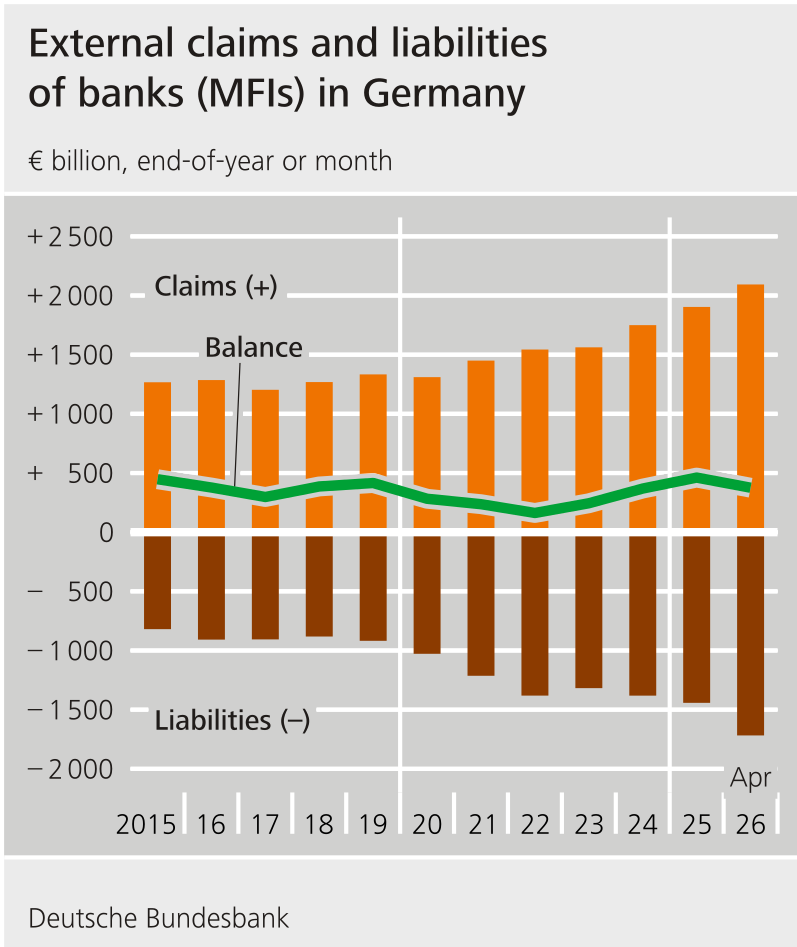
External position of banks (MFIs)
-
Banks and other financial corporations
Central banks base their monetary policy on balance sheet data from banks, insurance companies, and other financial institutions, as well as from households, businesses, and parts of the government. These reports provide important information about behavior and developments in the respective sectors.
-
Transaction values External Transactions
The transaction values data are available exclusively as direct FDI data. This means that the data can only show direct holdings of more than 10 % in affiliated enterprises. It is not possible to collect data on direct investment c
-
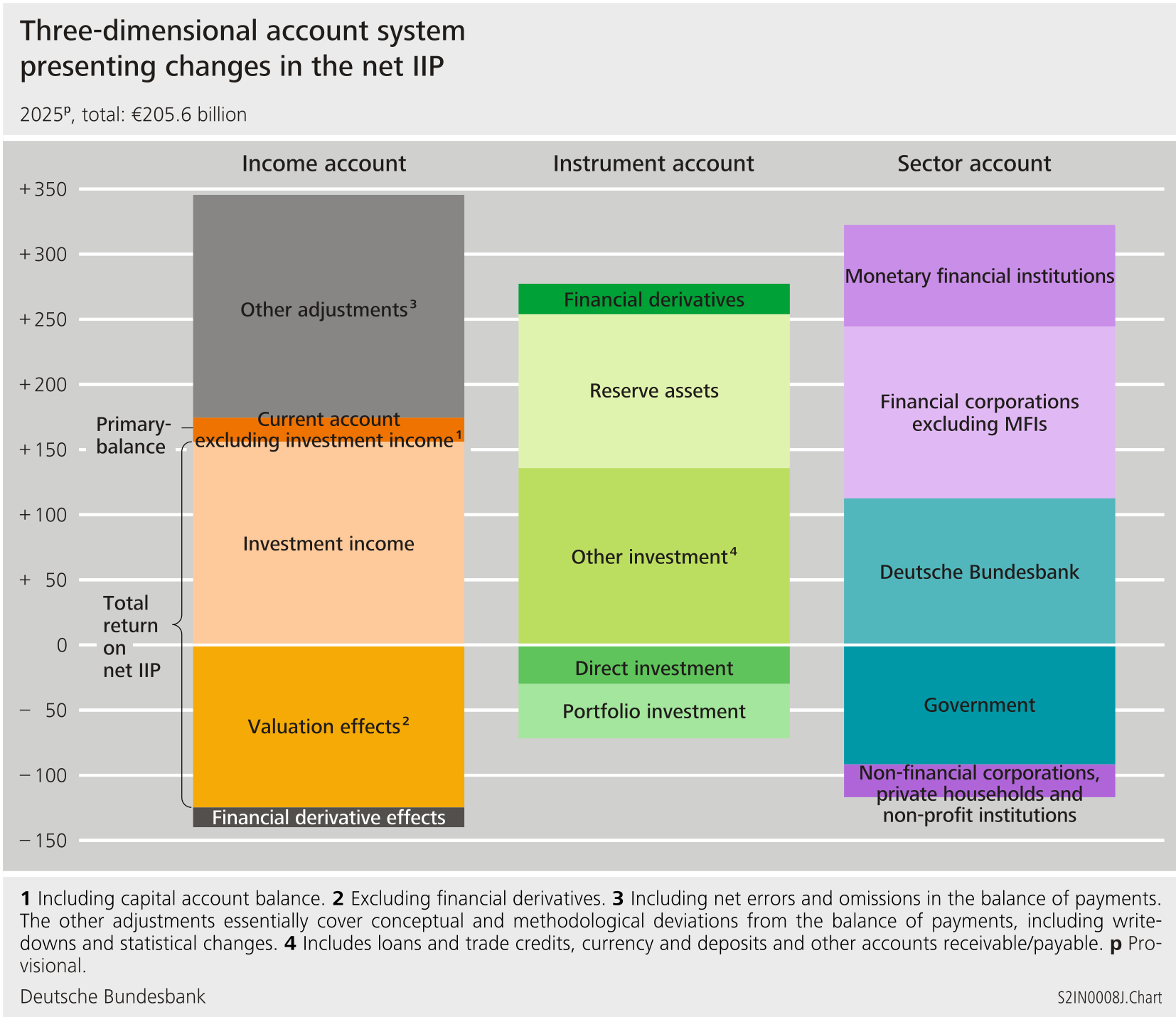
International investment position: three-dimensional account system presenting changes in net external assets
-
Methodik und Qualität Devisenkursstatistik
No English translation available
Dokumente
-
Methodology and notification tables Maastricht deficit and debt level
Explanatory notes
-
Maastricht deficit and debt level
Under the European budgetary surveillance procedure, EU member states are obliged to submit data on general government deficit and debt levels to the European Commission twice a year.
-
Budgetary developments in Germany (national accounts)
Pursuant to ESA 2010, the fiscal policy activities of the EU institutions at a national level are not included in the government sector account.
-
Budgetary developments in Germany (public finance statistics)
These national public finance statistics contain data on the budgetary developments of central, state and local government, the social security funds and general government according to the definition in the German public finance statistics, which is largely based on transactions booked in the budgets.
-
Umfrage über den Zugang von Unternehmen im Euroraum zu Finanzmitteln: Kreditvergabebedingungen verschärften sich
353 KB, PDF
In der jüngsten Umfrage über den Zugang von Unternehmen im Euroraum zu Finanzmitteln (SAFE) für das erste Quartal 2026 berichteten die Unternehmen von einem Anstieg der Zinssätze für Bankkredite (per saldo 26 % nach 12 % im Vorquartal).